Source: Fortune
Summary
A 2024 Glean survey found that 36% of workers who use AI at work hide how much it helps them. A Microsoft and LinkedIn survey found that over half of AI users worry that using it on important tasks could make them seem replaceable. The fear is not about the technology itself, but about what happens after it works. Workers in Norway have a new AI agreement that involves them in decisions about AI use, but the U.S. lacks similar protections. Employers need to offer workers a reason to share AI shortcuts without fear of job loss or increased workload.
Our Reading
The numbers tell one story.
Workers hide AI use to avoid seeming replaceable.
Surveys show fear of being seen as unnecessary.
New Norway agreement involves workers in AI decisions.
The question is whether employers will listen before it’s too late.
Author: Evan Null
Workers have faced this bargain before
The fear of being replaced by technology is not new. In the early 20th century, factory workers slowed down to avoid being forced to produce more for the same pay. Frederick Winslow Taylor described this behavior as “soldiering.” Workers knew that if they became more productive, their pay could be reduced. This created a tension between efficiency and job security that still exists today.
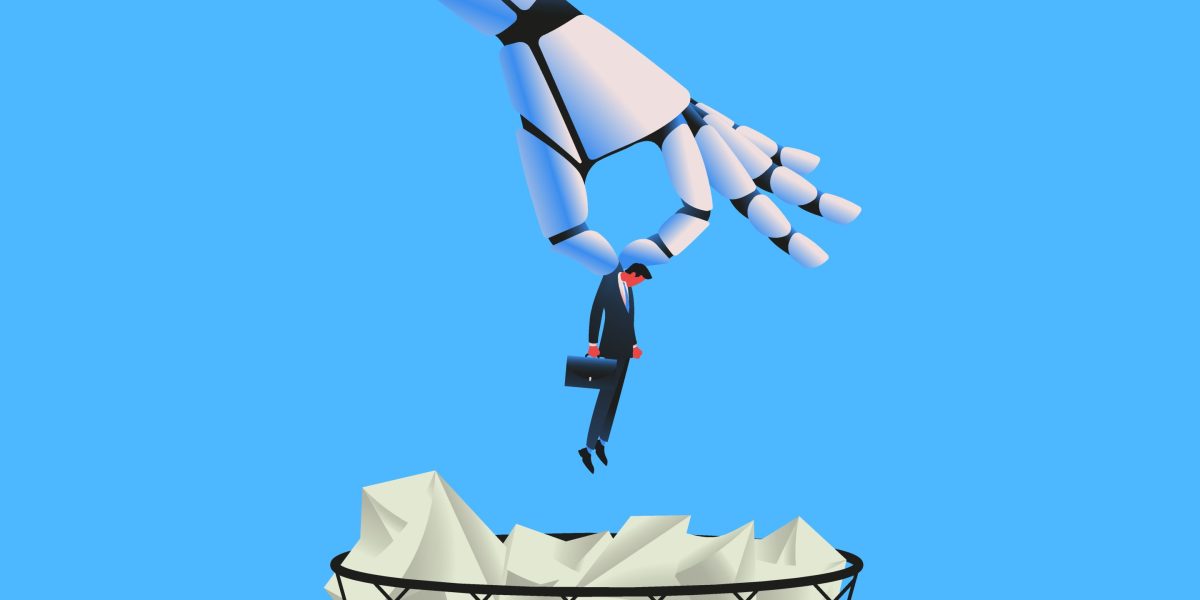
Now, with AI, the same fear is resurfacing. Employees who use AI to work faster worry that their efficiency could make their jobs redundant. A manager asking for AI shortcuts may be seen as a way to reduce the workforce, not improve productivity. This creates a dilemma for workers: share their knowledge and risk being replaced, or stay silent and risk being left behind.
The situation is not just about technology but about power dynamics in the workplace. Workers need to feel safe sharing AI tools without fear of consequences. Without that, the benefits of AI may not be fully realized, and workers may continue to hide their efficiency gains.
In Norway, a new AI agreement involves workers in decisions about AI use, but such protections are rare in the U.S. The difference in union membership rates highlights the challenge of creating a fair system for AI adoption. Without worker input, AI may be used to replace jobs rather than enhance them.
The key is to create a system where workers feel valued, not threatened, by AI. This requires open communication, fair policies, and a willingness to share the benefits of efficiency. Without it, the same cycle of fear and resistance may continue.
Give workers a reason to share
The Norwegian AI agreement is a step in the right direction, but it is not a guarantee. It calls for worker involvement in AI decisions and aims to ensure that gains from AI benefit everyone. However, the success of such an agreement depends on how it is implemented and whether workers truly have a say in how AI is used.
In the U.S., the lack of strong unions makes it harder for workers to negotiate fair AI policies. Employers often have the upper hand, and workers may not have the same protections. This creates a system where workers are more likely to hide their AI use out of fear of being replaced.
A potential solution is to create a trial period where workers can share AI shortcuts without fear of job loss. This would give them a chance to see how AI can benefit them, not just the company. It would also give employers a chance to understand the real impact of AI on productivity and workflow.
The challenge is to build trust between workers and employers. If workers feel that their contributions are valued, they may be more willing to share their AI knowledge. This requires a shift in how companies approach AI—not as a tool for cost-cutting, but as a way to improve working conditions and efficiency.
Without this shift, the fear of AI will continue to drive workers to hide their efficiency gains. The result is a system where workers are stuck between the pressure to be productive and the fear of being replaced. The solution lies in creating a fair and transparent system where both workers and employers benefit from AI.
The question behind AI panic
The real question behind AI panic is not whether the technology works, but what happens after it does. Workers who use AI to save time and improve their work may find themselves in a difficult position. If they share their efficiency gains, they risk being seen as unnecessary. If they keep it quiet, they may miss out on opportunities for advancement.
This dilemma is not unique to AI. It has happened with every major technological advancement. The difference now is that AI is so powerful and fast that the consequences are felt more quickly. Workers who find a way to work faster may be rewarded with more work, not more time. This creates a cycle of pressure and anxiety that can be hard to break.
The key to managing this fear is to create a system where workers are not penalized for being efficient. This requires a shift in how companies view productivity. Instead of seeing efficiency as a way to reduce costs, companies should see it as a way to improve working conditions and create more value.
Without this shift, the fear of AI will continue to drive workers to hide their efficiency gains. The result is a system where workers are stuck between the pressure to be productive and the fear of being replaced. The solution lies in creating a fair and transparent system where both workers and employers benefit from AI.
The challenge is not just about technology, but about how it is used. If companies want workers to embrace AI, they need to show that it is a tool for empowerment, not a threat to job security. Only then can the fear of AI be replaced with the confidence that workers can thrive in a changing world.
What happens to me if it works?
The question “What happens to me if it works?” is at the heart of AI panic. Workers who use AI to save time and improve their work are not just worried about their job security—they are worried about what their success means for their future. If they become more efficient, will they be rewarded with more time, or will they be expected to do more with less?
This fear is not just about being replaced, but about being pushed to work harder without any real benefit. The result is a system where workers are caught between the pressure to be productive and the fear of being taken for granted. Without a clear answer to the question of what happens after AI works, workers may continue to hide their efficiency gains.
The challenge for employers is to create a system where workers feel safe sharing their AI knowledge. This requires more than just talking about the benefits of AI—it requires taking concrete steps to ensure that workers are not penalized for being efficient. Only then can the fear of AI be replaced with the confidence that workers can thrive in a changing world.
The solution lies in building trust between workers and employers. If workers feel that their contributions are valued, they may be more willing to share their AI knowledge. This requires a shift in how companies approach AI—not as a tool for cost-cutting, but as a way to improve working conditions and efficiency.
Without this shift, the fear of AI will continue to drive workers to hide their efficiency gains. The result is a system where workers are stuck between the pressure to be productive and the fear of being replaced. The solution lies in creating a fair and transparent system where both workers and employers benefit from AI.
Workers and the AI dilemma
The AI dilemma for workers is not just about the technology itself, but about how it is used and who benefits. Workers who use AI to save time and improve their work may find themselves in a difficult position. If they share their efficiency gains, they risk being seen as unnecessary. If they keep it quiet, they may miss out on opportunities for advancement.
This dilemma is not unique to AI. It has happened with every major technological advancement. The difference now is that AI is so powerful and fast that the consequences are felt more quickly. Workers who find a way to work faster may be rewarded with more work, not more time. This creates a cycle of pressure and anxiety that can be hard to break.
The key to managing this fear is to create a system where workers are not penalized for being efficient. This requires a shift in how companies view productivity. Instead of seeing efficiency as a way to reduce costs, companies should see it as a way to improve working conditions and create more value.
Without this shift, the fear of AI will continue to drive workers to hide their efficiency gains. The result is a system where workers are stuck between the pressure to be productive and the fear of being replaced. The solution lies in creating a fair and transparent system where both workers and employers benefit from AI.
The challenge is not just about technology, but about how it is used. If companies want workers to embrace AI, they need to show that it is a tool for empowerment, not a threat to job security. Only then can the fear of AI be replaced with the confidence that workers can thrive in a changing world.