—
Source: Fortune
Summary
Women experiencing menopause often visit multiple doctors to address symptoms like hot flashes and joint pain, according to Paula Schneider, CEO of the Institute Advancing Women’s Health. Reshema Kemps-Polanco of Novartis suggested AI could help connect medical data across specialists. The nonprofit focuses on women aged 45 and older, highlighting gaps in medical training on midlife health. Novartis is working on treatments for autoimmune conditions like Sjögren’s disease, where diagnosis can take years. Experts caution that AI should complement, not replace, human clinicians.
Our Reading
The numbers tell one story.
Women see five or six doctors for menopause symptoms.
AI is framed as a fix for fragmented care.
Novartis and others push for AI in health care.
Experts warn against overreliance on technology.
Health care still needs human connection.
Author: Evan Null
Menopause and the Medical Maze
Women often see multiple doctors to manage menopause symptoms like hot flashes and joint pain. Paula Schneider, CEO of the Institute Advancing Women’s Health, said the average is five or six doctors. The lack of a holistic approach leaves women feeling lost in a medical system that doesn’t connect the dots.
Reshema Kemps-Polanco of Novartis sees AI as a way to fix this. She said AI could help connect medical data across specialists, making care more efficient. But she also emphasized the need for collaboration across sectors to close care gaps.
Medical training for women’s midlife health is minimal. OB-GYNs get only about two hours of education on the topic. Schneider’s nonprofit is working to change that with AI-powered continuing education for clinicians.
Women also face challenges with autoimmune conditions, which often require multiple specialists. Sjögren’s disease, for example, can take four years to diagnose. Kemps-Polanco said AI could help speed up the process.
Despite the promise of AI, experts like Wendy Barnes of GoodRx warn that human clinicians are still essential. Patients need to engage with real doctors, not just AI tools, to ensure proper care.
The Role of AI in Women’s Health
AI is being positioned as a solution to fragmented care in women’s health. Reshema Kemps-Polanco of Novartis believes it can help connect the dots between specialists. She said AI could make care better, faster, and cheaper, but emphasized the need for multi-sector collaboration.
The Institute Advancing Women’s Health is using AI to create evidence-based training for clinicians. This effort aims to improve medical education on midlife health, which is currently lacking. Women are also being taught how to ask the right questions of their providers.
Autoimmune conditions like Sjögren’s disease highlight the need for better coordination. Patients often see multiple doctors, but their records are not connected. Kemps-Polanco said AI could help with this, though she acknowledged the need for caution.
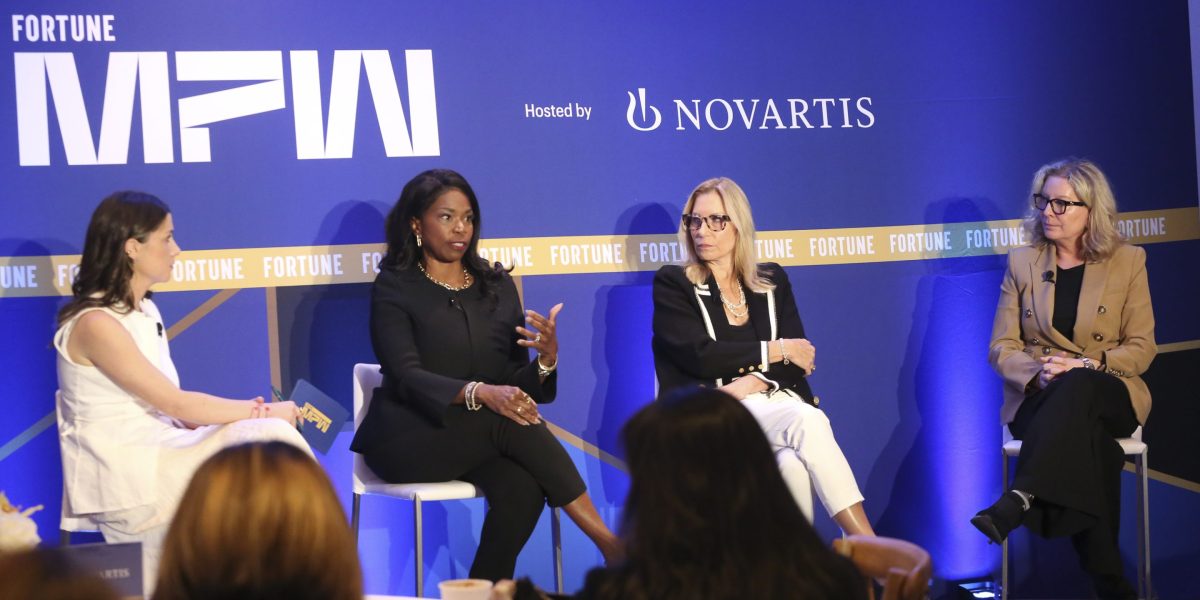
During a panel at the Fortune Most Powerful Women Summit, Kemps-Polanco shared a personal experience. She used an AI tool in the ER to help understand her symptoms. While she didn’t know how accurate it was, it helped start a conversation with her doctor.
AI is seen as a tool, not a replacement. Wendy Barnes of GoodRx said patients should still have access to human clinicians. She emphasized the importance of clinical evidence and real doctor-patient interactions.
Medical Gaps and the Push for Change
Women face a fragmented health care system when dealing with menopause. They often see multiple specialists, each treating a different symptom. Paula Schneider said this lack of coordination is a major issue. She called for a more holistic approach to women’s health.
Reshema Kemps-Polanco of Novartis believes AI can help bridge these gaps. She said the technology can connect data across different doctors and improve care. But she also stressed the need for collaboration with government, AI companies, and the medical industry.
Medical education on women’s midlife health is minimal. OB-GYNs receive only about two hours of training on the topic. Schneider’s nonprofit is working to change this by using AI to create continuing medical education for clinicians.
Autoimmune conditions like Sjögren’s disease also highlight the need for better coordination. Patients often wait years for a diagnosis. Kemps-Polanco said AI could help speed up the process, but she also warned against overreliance on the technology.
Experts like Wendy Barnes of GoodRx say AI should complement, not replace, human doctors. Patients need to be able to engage with real clinicians to ensure proper care. This balance is key to improving women’s health outcomes.
Challenges in Women’s Health Care
Women dealing with menopause often face a confusing and fragmented health care system. They may see multiple doctors for different symptoms, but there’s no central point of care. Paula Schneider of the Institute Advancing Women’s Health said this lack of coordination is a major problem.
Reshema Kemps-Polanco of Novartis sees AI as a way to improve this. She said the technology can help connect data across specialists, making care more efficient. But she also emphasized the need for collaboration across sectors to close care gaps.
Medical training on women’s midlife health is limited. OB-GYNs get only about two hours of education on the topic. Schneider’s nonprofit is working to change that with AI-powered continuing education for clinicians.
Autoimmune conditions like Sjögren’s disease also require multiple specialists. Patients often wait years for a diagnosis. Kemps-Polanco said AI could help speed up the process, but she also warned against overreliance on the technology.
Experts like Wendy Barnes of GoodRx say AI should complement, not replace, human doctors. Patients need to be able to engage with real clinicians to ensure proper care. This balance is key to improving women’s health outcomes.
The Future of Women’s Health and AI
The push for AI in women’s health is gaining momentum. Reshema Kemps-Polanco of Novartis believes it can help connect the dots between specialists, making care more efficient. She said AI could improve outcomes by enabling faster diagnoses and better treatment.
Paula Schneider of the Institute Advancing Women’s Health is also looking to AI to improve medical education. Her nonprofit is using the technology to create evidence-based training for clinicians. This effort aims to address the lack of education on women’s midlife health.
Autoimmune conditions like Sjögren’s disease highlight the need for better coordination. Patients often see multiple doctors, but their records are not connected. Kemps-Polanco said AI could help with this, though she acknowledged the need for caution.
Despite the promise of AI, experts caution against overreliance on the technology. Wendy Barnes of GoodRx said patients should still have access to human clinicians. She emphasized the importance of clinical evidence and real doctor-patient interactions.
AI is seen as a tool, not a replacement. It has the potential to improve care, but it must be used wisely. The goal is to create a system where technology and human expertise work together to better serve women’s health needs.