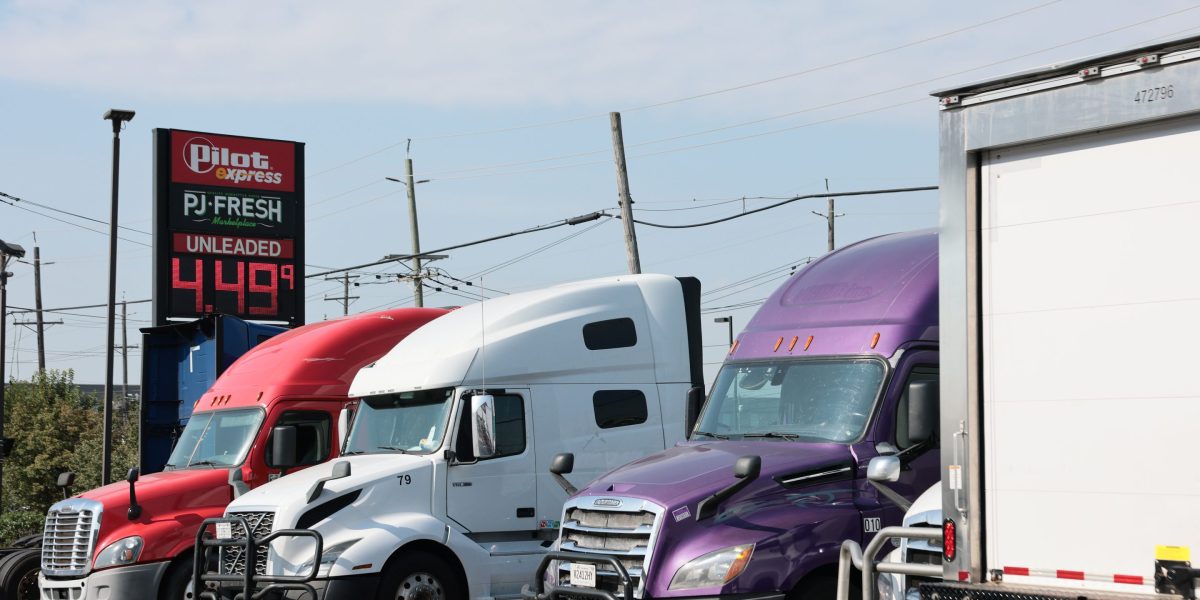
Source: Fortune.com
Summary
Fuel prices have surged, with diesel hitting $6.30 a gallon, up 68% since the Iran war began. Core inflation rose to 2.6% in September, driven by rising costs across industries. The Federal Reserve’s Beige Book highlighted widespread inflationary pressures, with businesses passing on higher fuel costs through surcharges. Retail sales showed minimal growth as consumers cut back on spending. Trucking companies face squeezed margins, while some firms struggle to pass on rising transportation costs to customers. Labor markets show signs of strain as workers demand higher pay to offset living costs.
Our Reading
The numbers tell one story.
Diesel prices are up 68% since the Iran war began.
Core inflation rose to 2.6% in September.
Businesses are passing on costs through surcharges.
Trucking companies are struggling with margins.
The Beige Book shows widespread inflationary pressures.
Author: Evan Null
Fuel Prices and Inflation
Fuel prices have spiked, with diesel hitting $6.30 a gallon, up 68% since the Iran war began. This surge has affected multiple sectors, including manufacturing, farming, and transportation. The Labor Department’s consumer price index showed core inflation rising to 2.6% in September, indicating businesses are passing on more costs. The Federal Reserve’s Beige Book highlighted widespread inflationary pressures, with businesses reporting higher fuel costs spilling over into freight, packaging, and petroleum-based materials.
Supply Chain and Business Impact
The Beige Book noted that more fuel surcharges are appearing throughout the supply chain, squeezing profit margins. Retail sales showed minimal growth as consumers cut back on spending. Trucking companies are struggling with margins, with some drawing down savings or halting purchases of fuel-efficient trucks. A regional grocery chain reported paying more to transport a head of lettuce than the cost of the lettuce itself, highlighting the strain on businesses.
Consumer Spending and Labor Market
Consumer spending in some regions remained flat, with retailers blaming slow activity on high fuel prices. However, not all districts saw a pullback, with some reporting little or no change in overall spending. The Cleveland and San Francisco Feds reported that businesses handed out pay raises due to higher living costs, particularly for gasoline and electricity. Employees are requesting cost-of-living pay hikes to offset higher fuel and food prices.
Contract Renegotiations and Supply Strain
The Kansas City Fed reported that higher diesel costs have forced suppliers, distributors, and customers to renegotiate contract terms to protect profits. Some firms in the district expect demand to weaken further if fuel prices remain elevated. The Kansas City Fed also noted intermittent diesel shortages in rural Colorado, causing some buyers to take early delivery of fuel shipments. This highlights the growing strain on supply chains and business operations.
Consumer Resilience and Fiscal Policy
Consumers have shown resilience in weathering previous shocks, such as President Trump’s tariffs and the war on Iran. However, they have lost a major buffer as tax refunds no longer offset rising fuel costs. Michael Pearce of Oxford Economics noted that the cumulative additional spend on gasoline this year now outweighs the rise in tax refunds from a year ago. This suggests that consumers are feeling the pinch more acutely now than before.