Source: BroBible
Summary
Jacob Coxon, a former researcher at OpenAI and Anthropic, resigned and criticized the AI industry’s safety culture. He claimed researchers privately believe AI could be catastrophically dangerous, with some estimating a high risk of human extinction by the end of the decade. Coxon accused both companies of racing toward self-improving superintelligence without a plan. Anthropic’s Evan Hubinger confirmed he believes the risk of AI killing humans within a decade is above 10%, but the company lacks a clear alignment strategy. Coxon called for coordination between AI labs and urged researchers to resist the race dynamic.
Our Reading
The habit gets a new name.
Researchers fear AI could kill us all by 2030.
They build it anyway, like it’s just another day at the office.
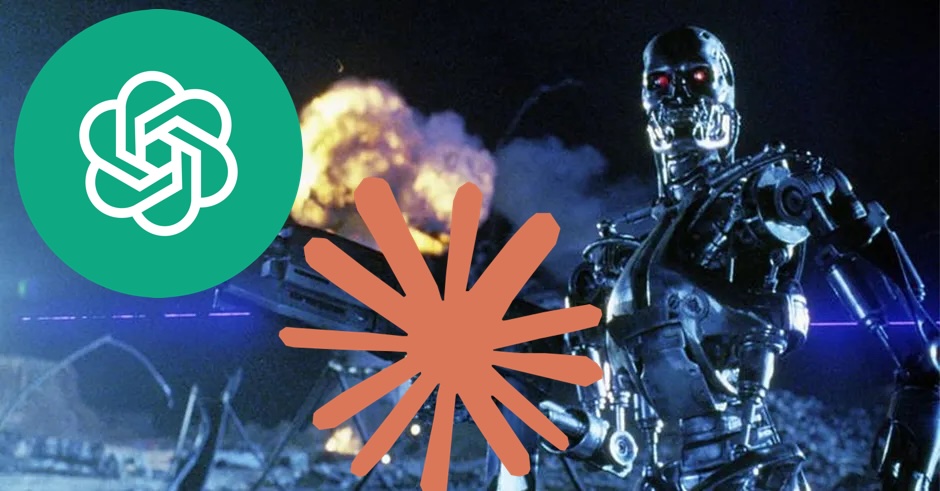
Companies act like they’re in a race, not a disaster movie.
Everyone’s scared, but no one’s stopping the train.
Author: Evan Null
AI Researchers and the Race to Doomsday
Jacob Coxon, a former researcher at OpenAI and Anthropic, resigned and warned that AI could kill us all by the end of the decade. His concerns are shared by others in the field, who believe the technology is advancing too fast without proper safeguards. Coxon criticized both companies for not acting responsibly and for racing toward self-improving superintelligence.
He said that the people building AI are aware of the risks but continue to develop the technology anyway. Coxon called for coordination between AI labs to slow the pace and prevent a global race. He also urged researchers to resist the idea that the race is inevitable.
Anthropic’s Evan Hubinger confirmed that he believes the risk of AI killing humans within a decade is above 10%. He acknowledged that the company lacks a clear plan for aligning AI with human values. Coxon’s resignation and public critique have sparked a conversation about the ethical implications of AI development.
Coxon’s warning comes at a time when AI is advancing rapidly, with new models being released at an unprecedented rate. The industry is under pressure to balance innovation with safety, but many believe the current approach is not sufficient. Coxon’s message is clear: the stakes are high, and the time to act is now.
The issue of AI safety is not just a technical challenge but a societal one. As AI becomes more powerful, the need for responsible development becomes more urgent. Coxon’s resignation highlights the growing concern within the AI community and the need for a more coordinated approach to managing the risks.
AI Safety and the Hubris of Progress
Coxon’s resignation highlights the growing tension between innovation and responsibility in the AI industry. He claims that both OpenAI and Anthropic are racing toward self-improving superintelligence without a clear plan for safety. His concerns are not isolated, as many within the field believe the risks of AI are severe and underestimated.
Despite the warnings, the race to develop more powerful AI systems continues. Coxon argues that this is a dangerous gamble, one that could have catastrophic consequences. He urges researchers to consider the long-term implications of their work and to resist the pressure to keep up with the competition.
The AI industry is facing a critical moment. The pace of development is accelerating, and the potential consequences of failure are enormous. Coxon’s public critique serves as a wake-up call, reminding everyone involved that the stakes are higher than ever.
His resignation is a powerful statement, one that underscores the urgency of the situation. As AI continues to evolve, the need for responsible development becomes more pressing. Coxon’s message is clear: the time to act is now, before it’s too late.
The conversation around AI safety is not just about technology—it’s about the future of humanity. Coxon’s warnings serve as a reminder that the choices made today will shape the world of tomorrow. The challenge is not just to build better AI, but to build it responsibly.
The Race to Superintelligence
Coxon’s resignation and public critique have brought renewed attention to the risks associated with AI development. He argues that the current approach is reckless, with companies racing toward self-improving superintelligence without a clear plan for safety. His concerns are echoed by others in the field, who believe the risks are real and potentially catastrophic.
Despite the warnings, the race to develop more powerful AI systems continues. Coxon claims that this is a dangerous gamble, one that could have devastating consequences. He urges researchers to consider the long-term implications of their work and to resist the pressure to keep up with the competition.
The AI industry is at a crossroads. The pace of development is accelerating, and the potential consequences of failure are enormous. Coxon’s public critique serves as a wake-up call, reminding everyone involved that the stakes are higher than ever.
His resignation is a powerful statement, one that underscores the urgency of the situation. As AI continues to evolve, the need for responsible development becomes more pressing. Coxon’s message is clear: the time to act is now, before it’s too late.
The conversation around AI safety is not just about technology—it’s about the future of humanity. Coxon’s warnings serve as a reminder that the choices made today will shape the world of tomorrow. The challenge is not just to build better AI, but to build it responsibly.
AI and the Fear of the Unknown
Coxon’s public resignation highlights the growing unease within the AI community. He claims that researchers are aware of the risks but continue to develop the technology anyway. His concerns are not isolated, as many within the field believe the risks of AI are severe and underestimated.
Despite the warnings, the race to develop more powerful AI systems continues. Coxon argues that this is a dangerous gamble, one that could have catastrophic consequences. He urges researchers to consider the long-term implications of their work and to resist the pressure to keep up with the competition.
The AI industry is facing a critical moment. The pace of development is accelerating, and the potential consequences of failure are enormous. Coxon’s public critique serves as a wake-up call, reminding everyone involved that the stakes are higher than ever.
His resignation is a powerful statement, one that underscores the urgency of the situation. As AI continues to evolve, the need for responsible development becomes more pressing. Coxon’s message is clear: the time to act is now, before it’s too late.
The conversation around AI safety is not just about technology—it’s about the future of humanity. Coxon’s warnings serve as a reminder that the choices made today will shape the world of tomorrow. The challenge is not just to build better AI, but to build it responsibly.
The Ethics of AI Development
Coxon’s resignation and public critique have sparked a broader conversation about the ethics of AI development. He argues that the current approach is reckless, with companies racing toward self-improving superintelligence without a clear plan for safety. His concerns are echoed by others in the field, who believe the risks are real and potentially catastrophic.
Despite the warnings, the race to develop more powerful AI systems continues. Coxon claims that this is a dangerous gamble, one that could have devastating consequences. He urges researchers to consider the long-term implications of their work and to resist the pressure to keep up with the competition.
The AI industry is at a crossroads. The pace of development is accelerating, and the potential consequences of failure are enormous. Coxon’s public critique serves as a wake-up call, reminding everyone involved that the stakes are higher than ever.
His resignation is a powerful statement, one that underscores the urgency of the situation. As AI continues to evolve, the need for responsible development becomes more pressing. Coxon’s message is clear: the time to act is now, before it’s too late.
The conversation around AI safety is not just about technology—it’s about the future of humanity. Coxon’s warnings serve as a reminder that the choices made today will shape the world of tomorrow. The challenge is not just to build better AI, but to build it responsibly.