Source: Fortune
Summary
Apollo Global Management’s chief economist Torsten Slok has applied the Jevons paradox to the AI age, suggesting that increased AI adoption will lead to more jobs, not fewer. Slok argues that as AI makes tasks more efficient, the market for those tasks will expand, leading to growth in industries such as law, accounting, and consulting. However, others argue that AI will replace large swaths of the white-collar workforce, and that the Jevons paradox may not hold true in this case. The outlook for Gen Z workers is particularly uncertain, with many rethinking the traditional corporate ladder and considering entrepreneurship, gig work, or freelance work.
Our Reading
The announcement sounds familiar.
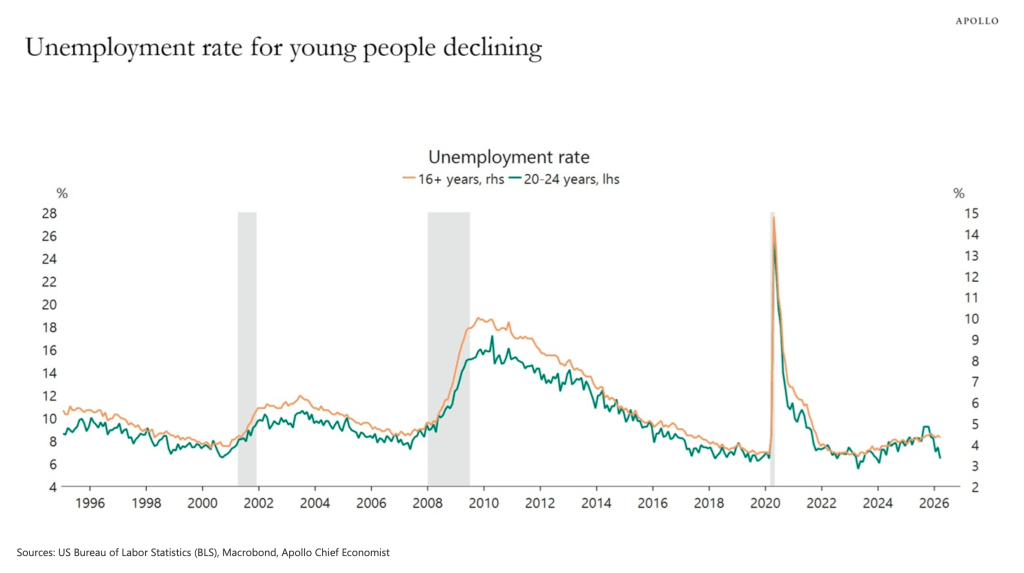
Torsten Slok’s assertion that AI will create more jobs, not fewer, flies in the face of conventional wisdom. But what if the Jevons paradox only holds true for certain industries, while others contract? The numbers tell one story, but the impact on individual workers is another. The trend of young people starting their own companies may be a sign of a shifting labor market, but it’s unclear if this will lead to more opportunities for entry-level workers. The data on underemployment and unemployment among recent college graduates paints a more nuanced picture.
Author: Evan Null