Source: Fox News
Summary
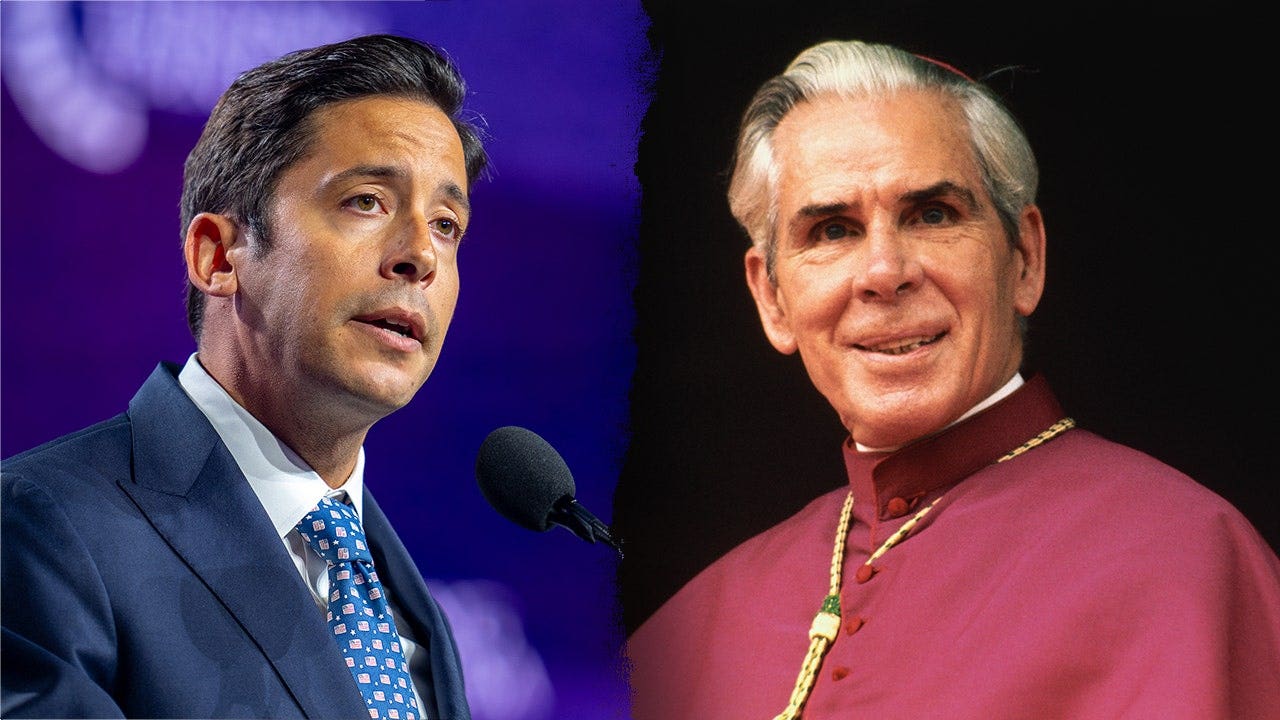
Archbishop Fulton Sheen, known for his TV broadcasts on Christianity, morality, and anti-communism, was beatified in St. Louis. The event marked a step toward sainthood for the 20th-century religious figure. President Trump and Melania attended the ceremony. Sheen’s TV show “Life Is Worth Living” reached 30 million viewers. Michael Knowles, a conservative commentator, said Sheen’s message would now label him a “far-right extremist.” The White House highlighted Sheen’s opposition to communism and his influence on American culture.
Our Reading
As expected, the matter has reached another stage.
Sheen’s message returns in a new form, now framed by modern politics.
His beatification happens alongside warnings about communism and modern culture.
Conservatives see his legacy as a model for today’s debates.
His TV presence feels like a distant memory, now reinterpreted as a warning.
Author: Evan Null
Archbishop Fulton Sheen’s Beatification and Legacy
Archbishop Fulton Sheen, a prominent Catholic broadcaster, was beatified in St. Louis, marking a significant step toward sainthood. His beatification ceremony was attended by President Donald Trump and first lady Melania Trump, who praised his contributions to American religious life. Sheen became famous for his TV show “Life Is Worth Living,” which reached 30 million viewers. His message focused on Christianity, morality, and opposition to communism. The White House highlighted his role in bringing Christian teachings to a world threatened by communist forces.
Michael Knowles on Sheen’s Modern Relevance
Conservative commentator Michael Knowles argued that Sheen’s message would now be labeled as far-right extremism. He said Sheen’s unapologetic stance on Catholic teachings would face criticism in modern America. Knowles noted that Sheen understood mass communication and adapted to new platforms. He also pointed out that Sheen’s traditional views on sex, marriage, and human nature would draw fierce opposition today. Despite this, Knowles believed Sheen would ultimately “have the last laugh in heaven.”
Sheen’s Influence and Legacy
Sheen’s influence extended beyond religious audiences, competing with entertainment giants like Milton Berle and Frank Sinatra in weekly ratings. He appeared on the cover of Time magazine and won an Emmy. His work inspired future religious figures, including Pope Leo XIV, who recalled encountering Sheen’s teachings as a child. Sheen’s beatification was based on his religious life and a miracle attributed to his intercession. The miracle involved a child revived after 61 minutes without a heartbeat.
Sheen’s Connection to the Modern Papacy
Sheen participated in the Second Vatican Council, where he met future popes like Pope John Paul II and Pope Benedict XVI. His connection to the modern papacy continued when John Paul II embraced him during a 1979 visit to New York. Sheen died in 1979, just two months after their meeting. His legacy includes not only his media presence but also his deep faith, as he maintained a daily Holy Hour before the Eucharist throughout his ministry.
Sheen’s Message in the Context of Today’s Politics
Knowles argued that Sheen’s warnings about human nature and political systems remain relevant. He linked the appeal of communist and utopian movements to the Christian doctrine of original sin, suggesting that political systems fail when they misunderstand human nature. The White House emphasized Sheen’s opposition to communism, describing him as a figure who brought Christian teaching to a world threatened by communist forces. His beatification came amid ongoing discussions about the role of religion in public life and the challenges of modern culture.