
Big Ten Releases Video Defending Controversial Extra Second Added At End Of Michigan-Western Michigan Game
—
Source: BroBible
Summary
The Big Ten defended its controversial call in a Michigan-Western Michigan game, where an extra second was added after a Hail Mary pass. The conference said a Western Michigan player touched the ball with one second left. Video evidence was provided, and the Big Ten claimed clocks were synced. Fans disputed the explanation.
Our Reading
The routine arrives with confidence.
Officials get a second chance to be right.
Time is a flexible concept.
Syncing clocks is a performance.
Extra seconds are just extra drama.
Author: Evan Null
Big Ten’s Clock-Syncing Claims
The Big Ten insists that all clocks on the field are synced with the clock on the TV. This is a claim that sounds more like a tech demo than a sports rule.
The conference says that 85 minutes before the game, all broadcast cameras are synced using a strobe system. This is the kind of detail that makes fans question if they’re watching a game or a science experiment.
Despite the explanation, fans remain unconvinced. The idea that a single second could change the outcome of a game is enough to spark debate.
The Big Ten’s video evidence was meant to clarify the situation, but it only added to the confusion. Fans are not easily swayed by technical jargon.
What started as a controversial call has turned into a larger conversation about the reliability of officiating and the role of technology in sports.
Controversial Call and Hail Mary Drama
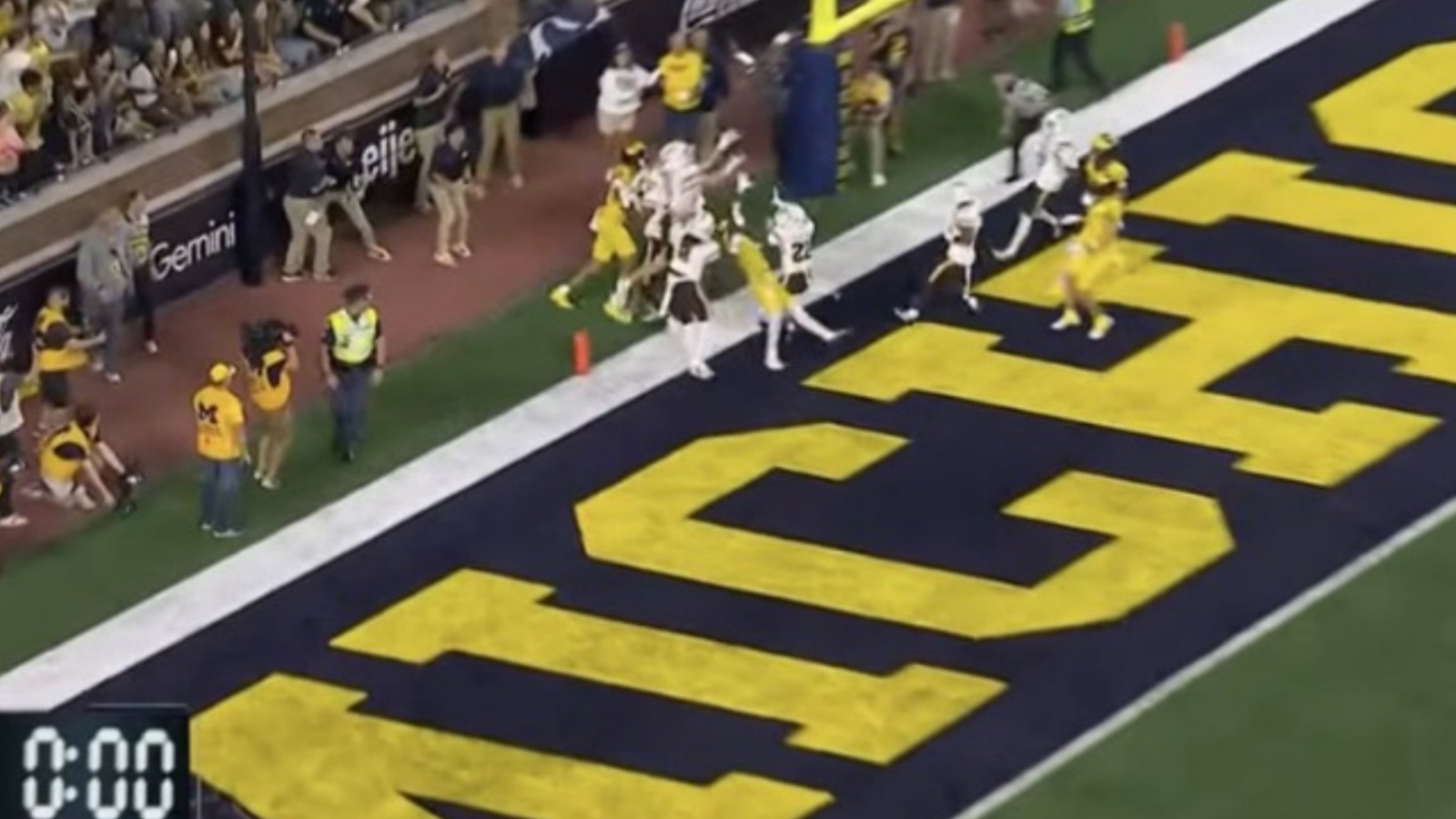
The game ended with a Hail Mary pass that was initially thought to be a failed attempt. But the extra second allowed Michigan to win with another Hail Mary.
The controversy stems from the timing of the play. The Big Ten claims that a Western Michigan player touched the ball with one second left, which justified the extra time.
This kind of last-second drama is what makes sports exciting, but it also highlights the flaws in the system. One second can be the difference between victory and defeat.
Many fans believe that the call was biased in favor of Michigan. The idea that a single second could be added without clear evidence is hard to swallow.
While the Big Ten insists that the call was fair, the perception among fans is that the system is flawed. This is not the first time a controversial call has sparked outrage.
Video Evidence and Fan Reactions
The Big Ten released video to support its explanation, showing the play from multiple angles. This was meant to reassure fans that the call was accurate.
However, the video did not convince everyone. Many fans still believe that the call was incorrect and that the extra second was unfairly given.
Some fans even called the explanation “B.S.,” suggesting that the Big Ten is trying to cover up a mistake. This kind of backlash is common when officials make controversial decisions.
The video evidence was a response to the criticism, but it only deepened the divide between the conference and its fans. Trust is hard to rebuild once it’s broken.
What started as a simple game has turned into a larger debate about the integrity of officiating. Fans want transparency, but the Big Ten’s explanation has only fueled more questions.
Extra Seconds and the Illusion of Fairness
The idea that an extra second could be added to a game is not new, but it always sparks controversy. It’s the kind of thing that makes fans question the fairness of the system.
The Big Ten claims that the clocks were synced, but fans are not convinced. The fact that the call was made in the final moments of the game makes it even more sensitive.
One second can change the outcome of a game, and that’s what makes this situation so contentious. Fans want to believe that the game is fair, but this call has made that difficult.
The Big Ten’s explanation may be technically sound, but it doesn’t address the real issue: the perception of bias. Fans don’t care about the technical details—they care about the outcome.
This situation highlights the challenges of officiating in high-stakes games. One mistake can lead to a lifetime of criticism.
Big Ten’s Response and the Future of Officiating
The Big Ten’s response to the controversy has been to release video and explain the process. This is a common strategy when facing backlash, but it doesn’t always work.
The conference’s claim that all clocks are synced with the TV is meant to reassure fans, but it doesn’t fully address the concerns. The fact that the call was made in the final moments of the game makes it harder to justify.
Officiating in sports is always going to be a sensitive topic. No matter how hard officials try, there will always be people who question their decisions.
The Big Ten’s explanation may not be enough to calm the fans, but it’s a step in the right direction. The goal is to maintain trust, even in the face of criticism.
As the season continues, the Big Ten will need to find a way to address these concerns and restore confidence in its officiating. It’s a delicate balance between transparency and authority.
