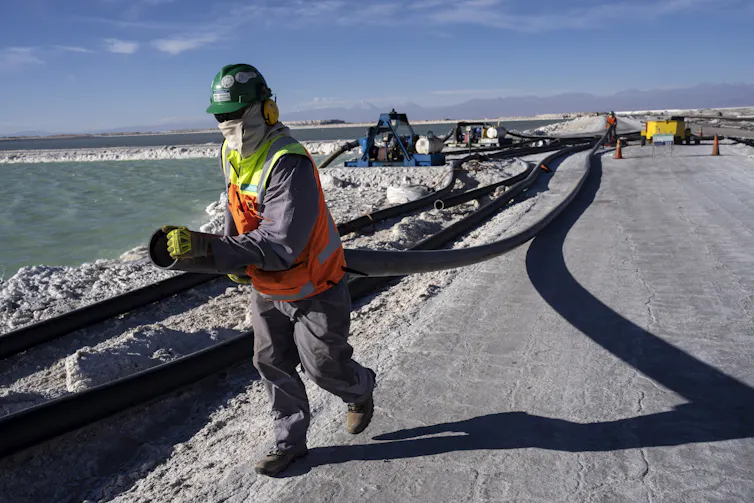
Source: Fortune
Summary
Critical minerals such as lithium, cobalt, and copper are essential for modern technologies, including AI, wind turbines, and electric vehicles. However, the mining of these minerals has severe environmental and health impacts on local communities, including water pollution, health crises, and food insecurity. The authors, researchers at the United Nations University Institute for Water, Environment and Health, argue that the global transition to a cleaner, greener future must address these issues to avoid reproducing the injustices of the oil extraction era.
Our Reading
The strategy enters a familiar phase.
Critical mineral mining is a double-edged sword, powering the energy transition while harming local communities. The numbers tell a story of water bankruptcy, with lithium production requiring 456 billion liters of water in 2024. The health crises hidden in supply chains are stark, with communities reporting skin diseases, gastrointestinal illnesses, and reproductive health problems. Food costs of the energy transition are also significant, with mining activities contaminating water used for irrigation and livestock. Companies, governments, and consumers must take action to protect mining communities and ensure a fair and sustainable energy transition.
The announcement sounds familiar, as the same patterns of environmental degradation and human rights abuses are evident in various mining regions, from the Democratic Republic of the Congo to Chile and Bolivia.
Ways to protect mining communities include creating stronger international governance, investing in less water-intensive mining technologies, and giving local and Indigenous communities a stronger voice in resource management.
One original observation is that the energy transition is not just about switching from fossil fuels to renewable energy, but also about who bears the costs and who benefits from this transition.
Author: Evan Null