Source: Fortune.com
Summary
Extreme drought and heat have severely impacted fish populations across Europe, with countries like Hungary, Romania, the Czech Republic, Bosnia, and Serbia reporting significant losses. Fishermen and farmers describe shrinking water sources, rising temperatures, and the risk of mass fish die-offs. In Hungary, 1,588 hectares of fish ponds dried up, leading to the death of nearly 280 metric tons of fish. Romanian fish farmers face ongoing challenges from repeated droughts, while Czech and Bosnian producers implement emergency measures to keep fish alive. Slovenia’s Lake Pristava has seen emergency water pumping to prevent fish suffocation.
Our Reading
The numbers tell one story.
Hungary’s fish ponds are drying up, with 1,588 hectares lost and 280 metric tons of fish dead.
Romania’s fish farmers are still feeling the effects of droughts from 2023 and 2024.
Czech producers are aerating ponds and draining them to save fish.
Climate change is not a future risk—it’s a present crisis for fishers and farmers.
Author: Evan Null
Small Boats and Shriveled Ponds
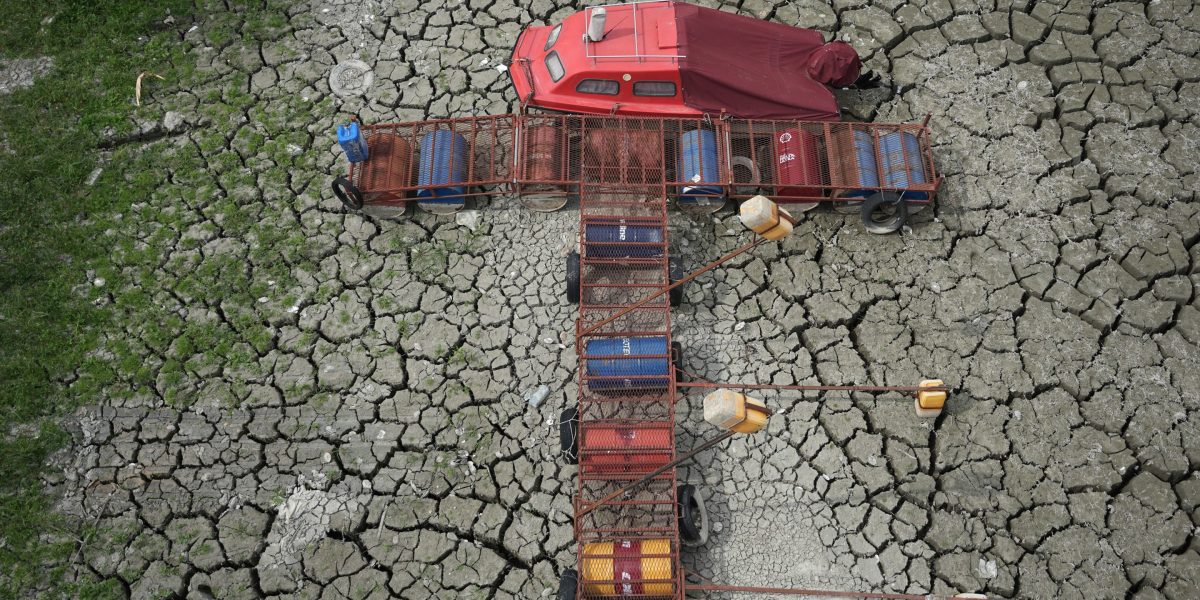
Small boats sit idle on cracked ground in a side channel of the Danube River in northern Serbia, where the water has receded into shrinking ponds. Fishermen like Dusan Jovanovic describe the situation as dire, with juvenile fish trapped in water that is over 30 degrees Celsius. The fish are at risk of dying en masse if conditions do not improve.
The drought has hit ecosystems and businesses across the region, from Slovenia’s lakes to fish farms in Bosnia, the Czech Republic, Romania, and Hungary. The fish industry has suffered millions in damages, compounding the effects of energy and water shortages, damaged crops, and disrupted river traffic.
In Hungary, 99% of the country is under severe or extreme drought conditions. The Agriculture and Food Economy Ministry reported that 1,588 hectares of fish ponds have dried up, leading to the death of nearly 280 metric tons of fish. The revenue loss is estimated at 1.3 billion forints, and replacing the lost fish could take years.
Romanian fish farmers, especially those raising carp, are still recovering from droughts in 2023 and 2024. The three- to four-year production cycle means losses from previous years continue to impact current output. Water policies that prioritize agriculture over fish farming have left many without enough water.
Czech fish farmers are taking emergency steps, such as reducing feeding and aerating ponds. Officials say long-term water retention strategies are needed. In Bosnia, trout farmers are struggling to keep their cold-water fish alive during the summer, with some adding liquid oxygen to the water.
Hungary’s Fish Die as the Country Faces Drought
Hungary’s national meteorological service reports that 99% of the country is under severe or extreme drought conditions. Desertification is threatening the Great Hungarian Plain, with water shortages affecting nearly 27,000 hectares of fish ponds. The Agriculture and Food Economy Ministry said that 1,588 hectares of ponds have dried out, killing nearly 280 metric tons of fish at 20 farms.
The revenue loss from the damage is estimated at 1.3 billion forints, or about $4.2 million. Fish farmers say it could take years to replace the lost fish. Some have had to drain one pond to save fish in another, according to the Hungarian Aquaculture and Fisheries Inter-branch Organization.
The crisis has forced fish farmers to make difficult choices. Some have had to reduce or stop feeding fish to conserve oxygen. Others have drained ponds when necessary, but the long-term solution remains unclear. The government and industry are now looking for ways to prepare for future extreme weather events linked to climate change.
Repeated Droughts Hurt Romanian Fish Farmers
For Romanian fish farmers, this year’s drought is the latest in a series of challenges. The 2023 and 2024 droughts have left lasting effects, with many still struggling to recover. Catalin Platon, president of ROMFISH National Association of Fish Producers, said the three- to four-year production cycle for carp means losses from previous years continue to impact current output.
Water-use policies that prioritize agriculture over fish farming have left many fish farmers without enough water. Platon said that during previous droughts, “we were left with no water for the fish.” This has made it difficult for farmers to maintain their operations and sustain production.
Despite the challenges, some farmers are trying to adapt. They are exploring ways to manage water more efficiently and invest in infrastructure that can help them survive future droughts. However, the financial and environmental toll of repeated droughts is significant, and many are worried about the long-term viability of their businesses.
Czech Fish Farmers Take Emergency Measures
Czech fish farmers are taking a range of emergency steps to keep their fish alive. These include reducing or suspending feeding to lower oxygen use, aerating ponds, and draining them when necessary. The Czech Fishing Association says sustained rainfall could help ease the immediate crisis, but long-term solutions are needed to retain more water in the landscape.
Jan Sokolik, a technician at the Rybarstvi Trebon fishery, explained that some ponds that were already low on water have been fished out, but they were all marginal. “Now we’re just starting to plan what to do with the big ponds,” he said. The challenge is not just about keeping fish alive, but also about preserving the infrastructure and resources needed for future production.
The crisis has highlighted the vulnerability of the fish farming industry to extreme weather events. With climate change making such events more frequent and severe, farmers are under pressure to find sustainable solutions. However, the immediate focus remains on survival, with many hoping for rain and better conditions in the coming months.
Bosnian Trout Breeders ‘Looking to Survive Summer’
Veljko Budjen owns a trout farm near Trebinje in southeast Bosnia, where hot and dry summers have brought serious challenges. Trout, a cold-water fish, requires cold, oxygen-rich water to thrive. During the summer, Budjen is forced to reduce feeding and production to keep the business afloat.
One option is to add liquid oxygen to the water, but that is costly and not always effective. Without sufficient water, the fish can quickly die. “You wait for the first rain,” Budjen said. The situation is particularly difficult in a country where trout farming is a key part of the local economy and cuisine.
The challenges faced by Bosnian trout farmers are not unique. Across Europe, fish farmers are struggling to adapt to the new normal of extreme heat and water shortages. With climate change making these conditions more common, the long-term future of the industry remains uncertain.