Source: Fox News
Summary
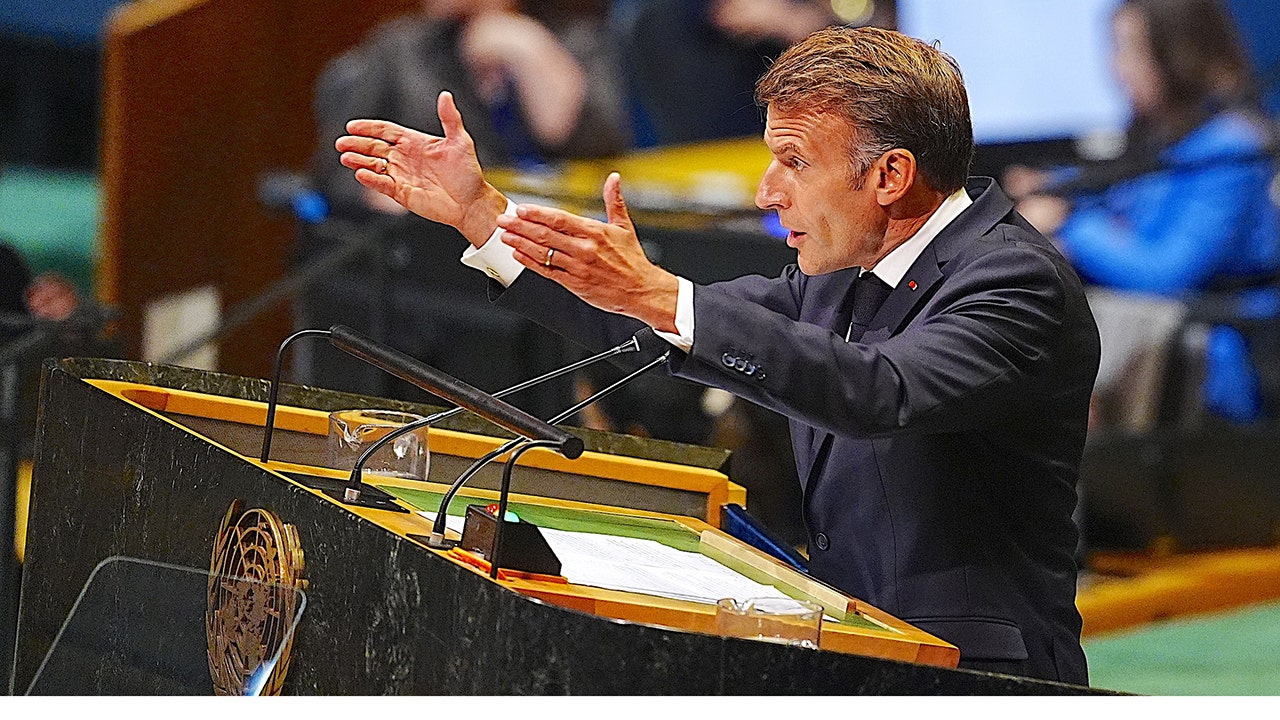
At the U.N. General Assembly, French President Emmanuel Macron criticized Israel for its actions in the West Bank, stating that Hamas was “never active” there. Israel’s U.N. Ambassador, Danny Danon, disputed this claim, noting a recent murder of a French citizen in the West Bank. U.S. Ambassador Mike Huckabee supported Israel, citing Hamas’ history of attacks. U.N. Secretary-General António Guterres condemned Israel’s response in Gaza, calling it the worst devastation he had seen. King Abdullah II of Jordan accused Israel of war crimes, while President Donald Trump criticized Iran and praised his own approach to global issues.
Our Reading
As expected, the matter has reached another stage.
Macron speaks, Danon corrects, Huckabee echoes.
Guterres condemns, Abdullah accuses, Trump defends.
Each leader repeats their lines, the same as before.
It’s not a debate — it’s a ritual of blame and response.
Author: Evan Null
Key Moments
Macron’s remarks about Hamas in the West Bank sparked immediate rebuttals from Israel. His claim that Hamas was “never active” there was challenged by Israel’s U.N. Ambassador, Danny Danon, who pointed to a recent murder of a French citizen in the area. The French Foreign Ministry later clarified that Macron meant to say Hamas does not govern the West Bank, not that it is not active there.
U.S. Ambassador Mike Huckabee supported Israel’s position, reposting a statement from Israel’s Minister of Diaspora and Combating Antisemitism, who emphasized Hamas’ history of attacks. Huckabee called Macron’s speech “out of touch with reality,” reinforcing the U.S. stance on Israel.
U.N. Secretary-General António Guterres criticized Israel’s actions in Gaza, calling it the worst devastation he had witnessed. His comments contrasted with the ongoing conflict in Sudan, where an estimated 150,000 people have died, but the world’s attention remains on Gaza.
King Abdullah II of Jordan accused Israel of war crimes, calling for international action. He praised Trump for pushing for peace but criticized Israel for allegedly destroying civilian infrastructure in Gaza. His remarks reflected a broader regional sentiment against Israel.
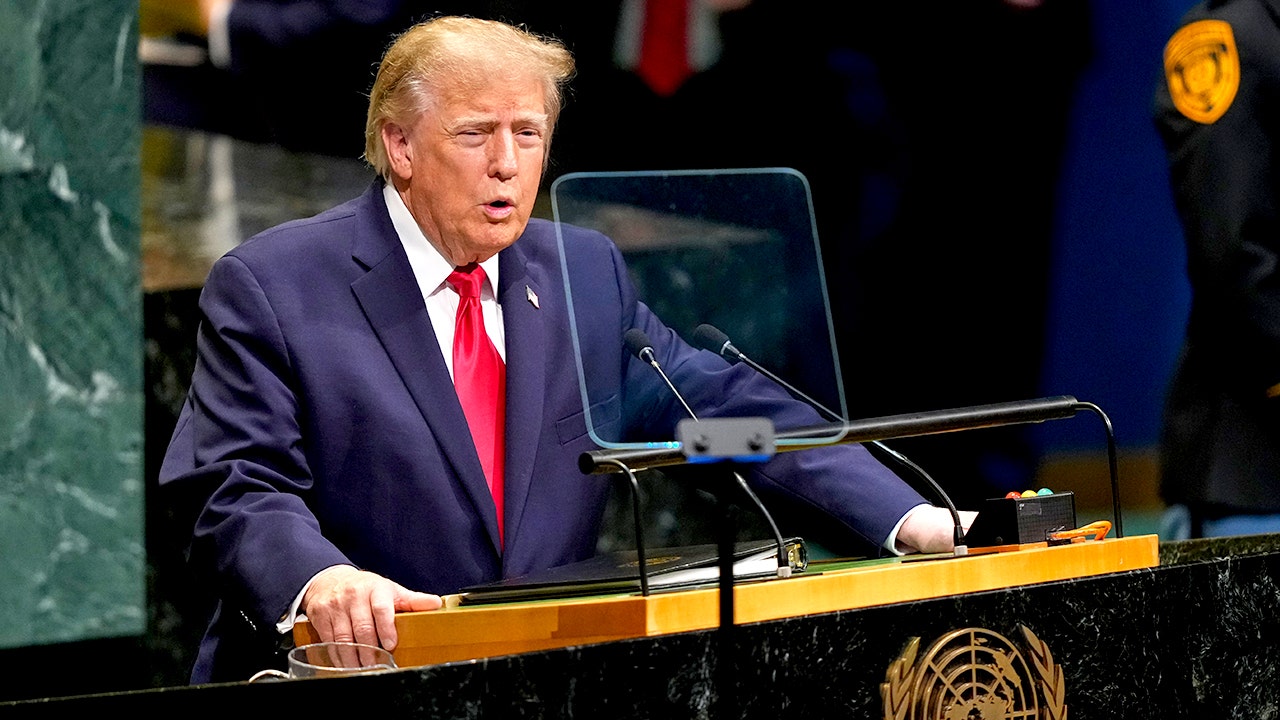
President Donald Trump offered a counterbalance to the criticism of Israel, focusing on Iran and its nuclear ambitions. He claimed that Iran celebrated the Oct. 7 Hamas attacks and warned of the dangers of a nuclear-armed Iran. His speech emphasized U.S. leadership and the need for a deal after the election.
Reactions and Responses
Israeli Ambassador Danny Danon criticized the U.N. for focusing on Israel rather than real global issues. He expressed gratitude for Trump’s speech, which he said provided moral clarity. Danon also accused Turkish President Recep Tayyip Erdoğan of antisemitism for comparing Israel to Nazi Germany.
Erdoğan continued his criticism of Israel, calling Gaza “the world’s biggest graveyard for children” and likening the situation to Holocaust-era concentration camps. His remarks, while controversial, are part of a pattern of comparing Israel to Nazi Germany, a stance that has drawn criticism from Israel and some Western allies.
King Abdullah II of Jordan also criticized Israel, accusing it of war crimes and forced displacement. His comments were part of a broader trend of regional leaders using the U.N. to voice concerns about Israel’s actions, often without addressing the broader context of regional conflicts and alliances.
Brazilian President Luiz Inácio Lula da Silva criticized Israel’s government, calling it responsible for a “genocide” of women and children in Gaza. His remarks reflected a growing sentiment among some Latin American leaders who have been critical of Israel’s military actions.
Despite the criticism, Israel’s U.N. Ambassador, Danny Danon, maintained that it is legitimate to criticize Israel, but that the U.N. often focuses on “pure hate and incitement.” He argued that many leaders use the U.N. to criticize Israel rather than address real global issues.
International Context
The U.N. General Assembly saw a mix of criticism and defense of Israel, with world leaders taking sides on the conflict in Gaza and the broader Middle East. While some leaders called for action against Israel, others, like Trump, focused on other global threats, such as Iran’s nuclear ambitions.
The U.N. Secretary-General’s focus on Gaza highlighted the ongoing humanitarian crisis, but also raised questions about the international community’s attention to other conflicts, such as the war in Sudan. The disparity in global attention to different crises was a recurring theme in the speeches.
Regional leaders, including Jordan’s King Abdullah II and Turkey’s President Erdoğan, used the U.N. to voice their concerns about Israel, often linking the conflict to broader regional tensions. Their remarks reflected the complex geopolitical landscape of the Middle East and the role of the U.N. in addressing these issues.
Despite the criticism, Israel’s U.N. Ambassador, Danny Danon, argued that the U.N. often focuses on Israel rather than real global issues. He called for more practical actions to improve the world, rather than simply blaming Israel for global problems.
The U.N. General Assembly provided a platform for a wide range of perspectives on the Middle East, with leaders using the opportunity to express their views on Israel, the conflict in Gaza, and other global issues. The event underscored the ongoing challenges of international diplomacy and the difficulty of achieving consensus on complex global issues.
Conclusion
The U.N. General Assembly highlighted the deep divisions among world leaders regarding Israel’s actions in the Middle East. While some leaders criticized Israel for its military response to the Hamas attacks, others, like President Trump, focused on broader global threats and praised U.S. leadership. The event also underscored the challenges of international diplomacy and the difficulty of achieving consensus on complex global issues.
As the U.N. continues to address global conflicts and challenges, the focus on Israel and the Middle East remains a central issue. The speeches and reactions from world leaders reflect the ongoing tensions and the difficulty of finding a resolution to the conflict. The U.N. remains a key forum for these discussions, but the lack of consensus and the persistence of regional and global conflicts make progress difficult.
The event also highlighted the role of the U.N. in addressing humanitarian crises, but raised questions about the organization’s ability to focus on the most pressing global issues. The contrast between the attention given to Gaza and other conflicts, such as the war in Sudan, underscored the challenges of international diplomacy and the need for a more balanced approach to global crises.
As the U.N. continues to address global issues, the focus on Israel and the Middle East will likely remain a central topic of discussion. The event demonstrated the complexity of international diplomacy and the difficulty of achieving consensus on complex global issues. The U.N. remains a key forum for these discussions, but the lack of consensus and the persistence of regional and global conflicts make progress difficult.
The U.N. General Assembly provided a platform for a wide range of perspectives on the Middle East, with leaders using the opportunity to express their views on Israel, the conflict in Gaza, and other global issues. The event underscored the ongoing challenges of international diplomacy and the difficulty of achieving consensus on complex global issues.