Source: Fortune
Summary
A reader challenged a column about Gen Z’s spending habits, arguing that buying consumer goods doesn’t mean they love capitalism. The author agrees, citing Mark Fisher’s concept of “capitalist realism” where the system makes itself feel like the only conceivable arrangement. The article explores how generations since the baby boomers have expressed antipathy towards capitalism, but what’s changing is what happens to that opposition as a generation grows up and joins the masses.
The article discusses how the economic slowdown since the 1970s has shaped attitudes towards capitalism, with baby boomers being the most positive, Gen X being hurt by the 2008 crisis but recovering, and younger millennials and Gen Z being less confident in the system. It also explores how Gen Z’s opposition to capitalism is different, with phrases like “bare minimum Monday” and “quiet quitting” describing work as a transaction to be minimized.
Our Reading
The numbers tell one story.
Gen Z’s opposition to capitalism is not just about spending habits, but about the system’s ability to capture the imagination. The concept of “capitalist realism” suggests that the system makes itself feel like the only conceivable arrangement. The article highlights how generations have expressed antipathy towards capitalism, but what’s changing is what happens to that opposition as a generation grows up and joins the masses. Gen Z’s starting point is different, with low confidence in institutions and a focus on minimizing work.
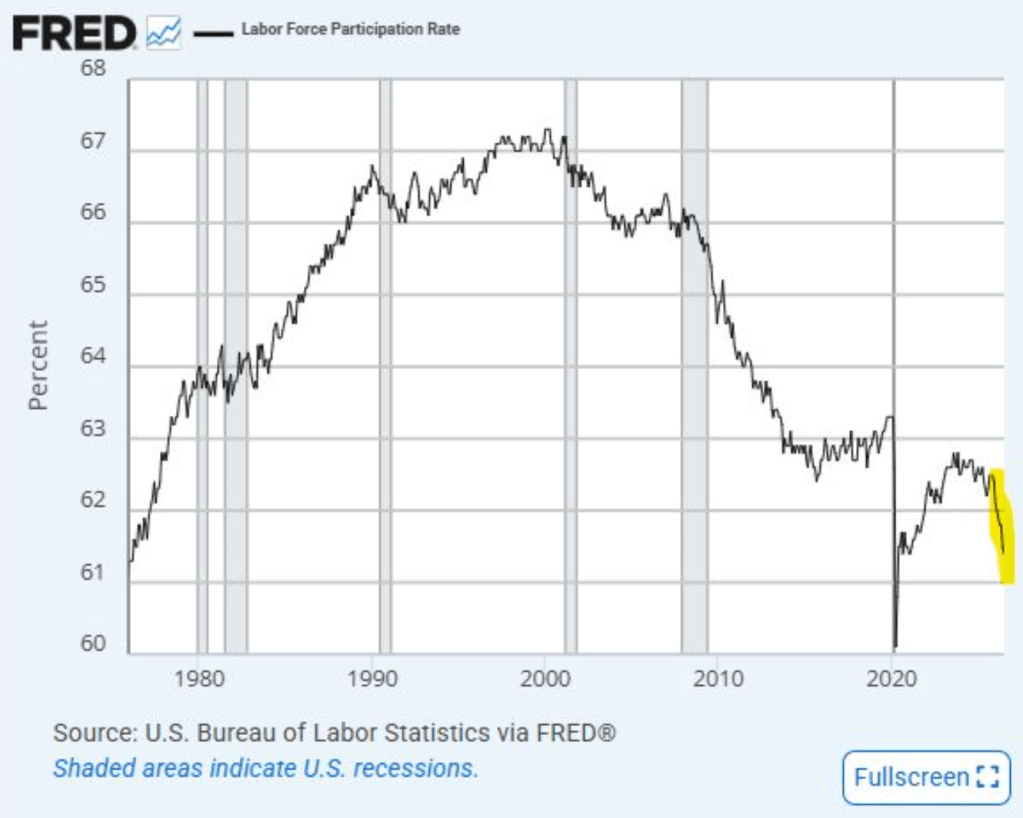
The article notes that the economic slowdown since the 1970s has shaped attitudes towards capitalism, with baby boomers being the most positive, Gen X being hurt by the 2008 crisis but recovering, and younger millennials and Gen Z being less confident in the system. The labor force participation rate has fallen, with the steepest declines concentrated among workers age 25 to 54, and the productivity boom that AI enthusiasm has assumed may not arrive on schedule.
The future is still canceled.
The system works not because the bars are strong, but because the prisoner can no longer picture the outside.
Author: Evan Null