Source: Fox News
Summary
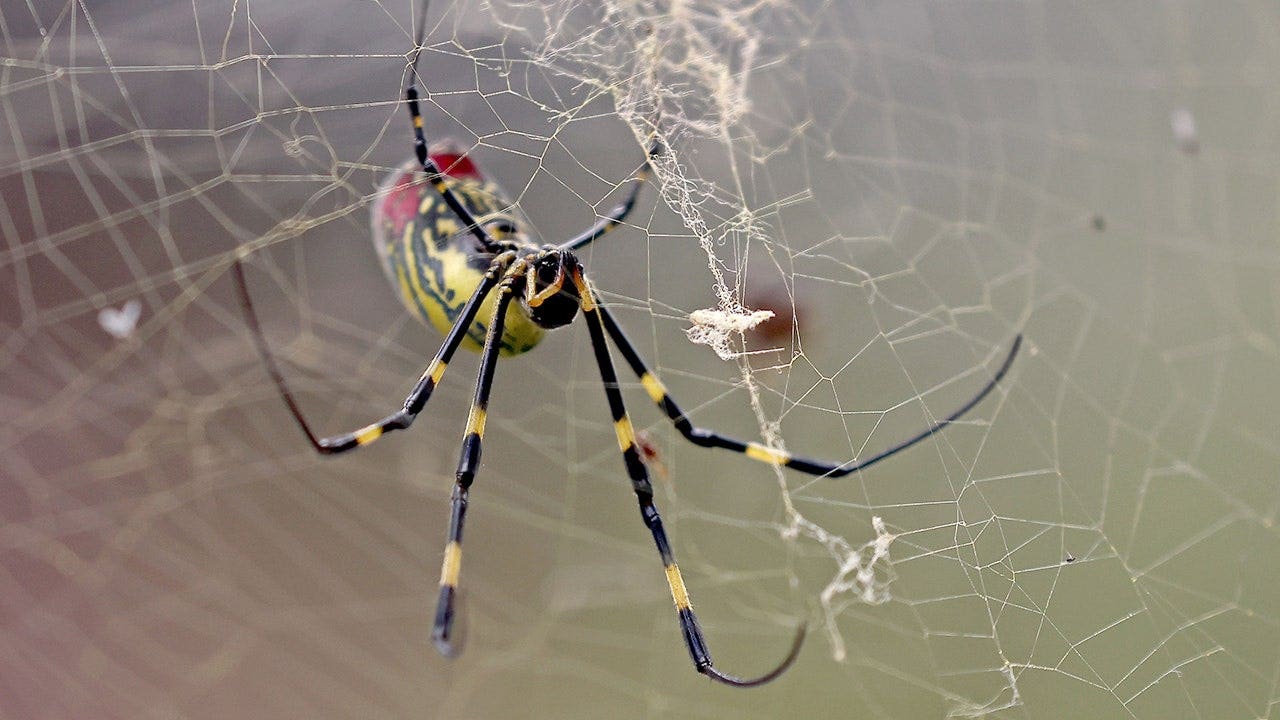
The Joro spider, a large, palm-sized arachnid with a leg span of up to 4 inches, has been spotted in the southeastern United States, including Georgia, North Carolina, South Carolina, and Tennessee. Experts say the spider, which has a distinctive golden web, is expected to spread throughout eastern North America. Despite its intimidating appearance, the Joro spider is considered “shy” and its venom is weak, comparable to a localized bee sting.
Our Reading
The advice sounds familiar. Experts agree that people shouldn’t panic about the Joro spider’s presence. Research shows that the spider is among the “shyest” spiders ever documented and its venom is weak. However, concerns remain about the spider’s potential impact on native species.
The Joro spider’s ability to spin massive golden webs across porches and power lines is a notable feature. Its use of “ballooning” to travel long distances has allowed it to spread rapidly. Experts recommend using a broom or long pole to knock down the spider’s web to prevent it from nesting on properties.
One of the big concerns is that the Joro spider may out-compete native species of spiders. Its impact is still being weighed by scientists. Meanwhile, physical removal of the spider’s web is considered more effective than pesticides.
As the Joro spider continues its northern migration, experts suggest logging sightings on apps like iNaturalist to help researchers track its movement. The spider’s arrival has sparked concern, but experts remain calm, noting that its venom is weak and its behavior is non-aggressive.
The Joro spider’s presence is a reminder that invasive species can have a significant impact on native ecosystems. As researchers continue to study the spider’s behavior and impact, one thing is clear: the Joro spider is here to stay.
Author: Evan Null