Source: Fortune
Summary
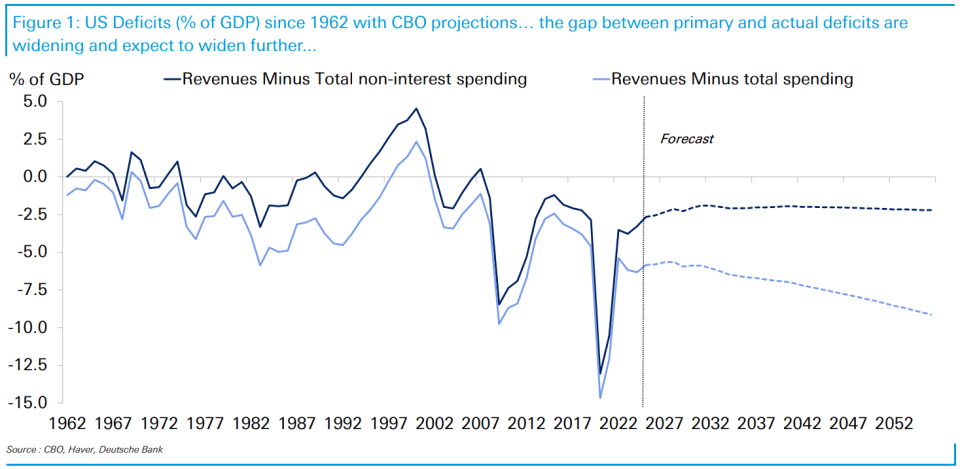
The US debt has surpassed the country’s GDP, with interest payments on past borrowing expected to drive future deficits. The Congressional Budget Office forecasts that interest costs will reach $2.1 trillion by 2036, with the debt-to-GDP ratio projected to balloon to 120%. The primary deficit is expected to remain stable, but the total deficit will widen due to interest payments. Analysts warn that the sheer size of the outstanding debt stock is becoming a significant driver of deficits, constraining fiscal policy. The Trump administration’s plans to boost the Pentagon’s budget and restock depleted munitions inventories may further exacerbate the issue.
Our Reading
The numbers tell one story.
Deutsche Bank analysts note that the US is entering a “Fiscal Dominance” regime, where interest expense is becoming a primary driver of the deficit. The Congressional Budget Office forecasts a steady widening of the total deficit, driven by interest payments. The Trump administration’s plans to boost the Pentagon’s budget and restock depleted munitions inventories may further exacerbate the issue. Historian Niall Ferguson’s “Law” suggests that a great power that spends more on debt servicing than on defense risks ceasing to be a great power. The US is already meeting the conditions for “Ferguson’s Law.” The future debt surge is not due to higher borrowing costs or an economic slowdown, but rather the sheer size of the outstanding debt stock.
The debt burden is drawing scarce resources towards itself, reducing the amount available for national security.
Author: Evan Null