Source: Fortune.com
Summary
Iran launched attacks on U.S. allies in the Gulf following a night of American bombardment, which Iranian state media claims included a strike on a wedding party. The conflict, now in its sixth month, has caused oil prices to rise and created political challenges for U.S. President Donald Trump. The U.S. military targeted Iranian military assets, including rocket launchers, while Iran retaliated with missile attacks on American bases in Jordan. Oil prices have surged over 30% since the conflict began, and both sides face growing pressure. A U.S. strike on a wedding in Kuhestak reportedly killed four and injured dozens, according to Iranian media.
Our Reading
The numbers tell one story.
Iran and the U.S. trade strikes, with oil prices climbing sharply.
Iran claims a U.S. strike killed four at a wedding, while the U.S. remains silent.
Trump says he’s in control of the Strait of Hormuz and Iran’s economy is collapsing.
The conflict shows no sign of ending, with both sides escalating tensions.
War is a numbers game, and neither side can afford to lose the next round.
Author: Evan Null
The struggle is focused on the Strait of Hormuz and oil prices
The latest flare-up in violence came as the standoff seemed to be shifting slightly more in the U.S. favor, with the price of oil hitting around $80 a barrel last month and Iranian leaders talking about growing economic hardships, said Sascha Bruchmann, an analyst with the International Institute for Strategic Studies’ Middle East office in Bahrain.
“The U.S. is trying to reinstall some kind of confidence into the global oil markets … and the Iranians had to respond to that by reinserting insecurity and doubt,” Bruchmann said.
Since the fighting resumed over the weekend, the price of Brent crude oil, the international standard, has climbed to around $95, up more than 30% from the start of the war.
U.S. Secretary of State Marco Rubio said Iran will “continue to feel the squeeze” from the United States until it drops any nuclear weapons ambitions and ends support for armed groups in the Middle East. Iran has always insisted its nuclear program is peaceful.
The war has caused oil prices to spike, with the U.S. trying to stabilize markets and Iran trying to disrupt them.
U.S. allies in the region fend off Iranian attacks
Following the strikes on Jordan, U.S. Gulf allies Kuwait and Bahrain said they had also come under attack, without reporting any casualties.
“You will soon see that Iran’s new strategy on the battlefield, in diplomacy, and in confronting the economic blockade will shatter your foundations,” the recently appointed head of Iran’s powerful Supreme National Security Council, Mohsen Rezaei, said on X.
In Iraq, where Iranian-backed forces are active, Kurdish authorities said they had intercepted 10 drones laden with explosives in the Irbil area. Iranian television reported that American bases in Irbil had been targeted.
Israel’s military also said that Iran-backed Hezbollah fired two explosive drones at its soldiers in southern Lebanon, without causing casualties.
The U.S. Central Command said Tuesday’s strikes focused on Iranian military targets, including air defense sites, radar systems and maritime assets.
Strike on wedding killed 4 and wounded dozens, state media says
One U.S. strike hit a home hosting a wedding in Kuhestak, a small coastal town overlooking the Strait of Hormuz, according to Iranian state media.
Four people were killed — two women and two children, aged 4 and 16 — and at least 68 were wounded, the state news agency IRNA and state TV said Wednesday. Just after the strike, Ahmad Nafisi, the province’s deputy governor, told Iranian state television that five people were killed. There was no explanation for the change.
Several heavy explosions shook Kuhestak, with fireballs that lit up the night sky, according to security camera footage carried by the semiofficial Fars news agency.
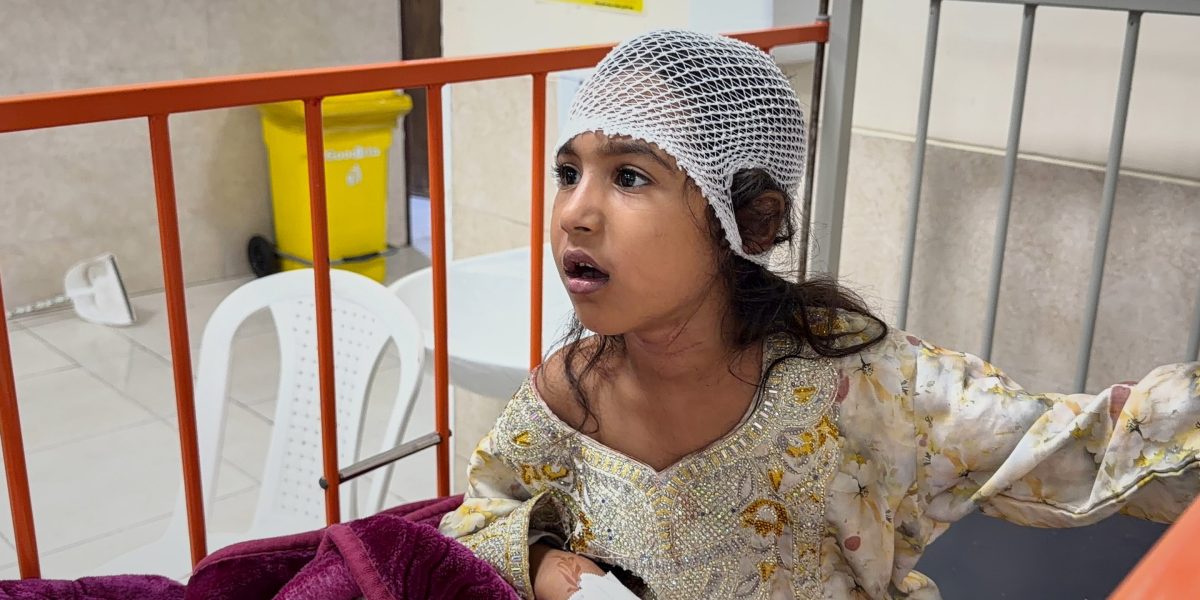
Images from Iran’s semiofficial Tasnim news agency showed several hospitalized children being treated for injuries at a hospital in the nearby town of Minab, where a U.S. missile strike on the opening day of the war hit a primary school, killing more than 100 children.
The strike on the wedding has intensified the conflict, with both sides blaming each other for civilian casualties.
Expert says fragments point to a U.S. weapon
A weapons expert told The Associated Press that images of fragments of ordnance that Iranian media said was used in the strike on Mallahi’s home, indicated it was an “American air-delivered guided weapon.”
N.R. Jenzen-Jones, director of Armament Research Services, initially identified the weapon as a SLAM-ER cruise missile, an air-launched missile that can be retargeted in flight by a human operator. But after examining further imagery, he said it was more likely to be a JSOW, a type of guided bomb, though he did not rule out a SLAM-ER and said multiple weapons may have hit the site.
U.S. Central Command declined to comment on the analyst’s findings. Spokesperson Capt. Tim Hawkins said earlier that the U.S. military was “aware of the reports, which originated from Iranian state media, and we are looking into them.” He would not say if CENTCOM had launched a formal investigation.
“Make no mistake: These crimes will not go unpunished,” Ebrahim Azizi, chairperson of the Iranian parliament’s National Security and Foreign Policy Committee, said on X.
Experts suggest the U.S. is using advanced weapons, but the military remains silent on specific details.
The Strait of Hormuz remains largely shut down
During last month’s lull in fighting, the U.S. ramped up economic pressure on Iran as Washington sought to fully open the Strait of Hormuz.
About a fifth of the world’s traded oil was shipped through the key waterway before Israel and the U.S. attacked Iran on Feb. 28 and Iran largely shut it down in response. Despite many pronouncements from Washington that the strait is open, only a handful of ships are making the passage each day and Iran has regularly attacked vessels.
On Wednesday, Saudi shipping company Bahri said two Filipino sailors were killed in an attack late Monday as their vessel transited the strait.
A ceasefire deal reached in June quickly fell apart amid exchanges of strikes that same month. Mediator Pakistan has been working to restart talks.
Trump said he would not force Iran to the bargaining table, claiming he’s in control of the Strait of Hormuz and Iran’s economy is collapsing.