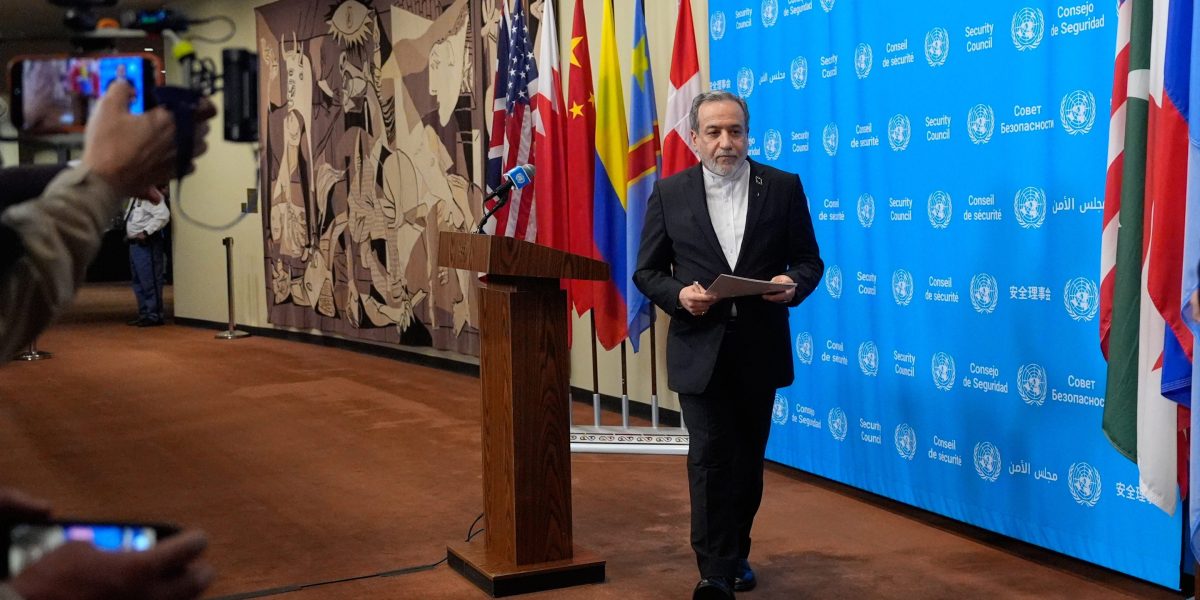
Source: Fortune.com
Summary
Iranian President Masoud Pezeshkian and Foreign Minister Abbas Araghchi proposed a deal with the U.S. to open the Strait of Hormuz, contingent on ending the military blockade, releasing frozen assets, and waiving sanctions on oil sales. The U.S. held indirect talks with Iran, described as “good” by Secretary of State Marco Rubio, but President Donald Trump threatened to “annihilate” Iran. Iran’s proposal mirrored previous failed agreements, and the U.S. remained noncommittal. Analysts suggested Iran’s urgency stemmed from the upcoming U.S. midterm elections.
Our Reading
The numbers tell one story.
Iran offered a deal to open the Strait of Hormuz, a move that could ease global markets and U.S. military strain.
The U.S. held indirect talks with Iran, but Trump threatened to annihilate the Islamic Republic.
Iran’s proposal repeated conditions from a failed June agreement, suggesting little progress.
Trump’s “Trump Strait” social media post highlighted his personal branding, even as Iran’s envoy said diplomacy remained open.
Author: Evan Null
Iranian Diplomacy and the U.S. Response
Iranian President Masoud Pezeshkian and Foreign Minister Abbas Araghchi engaged in diplomatic efforts during the U.N. gathering in New York, proposing a deal to open the Strait of Hormuz. The proposal included conditions such as lifting the U.S. naval blockade of Iranian ports and waiving sanctions on oil sales. These conditions were not new, as they had been part of a previous agreement that collapsed in June. Despite the lack of novelty, the timeline for a potential deal was accelerated, possibly to influence the U.S. midterm elections.
The U.S. held three hours of indirect talks with Iran, described as “good” by Secretary of State Marco Rubio. However, President Donald Trump used his U.N. speech to threaten to “annihilate” Iran, highlighting the ongoing tension. Meanwhile, Pezeshkian expressed openness to diplomacy, even as he warned of continued resistance. The U.S. stance remained firm, with no immediate indication of a shift in policy.
Iran’s proposal focused on the Strait of Hormuz, a critical waterway that Iran claimed control of after being attacked by the U.S. and Israel. Opening the strait would ease global markets and reduce the risk for U.S. military operations. For Iran, lifting the naval blockade and sanctions would allow for increased oil exports, helping its struggling economy. Despite these potential benefits, the U.S. remained noncommittal, with no clear path forward.
Analysts suggested that Iran’s urgency in seeking a deal was tied to the U.S. midterm elections, with Trump possibly seeing political advantages in an agreement. However, his rejection of the deal risked a return to conflict, which could drive up oil prices. The situation reflected a delicate balance, with both sides trying to outlast economic pressures while avoiding further escalation.
Iran’s security forces warned of further actions, indicating that the country was not ready to back down. Meanwhile, the U.S. continued to apply pressure through sanctions, aiming to weaken Iran’s economy. The outcome of these efforts remains uncertain, with both sides navigating a complex and volatile situation.