Source: Fortune
Summary
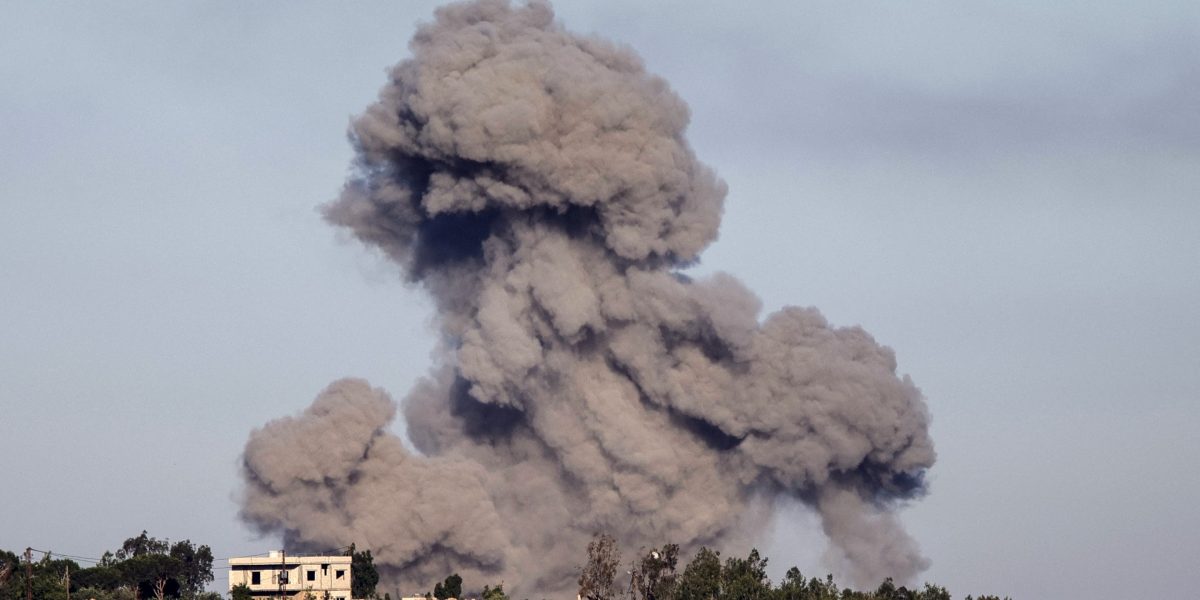
Israel has expanded its ground assault in Lebanon, crossing the Litani River and nearing the city of Nabatieh, a stronghold of Hezbollah. The escalation comes as the US and Iran negotiate a potential agreement that could pave the way for a permanent ceasefire. Israel’s Prime Minister Benjamin Netanyahu has instructed the IDF to deepen and expand its hold on places under Hezbollah’s control, capturing the Beaufort ridge and establishing security zones in Syria, Gaza, and Lebanon. The move has been condemned by French President Emmanuel Macron, who called for a ceasefire. The conflict has resulted in thousands of displaced residents, hundreds of deaths, and a dire humanitarian situation.
Our Reading
The numbers tell one story. Israel’s expansion into Lebanon marks a significant escalation in the conflict, with the IDF capturing key territories and establishing a permanent presence in the region. The move is seen as a dramatic change in policy, with Netanyahu aiming to uproot Hezbollah from Lebanon’s south. The US-hosted talks between Lebanese officials and Israel aim to end hostilities, but Lebanon demands a complete truce, while Israel wants a guarantee that Hezbollah is completely uprooted. The situation remains tense, with Iran demanding an end to the conflict in Lebanon as part of its peace deal with the US.
Netanyahu’s instruction to expand the incursion in Lebanon is a clear signal that the conflict is far from over. The fact that the US is hosting talks between Lebanese officials and Israel while also negotiating with Iran highlights the complex web of interests at play. The humanitarian situation in Lebanon continues to deteriorate, with thousands displaced and hundreds killed. The situation is a powder keg, with the potential for further escalation and violence.
Hezbollah’s rejection of the negotiations and its continued attacks on Israel’s north have only added to the tensions. The fact that the US is proposing changes to the memorandum of understanding with Iran while also sending mixed signals on the prospects for a deal highlights the challenges ahead.
Israel’s expanded control over Gaza, with plans to occupy 70% of the land, will only add to the tensions. The fact that Netanyahu did not give a time frame for the expanded land seizure raises questions about the Israeli military’s ability to sustain a multi-front conflict.
One thing is clear: the conflict in Lebanon is a symptom of a larger regional struggle, with Iran, Israel, and the US vying for influence. The situation demands a nuanced understanding of the complex web of interests at play.
The conflict is a stark reminder that, in the Middle East, the line between war and peace is often blurred. As the situation continues to unfold, one thing is certain: the humanitarian cost will only continue to rise.