Source: BroBible
Summary
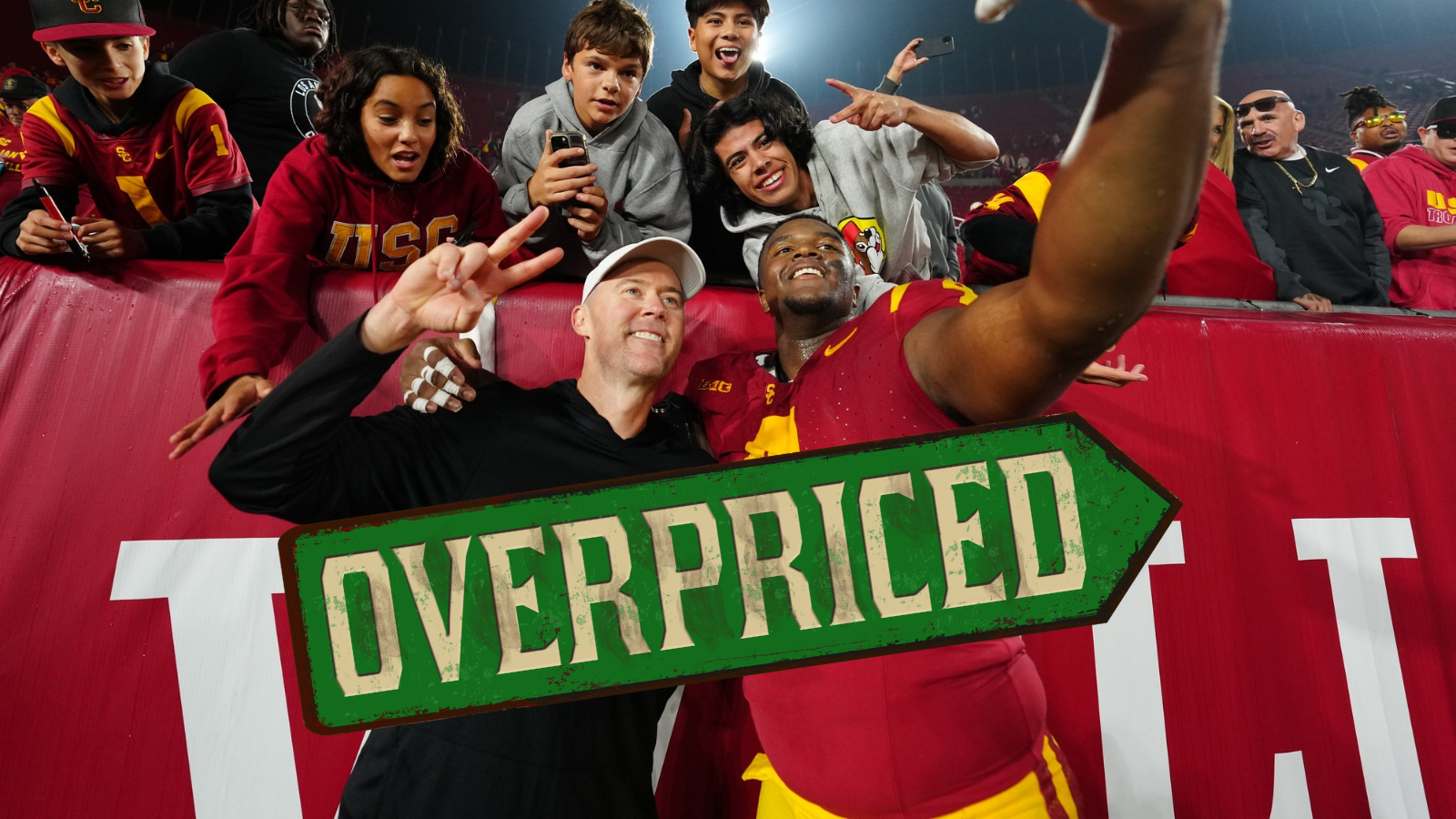
Jahkeem Stewart, a USC defensive lineman, has been accused of swindling the Trojans by not meeting expectations despite a $2 million annual NIL deal. His agent disputed the claims, citing his Freshman All-America honors while playing on a broken foot. LSU media member Matt Moscona suggested USC overpaid, prompting a response from Stewart’s representation. The debate highlights tensions in college football’s NIL landscape, where high-profile recruits face scrutiny over performance and value.
Our Reading
The habit gets a new name.
Players are now called “swindlers” for not meeting expectations.
Agencies push back with stats and injuries as excuses.
Coaches and media trade jabs over money and talent.
It’s just another day in the NIL circus.
Author: Evan Null
Jahkeem Stewart’s NIL Deal
Jahkeem Stewart chose USC over LSU, with NIL deals playing a major role. LSU offered $1.25 million per season, while USC offered $2 million. Stewart committed to USC in January 2024 and signed on Signing Day.
He reclassified to enroll early at USC, skipping his senior year of high school. Then-LSU coach Brian Kelly claimed money was the main reason for Stewart’s decision.
Stewart earned Freshman All-America honors last year, despite playing on a broken foot. His agent argued he was more than worth the investment.
LSU media member Matt Moscona suggested USC overpaid, leading to a rebuttal from Stewart’s agency. The agent called the claims “spin” and “bs.”
The debate reflects the growing influence of NIL deals and the challenges schools face in managing high-value recruits.
LSU’s Perspective
LSU media personality Matt Moscona questioned whether USC got its money’s worth from Stewart. He suggested the Trojans overpaid for a player whose production didn’t match the investment.
Moscona’s comments came after LSU lost several top recruits, including Stewart and Bryce Underwood, to schools offering better NIL deals. He criticized the trend of players prioritizing money over loyalty.
LSU reportedly offered Stewart $1.25 million per season, but he chose USC’s $2 million deal. The Tigers opted not to match the offer, leading to the current controversy.
Moscona’s comments were part of a broader discussion about the impact of NIL on college football recruitment and team-building strategies.
The situation highlights the financial pressures on schools and the difficult decisions they must make when competing for top talent.
USC’s Investment
USC invested heavily in Jahkeem Stewart, offering a $2 million annual NIL deal. The school hoped the five-star recruit would make an immediate impact on the defensive line.
Stewart’s performance has been underwhelming so far, with only five tackles this season. Critics argue he hasn’t justified the financial commitment.
His agent, however, defended the deal, pointing to his Freshman All-America honors and the challenges he faced, including a broken foot.
The agency also criticized Moscona for spreading what they called “spin” and “bs” to the fanbase.
USC remains hopeful that Stewart will improve and deliver on the investment, but the pressure is mounting.
The NIL Era
The rise of NIL deals has changed the landscape of college football. Schools now compete not just on talent, but on financial incentives.
Recruits like Stewart are now evaluated not just on their skills, but on how much money they can bring in. This has led to increased scrutiny and public debates over value and performance.
Programs must balance their budgets while trying to attract top-tier talent. Some schools, like LSU, have chosen to pass on high-profile recruits if the financial cost is too high.
Others, like USC, are willing to pay the price in hopes of long-term success. The results, however, are not always immediate.
The NIL era has created a new set of challenges for coaches, administrators, and fans alike.
Future Implications
The controversy surrounding Jahkeem Stewart could set a precedent for how schools evaluate and manage NIL deals in the future.
If players continue to be criticized for not meeting expectations, it may lead to more scrutiny and pressure on recruits to perform at a high level.
At the same time, agencies will likely continue to defend their clients, using stats, injuries, and other factors to justify the deals.
The debate also raises questions about the long-term impact of NIL on college football. Will it lead to more competitive balance, or will it create a divide between schools that can afford to pay and those that can’t?
As the NIL era continues to evolve, the focus will remain on how schools and players navigate this new financial landscape.