Source: Fortune
Summary
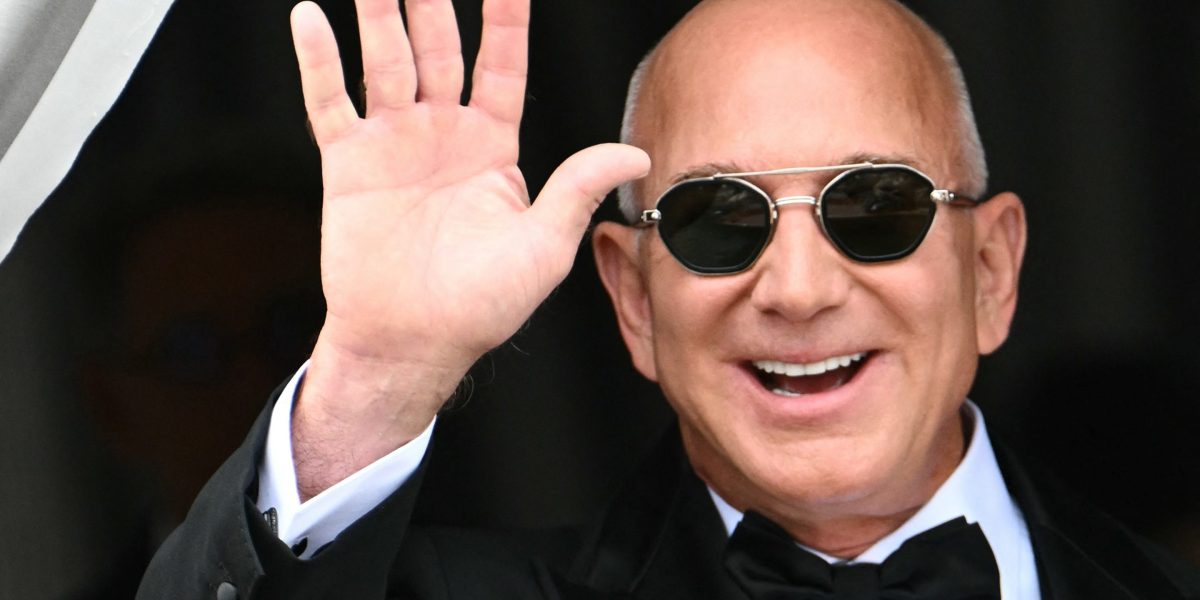
Jeff Bezos, founder of Amazon and owner of Blue Origin, has proposed that the bottom half of U.S. earners should pay no income tax. He argues that working Americans shouldn’t be placed under increased financial pressure, considering they contribute a relatively small share of total tax revenue. Bezos cited a hypothetical health care worker as an example, stating that it’s “absurd” for a nurse in Queens making $75,000 a year to pay over $1,000 a month in taxes. He plans to advocate for the idea with political leaders, arguing that exempting lower earners from federal income taxes would represent only “a small amount of money for the government.” Bezos also discussed his own tax history, which has drawn scrutiny, and his commitment to giving away most of his wealth in his lifetime.
Our Reading
The numbers tell one story. Bezos’s concern for affordability may come as a surprise considering his estimated net worth of $280 billion. He argues that doubling his tax bill wouldn’t help the teacher in Queens. Bezos plans to give away most of his wealth in his lifetime, but his ex-wife MacKenzie Scott already has a head start, having donated over $26 billion since 2020. Bezos’s proposal to cut taxes for bottom earners may be seen as a way to alleviate financial pressure, but it also raises questions about the fairness of the tax system and the role of philanthropy in addressing income inequality.
Bezos’s statement that “we can argue about what the fair share is” may be seen as a nod to the ongoing debate about income inequality and the role of taxes in addressing it. His comparison of Amazon’s efficiency to the New York City public school system may be seen as a critique of government inefficiency. Ultimately, Bezos’s proposal and philanthropic efforts may be seen as a way to shape the conversation around income inequality and the role of business leaders in addressing it.
Author: Evan Null