
Jesse Jackson’s Life Shaped by Segregated Childhood
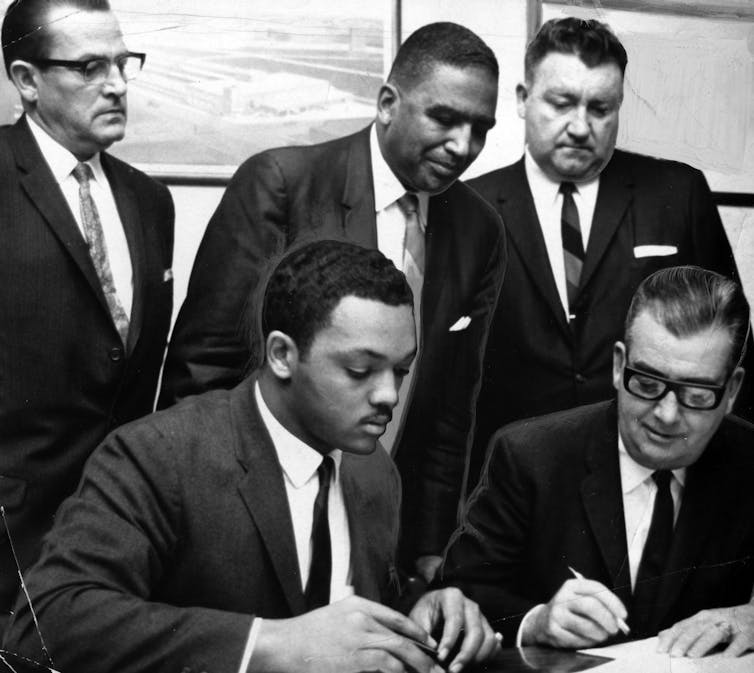
Source: Fortune
Summary
Jesse Jackson’s life was shaped by his segregated childhood in South Carolina. He grew up in a time when water fountains, bathrooms, and lunch counters were all separated by race. Jackson’s experience with segregation influenced his civil rights activism and historic runs for the U.S. presidency. He attended North Carolina Agricultural and Technical State University, a historically Black college, and emerged as a leader in the Civil Rights Movement. Jackson’s presidential campaigns in 1984 and 1988 helped alter the U.S. political landscape, and his background reinforced the importance of the Black church in Black political mobilization.
Our Reading
The numbers tell one story. Jesse Jackson’s life was a testament to the power of resilience and determination. Born in segregated South Carolina, he went on to become a prominent civil rights leader and presidential candidate. His experiences shaped his views on social and economic justice, and his presidential campaigns helped drive conservative Southern whites to the GOP. Jackson’s legacy continues to inspire a new generation of African Americans to seek office.
He crossed the Edmund Pettus bridge in Selma, Alabama, to commemorate the 60th anniversary of “Bloody Sunday” in a wheelchair. Jackson’s Southern identity was essential to understanding his life. He led protests to integrate Greensboro businesses and was arrested and charged with inciting a riot. Jackson’s two presidential runs fundamentally altered the U.S. political landscape.
Jackson finished third in the 1984 Democratic primary but with a remarkably strong showing, taking 18% of all primary votes. He performed especially well south of the Mason-Dixon Line, winning both Louisiana and the District of Columbia. Jackson’s strong results solidified his position as a major figure in American politics and a power broker in the Democratic Party.
His focus on social and economic justice undoubtedly helped drive conservative Southern whites to the GOP. Jackson’s background reinforced the importance of the Black church in Black political mobilization.
Jackson’s life and career reflect that place still matters – even for people who have left that region for colder pastures. He died on Feb. 17, 2026, at age 84.
Jackson’s legacy is a reminder that the past continues to shape our present and future.
