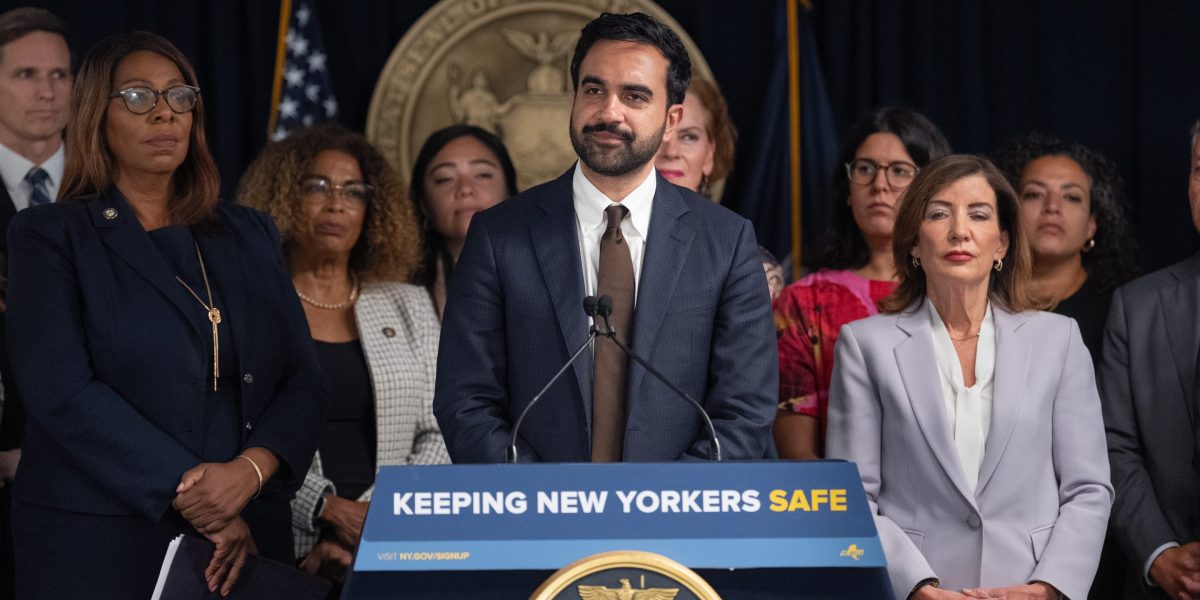
Source: Fortune
Summary
A New York City judge ruled that the city must cancel tax notices sent to property owners under the new pied-à-terre surcharge and restart the process. The decision was based on the city’s failure to review all available information before sending notices. The mayor’s office called the ruling “wrong” and said it would appeal. The tax, which targets high-value properties not used as primary residences, was expected to generate $500 million annually. The city plans to file an appeal, and the case could continue for months.
Our Reading
The numbers tell one story.
The city’s tax rollout failed basic due process.
The mayor’s office insists it’s still on track.
The tax is now in legal limbo.
The judge’s ruling highlights a gap between policy and practice.
Author: Evan Null
Background on the Tax
The pied-à-terre tax was introduced by Mayor Zohran Mamdani as part of his promise to target the wealthy. It applies to properties valued at $5 million or more for single-family homes and $1 million for condos or co-ops. The tax is meant to fund city services, but its implementation has faced immediate legal challenges. The city had sent notices to about 17,000 property owners, many of whom were later found to have primary residences.
Legal Challenges
Randy Mastro, a former deputy mayor, filed a lawsuit against the city, arguing that the Department of Finance failed to follow proper procedures. The suit did not challenge the tax itself but the way it was implemented. Mastro claimed the city skipped individual property determinations and instead forced homeowners to prove they weren’t liable. The judge agreed, ordering the city to restart the process.
Political Reactions
The mayor’s office called the ruling “wrong” and vowed to continue implementing the tax. A spokesperson emphasized that the city would follow the law and continue the surcharge. Governor Kathy Hochul’s office also supported the tax, saying the wealthy should pay their fair share. However, the city has the right to appeal the decision, and the case could go through multiple legal steps.
Future of the Tax
The city is expected to file an appeal, which could delay the tax’s implementation for months. The judge’s ruling does not address the legality of the tax itself, only the process used to notify property owners. Meanwhile, other legal challenges are emerging, including one from former Commerce Secretary Wilbur Ross, who is suing the state over the tax’s constitutionality. The outcome remains uncertain.
Corporate Language and Legal Maneuvers
The mayor’s office used familiar language, calling the tax a matter of “fairness” and “fighting for working New Yorkers.” The city’s response to the ruling followed a standard playbook—denying the decision, vowing to appeal, and emphasizing compliance with the law. Meanwhile, opponents like Mastro and Ross continue to challenge the tax, using legal avenues to push back against what they see as an overreach. The case highlights the tension between policy goals and legal requirements.