Source: Fox News
Summary
French President Emmanuel Macron continued with a trip to the Arabian Gulf amid violent riots in France, drawing criticism for his leadership. The unrest, initially student-led, expanded to include various political and ideological groups. Macron condemned the violence in a national address and defended his travel for energy negotiations. Over 2,500 people have been arrested. Critics from both the left and right accused Macron of failing to manage the crisis. The riots occurred as France’s presidential election approaches, with political figures like Marine Le Pen and Jean-Luc Mélenchon seizing on public discontent.
Our Reading
As expected, the matter has reached another stage.
Macron left for the Gulf as riots raged in France.
He called the violence unbridled and blamed fuel prices.
Opposition leaders accused him of inaction and brutality.
His trip and concert attendance felt like a performance of normalcy.
Author: Evan Null
Macron’s Trip and the Riots
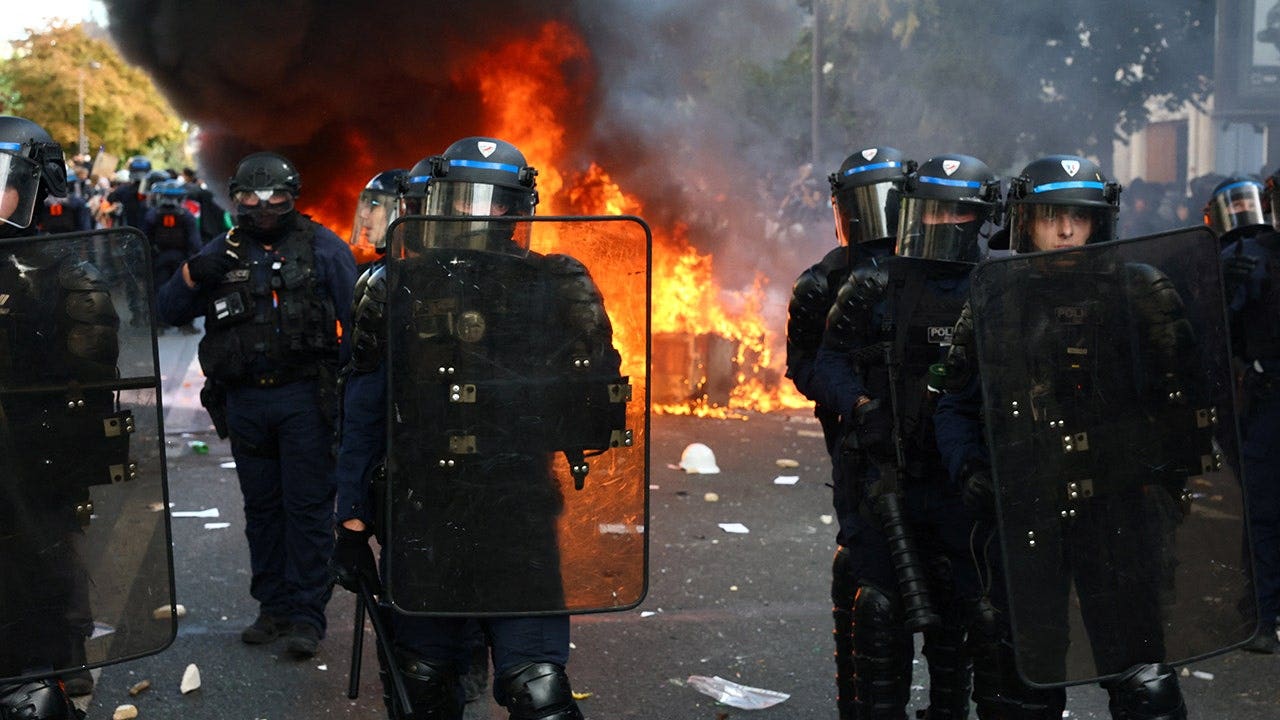
French President Emmanuel Macron pressed ahead with a trip to the Arabian Gulf as violent riots broke out in France. The unrest, which began as student-led demonstrations, expanded into widespread riots involving various political and ideological groups. Macron denounced the violence in a national address and defended his travel for energy negotiations. His government has arrested over 2,500 people in connection with the demonstrations.
Criticism from Both Sides
Macron faced criticism from both the left and the right for his handling of the riots. Marine Le Pen, a right-wing presidential contender, accused him of leading a country “caught in a vice between violence and impotence.” From the left, socialist candidate Jean-Luc Mélenchon criticized the government for relying on “inaction and police brutality” to quell the unrest. Macron refused to accept the resignation of his interior minister despite acknowledging security failures.
Political Context and Election
The riots occurred as France’s presidential election looms. Macron is term-limited, and his centrist allies face an increasingly difficult political environment. Figures like Le Pen and Mélenchon are seeking to capitalize on growing public discontent. Political observers suggest the riots could benefit Le Pen, a staunch critic of immigration, at the polls.
International Reactions
The unrest in France struck a particular chord with American conservatives, who saw it as emblematic of a broader decline in European social cohesion. Simon Hankinson, a former U.S. consul in Marseille, called the riots a “warning sign for the United States.” Conservative commentator Ben Shapiro blamed the demonstrations on “an out-of-control welfare state, left-wing radicalism and third world immigration.” Vice President JD Vance echoed similar sentiments on X.
Domestic and International Impact
Violence in the streets of France reportedly cooled after officials implemented overnight curfews in Paris and other major cities. However, the riots caused over $1 billion in estimated damages, including the destruction of small businesses and historic buildings. Some American liberals, including California Democratic Rep. Ro Khanna, pointed to economic grievances as a driving force behind the unrest, though Khanna condemned the violence and vandalism that accompanied the demonstrations.