Source: BroBible
Summary
An enormous alligator was spotted on a golf course in South Carolina, according to a viral TikTok video. The footage, shared by @wildinlowcountry, shows the gator walking and swimming on the course. National Geographic notes that American alligators can grow up to 15 feet and weigh 1,000 pounds. While alligator attacks on humans are rare, the South Carolina Department of Natural Resources advises avoiding contact and reporting large gators in public areas.
Our Reading
The habit gets a new name.
Golfers now have a new fear: gators in the rough.
People are pretending they didn’t know dinosaurs still exist.
Feeding them is out. Taking selfies is in.
Somehow, this is just another day in the South.
Holy Heck, What’s Going On With This Gator?
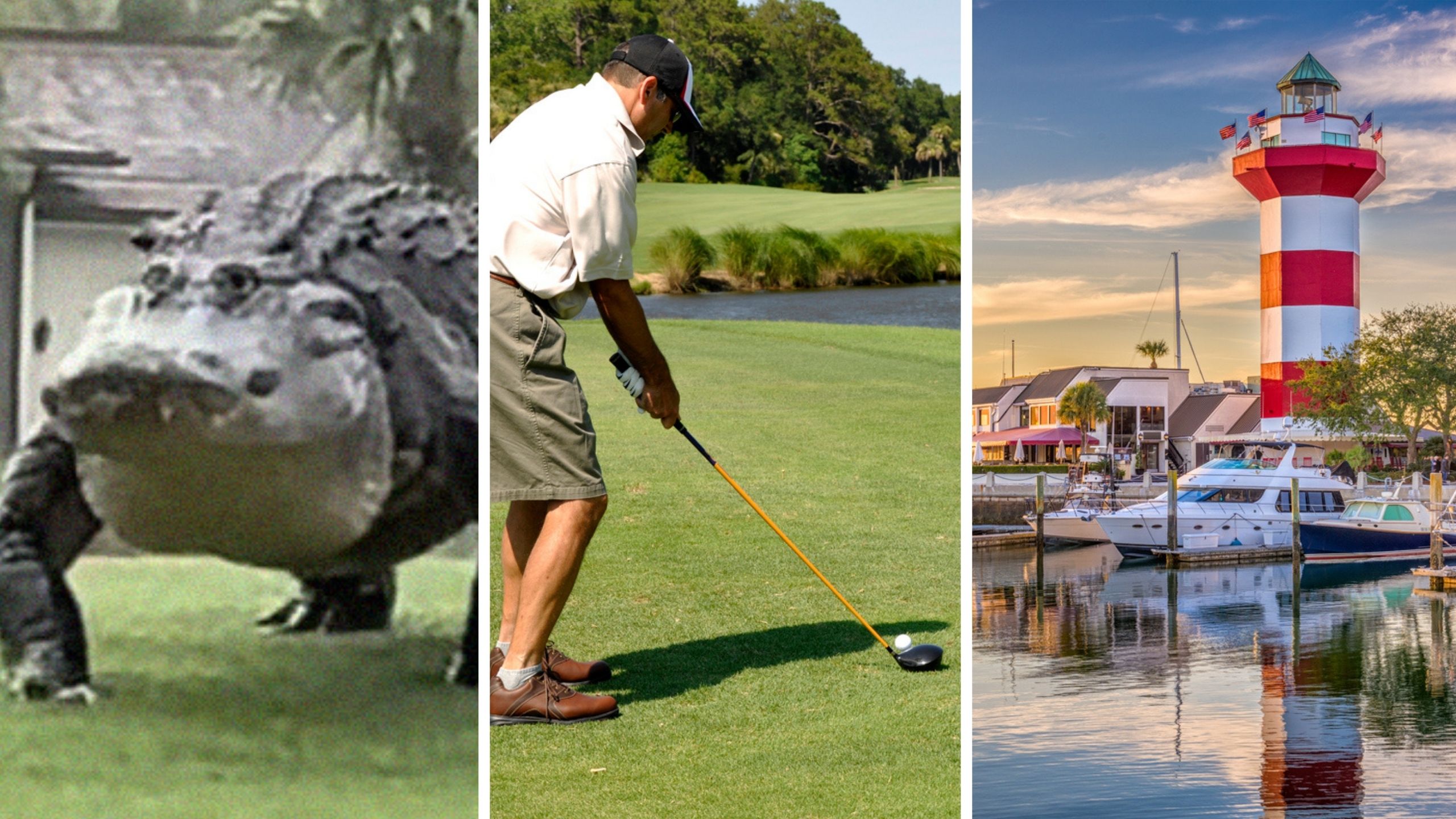
In a video with over 6 million views, TikTok user @wildinlowcountry shows a massive alligator casually strolling across a golf course. The video was reportedly taken on a Hilton Head golf course, though it’s unclear which one.
The video shows the gator effectively taking control of the course. He swims in the water; he walks around—in short, he’s clearly in charge, and if you were to accidentally hit a ball his way, you can safely kiss that sucker goodbye.
Commenters agreed that this creature was both remarkable and terrifying.
“WHY does nobody gaf??? is this an everyday thing??” a commenter asked.
“I thought this was ai. Omg,” another declared.
Are Alligators Usually This Big?
Unbelievably, they can be.
The American Alligator is a beast in pretty much every sense of the word. According to National Geographic, male gators can be between 10 and 15 feet and weigh around 1,000 pounds. That said, these are just rough limits. There are reports of alligators weighing significantly more than 1,000 pounds, and there’s at least one confirmed case of an alligator reaching nearly 16 feet.
Most of the time, if you see a creature like this in the United States, it’s the American Alligator. That said, the U.S., Mexico, and large parts of Central and South America are home to another, similar beast: the American Crocodile.
While they are easily confused, the American Crocodile is significantly different from the American Alligator. Notably, it can actually grow to be even bigger in size. There are recorded instances of American Crocodiles reaching 20 feet in length, or just over 6 meters.
Is It Safe To Play Golf Around An Alligator?
For those who grew up in the South, hearing the question “should you be afraid of alligators” sounds almost like “should you be afraid of thunderstorms.” Of course, they can be dangerous, but there’s nothing you can really do about them. In certain places, you’re just going to see gators—it’s just a fact of life.
Unsurprisingly, then, those who live around gators know how to deal with them. Consequently, alligator attacks on humans are exceedingly rare.
For example, since 1948, there have been only around 500 alligator attacks in the state of Florida. This is a state that is estimated to have about 1.3 million alligators.
Not only that, but studies have indicated that alligators rarely attack unprompted. Instead, a 2025 University of Florida and Centre College in Kentucky study found that the vast majority of alligator attacks in the state were caused by humans.
Gator-Proof Your Golf Trip
According to the South Carolina Department of Natural Resources, there are a few things you can do to ensure your safety around alligators.
First, you should stay out of their territory. This means not swimming near them, not playing near them, and certainly not feeding them.
Second, if you see an alligator, you should not approach it. While it may be tempting to run up with your phone and snap a few pictures, the best thing to do is simply hang back and wait for the alligator to exit.
Finally, if you see an alligator but it is “in a place where it cannot reasonably be expected to get back to the water without posing a risk to itself or to others, or is in a location that presents an immediate hazard, such as a road, school, pool, parking lot, etc.,” you should reach out to your local Department of Natural Resources.
Author: Evan Null