Source: Fox News
Summary
Sen. Jim Justice, R-W.Va., successfully passed a bill to place a monument honoring Medal of Honor recipient Hershel “Woody” Williams on the National Mall. The legislation, which was approved unanimously by the Senate in March and by the House in August, now awaits a signature from President Trump. Justice described the process as difficult due to partisan divisions but credited dialogue with Sen. Martin Heinrich, D-N.M., for helping secure support. The bill, Justice’s first as a senator, aims to honor Williams and all Medal of Honor recipients.
Our Reading
As expected, the matter has reached another stage.
Justice talks about the fight, then talks about the fight some more.
Heinrich listens, then nods, then says nothing.
They both know it’s not about the monument.
It’s about the ritual of pretending to agree.
Author: Evan Null
Monument to a Man, Not a Movement
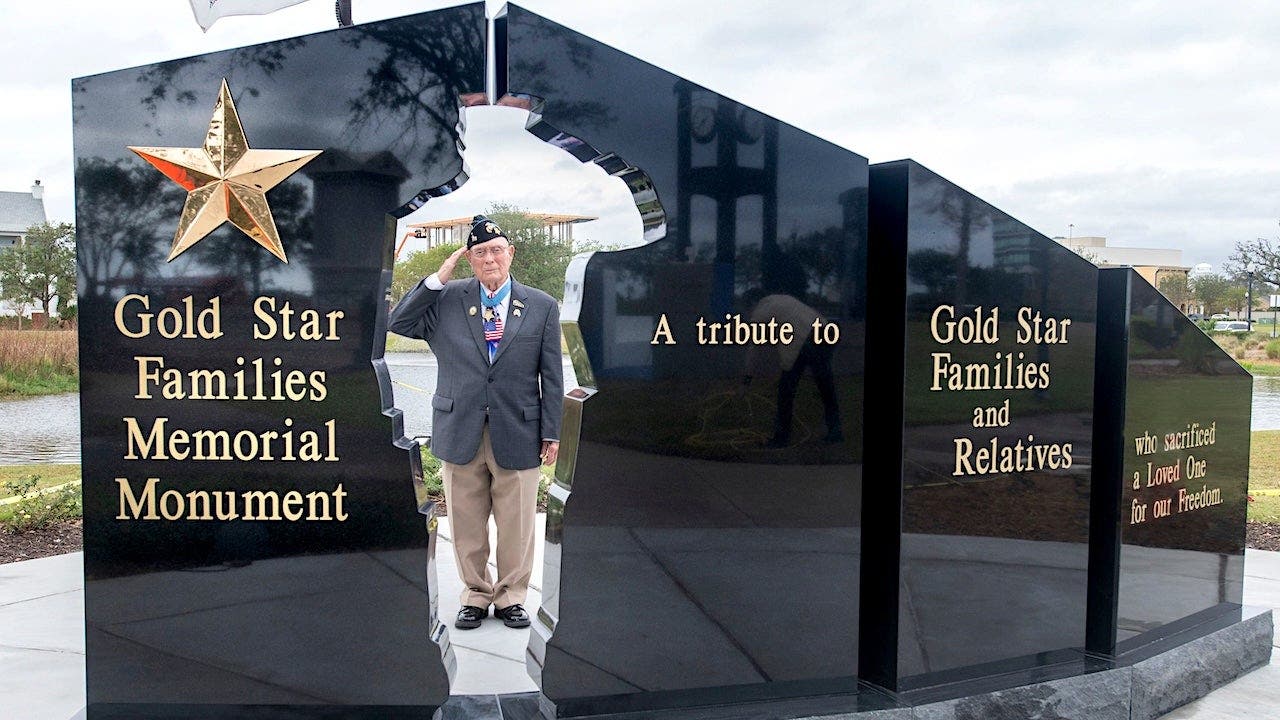
The bill honors Hershel “Woody” Williams, a World War II hero who died in 2022. His actions on Iwo Jima earned him the Medal of Honor. The monument will be placed on the National Mall, a place of national significance. Justice, a Republican, worked with a Democrat, Martin Heinrich, to get the bill passed. The legislation was approved unanimously by the Senate and the House. It is now waiting for a presidential signature.
Partisan Gridlock and a Single Bill
Justice criticized the Senate for its “romper-room behavior” and “childishness.” He said the process of passing the bill was not smooth. The measure faced opposition because it was introduced by a Republican. Justice said he had to push hard to get it through. He described the breakthrough as happening in a moment of direct conversation with Heinrich. The bill moved quickly after that.
Dialogue as a Political Tool
Justice said he and Heinrich had a personal relationship. They met on the Senate Energy and Natural Resources Committee. Justice also mentioned his bulldog, Babydog, as part of their connection. He described the moment before going to the Senate floor as a turning point. He said he appealed to Heinrich to find a way forward. Heinrich responded with a blunt explanation about the lack of communication in the Senate.
Symbolism and Legacy
The monument is not just for Williams but for all Medal of Honor recipients. Justice said it was long overdue. He described Williams as a man who was “all about us,” not himself. The senator said he would show his future descendants the monument and tell them he had something to do with it. The bill represents more than a single person; it is about honoring service and sacrifice.
Expectations and Realities
Justice said he does not expect the Senate’s structural issues to be fixed easily. He pointed to the 60-vote threshold for overcoming a filibuster. He also criticized lawmakers for prioritizing fundraising over actual work. Justice said the monument fight was important because Williams embodied the opposite of self-interest. He said the symbolism of the monument extends beyond Williams and into future generations.