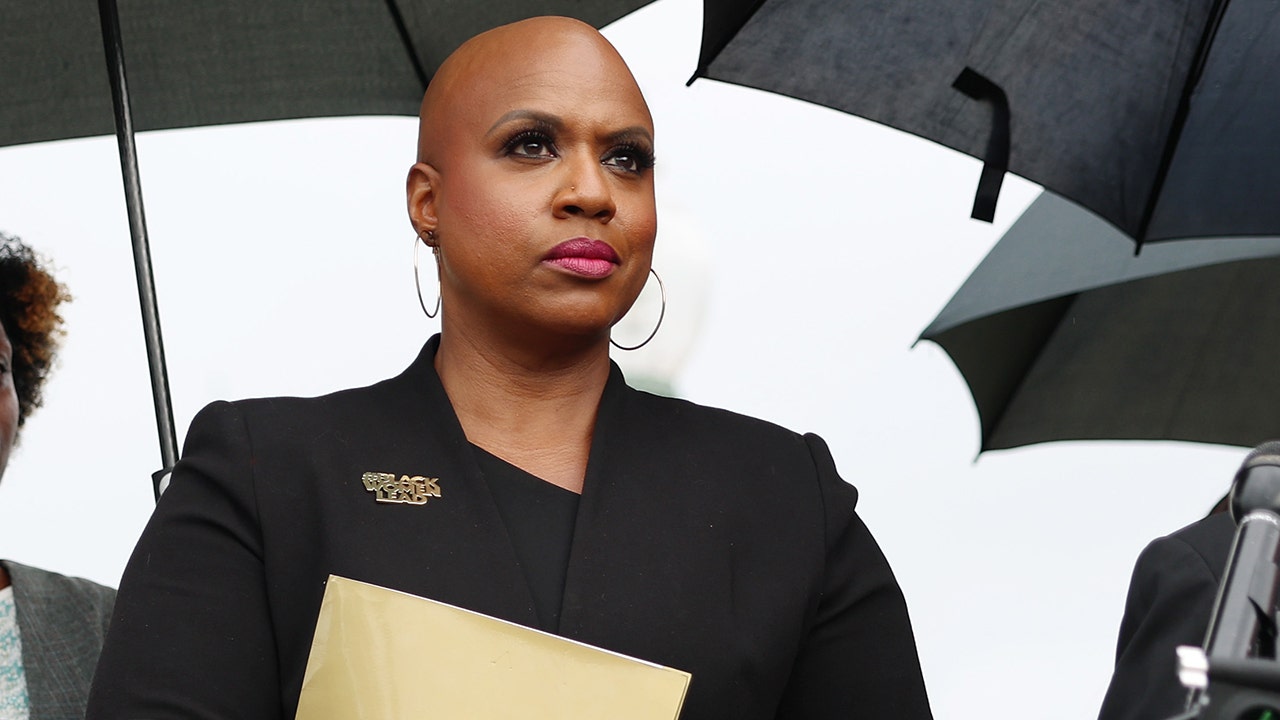
Source: Fox News
Summary
Rep. Ayanna Pressley, D-Mass., has been named the Democratic nominee for Massachusetts’ 7th Congressional District after no primary challengers. The district, considered Solid Democrat, includes most of Boston. Pressley, a member of the “Squad,” faces no Republican opponent in November. She has joined other Democratic candidates on the campaign trail, including state Rep. Tram Nguyen and Sen. Ed Markey. Pressley has criticized President Donald Trump and the Supreme Court, particularly after the Louisiana v. Callais ruling. She has also faced scrutiny over her financial disclosures and her husband’s business dealings.
Our Reading
As expected, the matter has reached another stage.
Pressley stands alone on the ballot, no opposition, no challenge.
She speaks of White supremacy, of evictions as violence, of a nation still shackled.
Her husband owns rental properties, her district remains safely blue.
It is a ritual of certainty, a performance of conviction in a stage of no competition.
Author: Evan Null
Pressley’s Nomination and the Absence of Competition
Rep. Ayanna Pressley has officially become the Democratic nominee for Massachusetts’ 7th Congressional District after no primary challengers emerged. The district, which covers most of Boston, is considered a safe Democratic seat. Pressley, a member of the “Squad,” is running unopposed in the general election, with no Republican candidate on the ballot. This pattern of no competition is common in strongly Democratic districts, where the outcome is often predetermined.
Pressley has been active on the campaign trail, joining other Democratic candidates like state Rep. Tram Nguyen and Sen. Ed Markey. Nguyen, like Pressley, supports progressive policies such as abolishing ICE and ending military aid to Israel. Pressley has also been vocal in her criticism of President Donald Trump and the Supreme Court, particularly following the Louisiana v. Callais ruling, which addressed racial gerrymandering.
Despite her political prominence, Pressley has faced scrutiny over her personal finances. Her 2024 financial disclosure revealed that she and her husband, Conan Harris, reported $8 million in assets from four Massachusetts rental properties. Additionally, her husband’s business dealings have drawn attention, particularly after a company he partners with secured a $2 billion state contract for a courthouse project. John Barros, a key partner in the company, left due to ethics concerns, and some losing bidders are now suing over the contract’s award.
Pressley has not been accused of wrongdoing in the lawsuit, but the controversy highlights the scrutiny she faces. She has continued to speak out on progressive issues, calling evictions “an act of violence” and criticizing the Trump administration for being “anti-Black.” At a campaign rally for Sen. Ed Markey, she linked the current political climate to the persistence of White supremacy, stating that it is “still alive and well.”
Despite the controversies, Pressley’s path to re-election remains clear. The political landscape in her district is firmly aligned with her views, and she faces no real opposition. This situation reflects a broader trend in U.S. politics, where safe seats allow candidates to focus on ideological messaging without the pressure of competition.
The Ritual of Unchallenged Victory
Pressley’s nomination is not a surprise. In a district that has consistently voted Democratic, her victory was almost guaranteed. The primary process, in this case, serves more as a formality than a real contest. There is no need for debate, no need for persuasion, just the reaffirmation of an existing political reality.
Her campaign has been focused on messaging rather than strategy. She has spoken about evictions as violence, about White supremacy, and about the need for systemic change. These are not just policy positions but part of a broader narrative that resonates with her base. In a district where her views are largely accepted, she can afford to be unapologetic.
Yet, the absence of opposition also means that her record is not tested. There is no challenger to question her financial disclosures, her husband’s business dealings, or her political decisions. The lack of competition allows her to present herself as a leader without the need to defend her actions against a real opponent.
Her presence on the campaign trail with other Democratic candidates like Tram Nguyen and Ed Markey reinforces the unity of the party. It is a show of solidarity, a reminder that in this district, the Democratic message is not just a platform but a certainty. There is no need to convince, only to reinforce.
Pressley’s campaign is not about winning an election but about maintaining a political identity. In a district where the outcome is already decided, the focus is on the message, not the vote. This is the nature of safe seats—where politics becomes more about performance than competition.
Financial Scrutiny and the Limits of Political Immunity
Despite her political dominance, Pressley has not been immune to scrutiny. Her financial disclosures, which revealed $8 million in assets from rental properties, have raised questions about her financial interests. While this is not unusual for a member of Congress, it has been highlighted in a political climate that often focuses on the personal finances of progressive lawmakers.
Her husband, Conan Harris, has also faced criticism. A company he partners with secured a $2 billion state contract for a courthouse project, and a key partner in the company, John Barros, left due to ethics concerns. This has led to legal challenges from losing bidders, who argue that the contract was awarded improperly. However, Pressley herself is not accused of any wrongdoing.
The scrutiny of her financial situation reflects a broader trend in politics, where even in safe districts, candidates are not entirely free from public and media attention. While she may not face a real opponent, the questions surrounding her finances and her husband’s business dealings are part of the political landscape she must navigate.
These issues, however, do not seem to have affected her political standing. In a district that remains firmly Democratic, the focus is more on her ideological positions than on her personal financial details. The political narrative continues to center on her role as a progressive voice, rather than on the specifics of her financial disclosures.
Ultimately, the scrutiny of her finances is a reminder that even in a safe seat, political figures are not entirely beyond the reach of public scrutiny. But in a district where her views are largely accepted, these issues do not pose a real threat to her political future.
The Performance of Progressive Leadership
Pressley’s campaign is not just about winning an election—it is about reinforcing a political identity. She has positioned herself as a leader of the progressive movement, speaking out on issues like evictions, White supremacy, and the need for systemic change. These are not just policy positions but part of a broader narrative that defines her political brand.
Her presence on the campaign trail with other Democratic candidates like Tram Nguyen and Ed Markey highlights the unity of the party. It is a performance of solidarity, a way to show that in this district, the Democratic message is not just a platform but a shared vision. There is no need for debate, only the reaffirmation of a common cause.
Her speeches, particularly those that link the current political climate to the persistence of White supremacy, are part of this performance. They are not just political statements but also rhetorical tools that reinforce her role as a progressive voice. In a district where her views are largely accepted, she can afford to be unapologetic.
Even as she faces scrutiny over her financial disclosures and her husband’s business dealings, the political narrative continues to focus on her ideological positions. This is the nature of a safe seat—where the focus is on the message, not the vote. The performance of leadership is more important than the mechanics of the election.
Pressley’s campaign is not just about securing a seat—it is about maintaining a political identity. In a district where the outcome is already decided, the focus is on the message, not the vote. This is the nature of a safe seat—where politics becomes more about performance than competition.
The Absence of Opposition and the Nature of Safe Seats
In a district where the Democratic Party holds a near-monopoly, the absence of opposition is not a surprise. Massachusetts’ 7th Congressional District is considered a Solid Democrat seat, and Pressley’s victory was all but guaranteed. This is a common pattern in U.S. politics, where certain districts are so firmly aligned with one party that the outcome of an election is rarely in question.
The primary process in such districts often serves as a formality, with no real competition. Candidates may campaign, but there is no need to persuade voters or defend their record. The focus is not on winning but on reinforcing the existing political narrative. This is not just about the election—it is about maintaining a political identity.
Pressley’s campaign has reflected this dynamic. She has spoken about progressive issues, about evictions as violence, and about the persistence of White supremacy. These are not just policy positions but part of a broader message that resonates with her base. In a district where her views are largely accepted, she can afford to be unapologetic.
The lack of opposition also means that her record is not tested. There is no challenger to question her financial disclosures or her husband’s business dealings. The political narrative continues to focus on her ideological positions rather than on the specifics of her personal life. This is the nature of a safe seat—where the focus is on the message, not the vote.
Ultimately, the absence of opposition in Pressley’s district is a reflection of the broader political landscape. In a country where certain districts are so firmly aligned with one party, the outcome of an election is often predetermined. This is not just about politics—it is about the structure of the political system itself.