—
Source: Fox News
Summary
Americans largely oppose new data centers to support AI, according to polls. Republicans in the 2024 elections are distancing themselves from President Donald Trump, who supports data center development. A Fox News poll found 70% of voters want to slow data center construction, with only 30% in favor. GOP candidates in key races, including Michigan and Ohio, are shifting positions, citing concerns over energy costs and resource use. Trump criticized the pushback, calling it a mistake and warning of consequences with China. Some Republicans propose moratoriums or conditions for data center projects, while the AI industry launches a campaign to build public support for infrastructure development.
Our Reading
As expected, the matter has reached another stage.
Republicans say they listen to voters but still talk about data centers.
Trump says the goose is golden, but others say it’s too loud.
Some candidates pause, others push, but all mention the same words.
It’s a race to say the right thing, not the true one.
Author: Evan Null
Republicans Distance From Trump On Data Centers
With a growing number of Republicans in the 2024 elections distancing themselves from President Donald Trump, the political landscape around data centers is shifting. Trump, a strong advocate for data center development, has been vocal about the benefits of such projects, especially in the context of the AI race with China. However, many GOP candidates are now taking a different stance, reflecting concerns among voters about the impact of data centers on local communities.
The political pushback against data centers is not limited to any one state. In Michigan, former Rep. Mike Rogers, a GOP Senate nominee, has proposed a one-year moratorium on data center construction, citing the need for stronger regulations. Similarly, in Ohio, the National Republican Senatorial Committee has warned that the issue could be a key factor in the Senate race, with Democrats using data centers as a central campaign issue.
Other states, such as Texas and Wisconsin, have seen similar trends, with Republican candidates and officials expressing concerns over the energy and water consumption of data centers. Texas Governor Greg Abbott has halted new data center connections to the power grid, while Wisconsin GOP gubernatorial nominee Tom Tiffany has made data centers a key part of his campaign.
The AI industry is also responding to the political backlash. A group called Build American AI has launched a multi-million-dollar campaign to promote policies that support data center development while addressing public concerns. The group emphasizes the need to protect residential ratepayers and the environment, while still supporting the growth of AI infrastructure in the U.S.
Despite the shift in rhetoric, Trump remains a strong supporter of data centers, calling the opposition a mistake and warning of the consequences of slowing down AI development. However, some Republicans are finding ways to navigate the issue, balancing their support for AI with the concerns of their constituents.
Public Opposition To Data Centers Grows
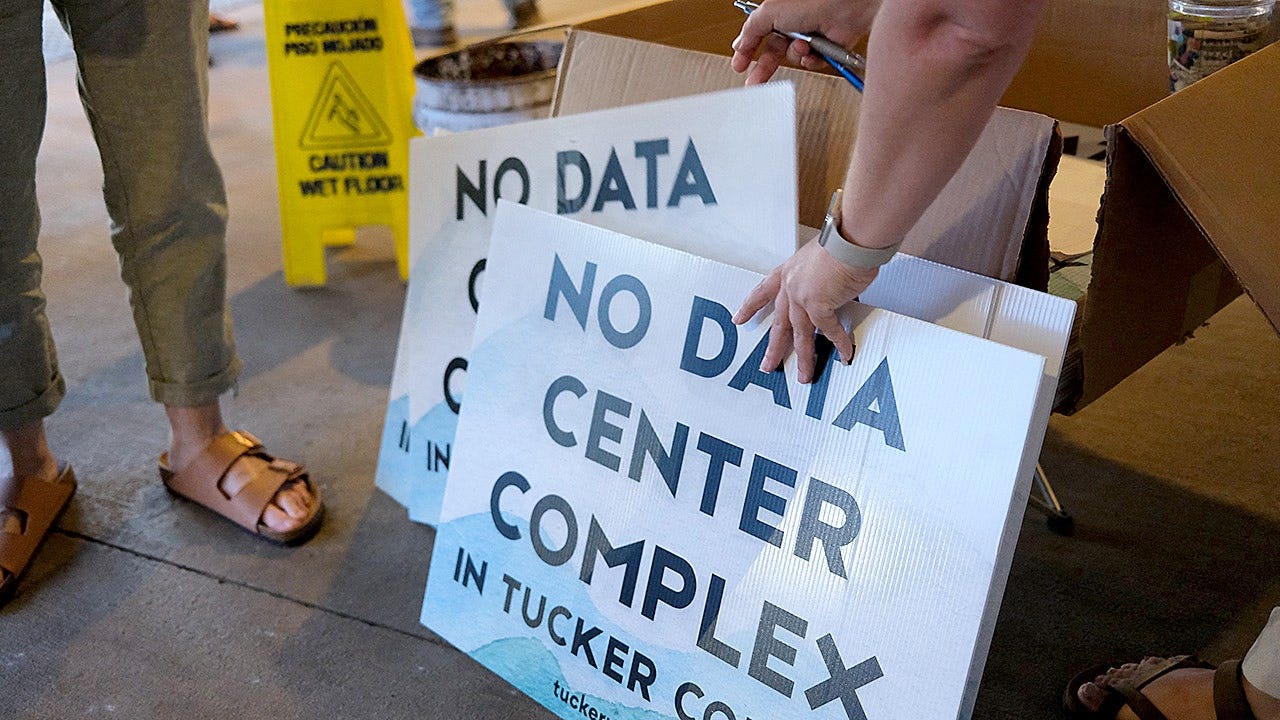
Public opposition to the construction of new data centers is on the rise, with polls showing that most Americans are against such projects in their communities. A recent Fox News poll found that 70% of voters want to slow down data center development, while only 30% support it. This sentiment is particularly strong among Republicans, with only 40% of them and 46% of MAGA Republicans supporting new data center construction.
The concerns driving this opposition are centered around rising electricity costs, energy consumption, and the strain on water resources. These issues have become a focal point for political campaigns, with candidates and groups using them to shape public opinion. In Ohio, for example, the National Republican Senatorial Committee has warned that the data center issue could be a key factor in the Senate race, with Democrats using it as a central campaign issue.
As the political landscape evolves, the debate over data centers continues to gain traction. Candidates are increasingly aware of the public’s concerns and are adjusting their positions accordingly. This shift in rhetoric reflects a broader trend in politics, where candidates are trying to balance their support for technological advancement with the needs and fears of their constituents.
The growing opposition to data centers is not just a local issue but a national one, with implications for the future of AI development in the United States. As more voters express their concerns, the political response is likely to continue evolving, shaping the direction of both policy and public opinion.
Political Shifts In Key Races
The political shift surrounding data centers is particularly evident in key races across the country. In Michigan, former Rep. Mike Rogers, a GOP Senate nominee, has changed his stance on data center development, proposing a one-year moratorium. This marks a significant shift for a candidate who previously supported such projects, highlighting the growing influence of public opinion on political decisions.
In Ohio, the National Republican Senatorial Committee has warned that the data center issue could be a deciding factor in the Senate race. The committee emphasized that the issue is “the anchor hanging around Husted’s neck,” indicating the potential impact of public sentiment on the outcome of the election. This reflects a broader trend where data centers are becoming a central issue in political campaigns.
Other states, such as Texas and Wisconsin, have also seen similar shifts. Texas Governor Greg Abbott has halted new data center connections to the power grid, while Wisconsin GOP gubernatorial nominee Tom Tiffany has made data centers a key part of his campaign. These actions demonstrate the increasing importance of data centers in the political landscape, as candidates and officials respond to public concerns.
The political shift is not limited to just a few states. Across the country, Republicans are reevaluating their positions on data centers, reflecting a broader trend in the political discourse. This shift is shaping the way candidates campaign and the policies they propose, as they seek to address the concerns of their constituents while also supporting technological advancement.
Trump’s Stance And The GOP Response
Despite the growing opposition to data centers, President Donald Trump remains a strong advocate for their development. He has criticized the pushback, calling it a mistake and warning of the consequences of slowing down AI development. Trump has argued that China would benefit from the anti-data center movement, emphasizing the importance of maintaining a competitive edge in the AI race.
However, Trump’s stance has not gone unchallenged. Some Republicans are finding ways to navigate the issue, balancing their support for AI with the concerns of their constituents. For example, Trump has said that it’s “OK” for a Republican to be against a data center, indicating a level of flexibility in the party’s approach. This suggests that while Trump remains a strong proponent of data centers, the broader GOP is adjusting its rhetoric to align with public sentiment.
Republican strategists have also acknowledged the need for a more nuanced approach. Veteran strategist Matt Gorman has suggested that Republicans are being responsive to public concerns, emphasizing the need for the AI industry to make a stronger case for its projects. This reflects a broader trend in politics, where candidates and officials are adapting their positions to address the needs and fears of their constituents.
As the political landscape continues to evolve, the debate over data centers remains a key issue. While Trump remains a vocal supporter, the broader GOP is adjusting its stance, reflecting the growing influence of public opinion on political decisions. This shift is shaping the way candidates campaign and the policies they propose, as they seek to balance technological advancement with the concerns of their constituents.
The AI Industry’s Response
The AI industry is actively responding to the political backlash against data centers. A group called Build American AI, backed by top AI leaders, has launched a multi-million-dollar campaign to promote policies that support data center development while addressing public concerns. The group emphasizes the need to protect residential ratepayers, safeguard the environment, and ensure that communities have a say in whether they want to welcome data center investment.
The campaign highlights the importance of balancing technological advancement with public interests. Build American AI argues that it is possible to protect ratepayers, preserve natural resources, and still build the infrastructure needed to lead the world in AI. This message is aimed at both policymakers and the general public, seeking to shift the narrative around data centers and their impact on communities.
The industry’s response reflects a broader effort to address the concerns raised by voters and politicians. By promoting policies that balance growth with responsibility, the AI industry is trying to shape the future of data center development in the U.S. This includes advocating for regulations that ensure fair treatment of communities and sustainable use of resources.
As the political debate over data centers continues, the AI industry’s efforts to engage with the public and policymakers will play a crucial role in shaping the future of AI development. By promoting a balanced approach, the industry is trying to ensure that data centers can continue to support technological progress while addressing the concerns of those who oppose them.