Source: Fortune.com
Summary
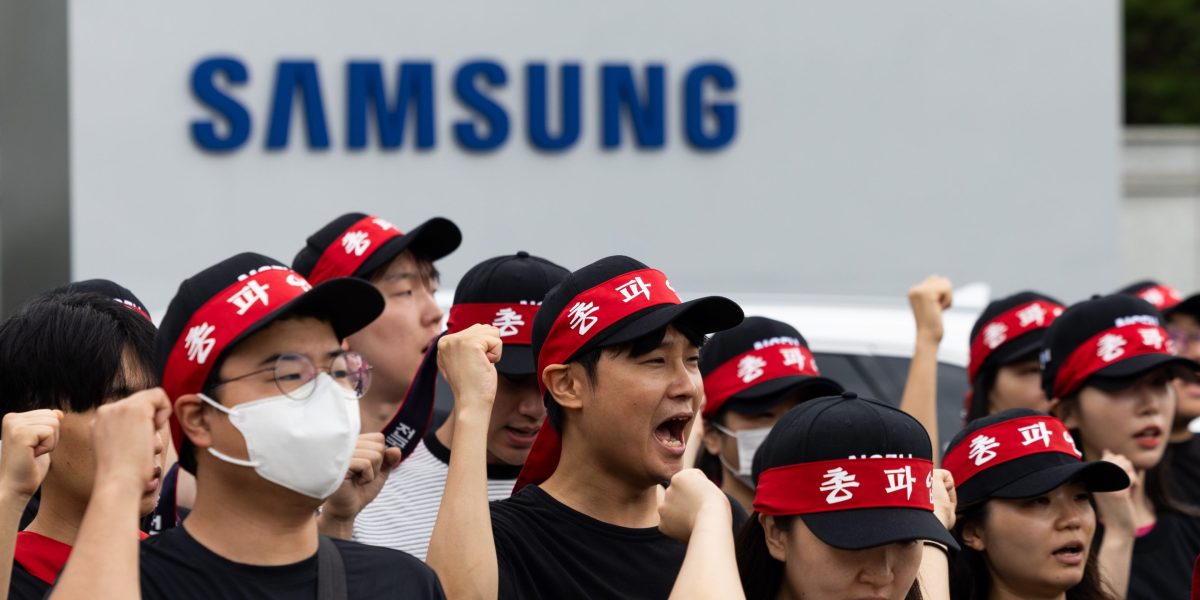
Samsung, the world’s largest DRAM maker, is facing a labor strike by 45,000 unionized workers, which could disrupt the global AI supply chain. The strike, scheduled to last 18 days, is over demands for better bonuses and working conditions. Samsung’s unions are seeking 15% of operating profit to be allocated to a bonus pool, removal of the current cap on bonuses, and a 7% wage hike. The company has offered 13% of operating profit as a one-time payment, but the union has rejected this offer. The strike could result in losses of up to 100 trillion won ($83 billion) and impact Samsung’s ability to meet customer demand.
Our Reading
The numbers tell one story. Samsung’s labor dispute is not just about wages and bonuses, but also about the company’s competitiveness in the AI market. The strike could slow down Samsung’s production and impact its ability to meet customer demand, particularly from AI hyperscalers. The company’s unions are seeking better compensation and working conditions, but Samsung is concerned about the impact on its operating profit. The strike could also have a broader impact on the global AI supply chain.
Samsung’s chairman, Shin Je-yoon, has expressed concerns about losing market leadership amid the strike. The company’s HBM4 chips have outperformed expectations, but a prolonged strike could put that trajectory at risk. JPMorgan analyst Jay Kwon has estimated that if Samsung meets the union’s demands, 2026 operating profit could face a 7-12% downside.
The strike has also sparked debate about the distribution of wealth from the AI boom. Presidential policy chief Kim Yong-beom has suggested that South Korea should pay its citizens a “dividend” from the AI boom, but this idea has been met with skepticism by investors.
The strike is a reminder that the AI industry is not just about technology, but also about people and labor. The outcome of the strike will have significant implications for Samsung, its customers, and the broader AI ecosystem.
Author: Evan Null