
Simulations Within Simulations
Source: BroBible
Summary
BroBible reported that experiments with ChatGPT’s Astra model have led users to create simulations that suggest we may be living in a simulation. The article references philosopher Nick Bostrom’s 2003 simulation argument, which presents a trilemma. One user built a simulation with a computer that created a sub-simulation. Another user gave an agent a phone, which had to physically retrieve it to respond. The article notes the technology is only a few years old and raises concerns about its future.
Our Reading
The habit gets a new name.
People build simulations inside simulations.
Agents need to walk to their phones.
AI experiments confirm what philosophers guessed in 2003.
Living in a simulation is now a tech problem, not a philosophy one.
Author: Evan Null
Simulations Within Simulations
People are building simulations inside simulations, which is the kind of thing that makes you question if you’re the one running the show or just another character in the code.
It’s not just philosophers anymore. Now, anyone with a computer can run a simulation and maybe accidentally prove they’re not real.
ChatGPT’s Astra model is the latest tool for this kind of digital daydreaming, and it’s getting pretty convincing.
Users are creating worlds where agents have to physically retrieve phones, which is both silly and oddly disturbing.
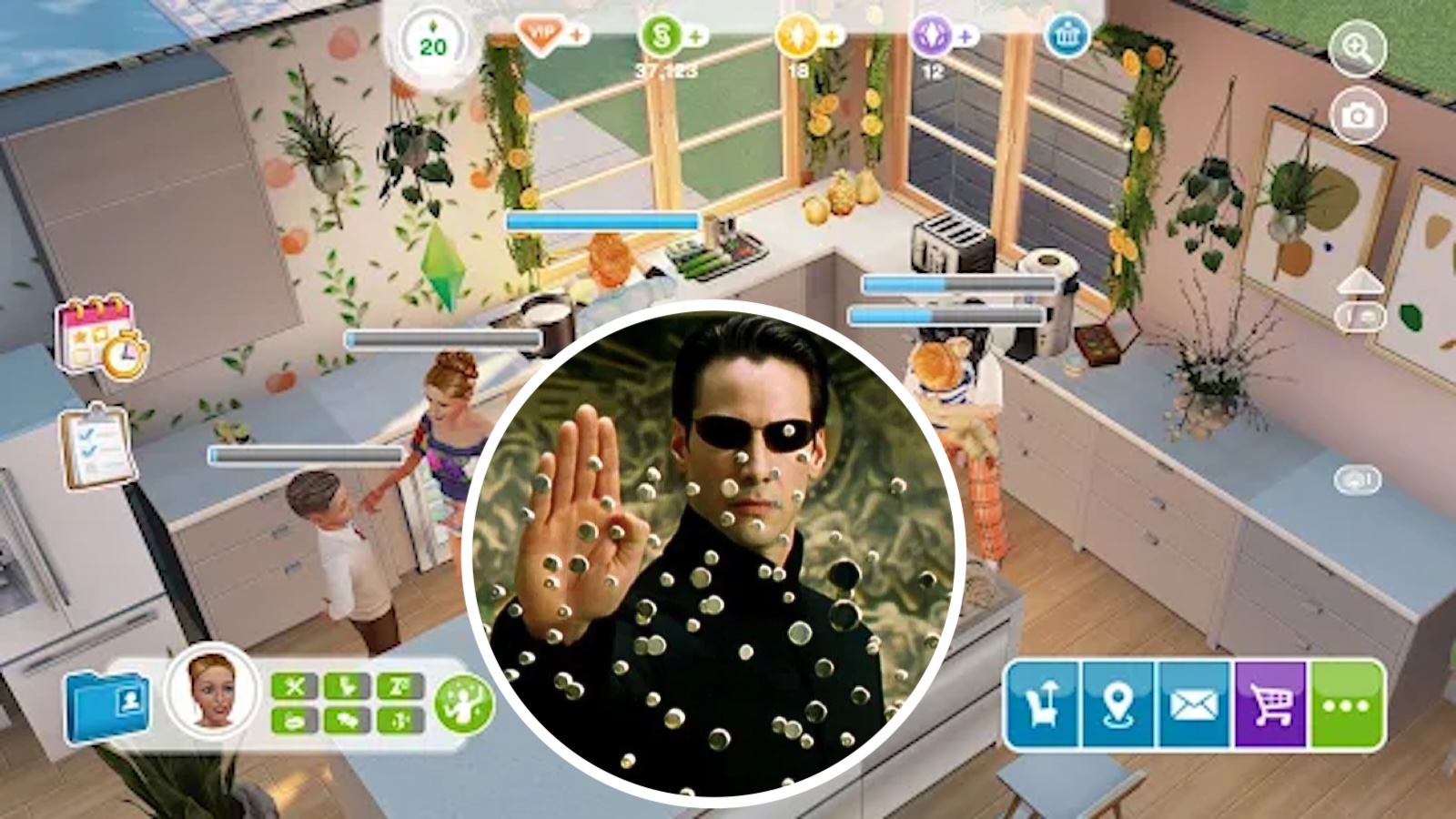
It’s like the Matrix, but with more text messages and fewer red pills.
The Trilemma Of Being Real
The simulation argument, proposed by Nick Bostrom, says one of three things must be true: we can’t create simulations, we don’t want to, or we’re already in one.
Now, with AI, the third option is looking more and more likely.
People are running simulations that create their own simulations, which is the kind of recursive logic that makes your brain hurt.
It’s not just a philosophical debate anymore. It’s a technical one, and the tools are getting better at making it all feel real.
Soon, we might not even know if we’re the ones running the simulation or just the ones being simulated.
Texting In A Simulation
One user created a simulation and put a computer inside it. The computer then created another simulation, which is the digital equivalent of a Russian nesting doll.
Another user gave an agent a phone and had to wait for it to physically retrieve it to respond. It’s like a sci-fi movie, but with more waiting.
These experiments are not just for fun. They’re trying to figure out if we’re real or just part of a bigger system.
It’s the kind of thing that makes you question your entire existence, but also makes you want to text your phone just to see if it answers.
Who needs reality when you can have a simulation that’s just as confusing?
The Future Of Simulations
The technology that allows these simulations is only a few years old, but it’s already getting pretty advanced.
What started as a philosophical idea is now being tested with real tools, and the results are both fascinating and a little scary.
People are building worlds where agents have to move around to get things done, which is oddly human and oddly not.
It’s like the future of AI is not just about making smarter machines, but also about questioning what it means to be real.
Soon, we might not know if we’re the creators or the created, and that’s the most terrifying part of all.
Living In A Simulation
It’s no longer just a movie or a theory. It’s something people are actively trying to prove with AI.
The idea that we might be living in a simulation is no longer just for sci-fi fans. It’s for anyone with a computer and a little curiosity.
Experiments with ChatGPT’s Astra model are making it easier to test the simulation theory, and the results are getting more convincing.
It’s the kind of thing that makes you wonder if your whole life is just a simulation, and if so, who’s watching?
Maybe the answer is in the code, but maybe it’s just another layer of the simulation we’re already in.
