Source: Fortune
Summary
The Iran conflict has highlighted a shift in the economics of warfare, with mass-produced, cheap weapons forcing a rethinking of military procurement. The US and Israel have struggled to counter Iran’s Shahed drones, which cost $20,000-50,000, using expensive PAC-3 missiles or THAAD interceptors. This has led to a concern about the cost asymmetry and the depletion of US munitions stockpiles. The US military is now exploring cheaper, mass-produced platforms, including a copycat version of the Shahed drone.
Our Reading
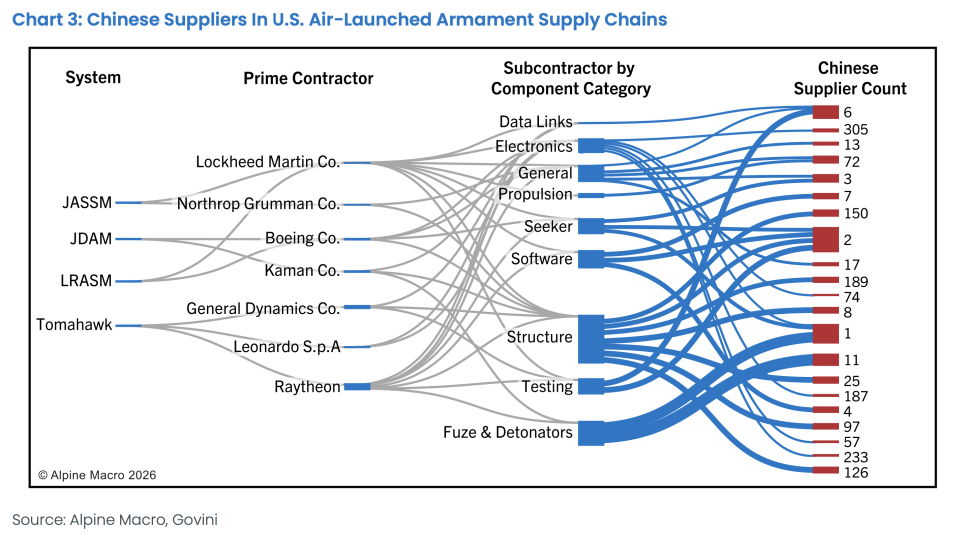
The numbers tell one story. The US military’s reliance on expensive munitions has created a near-term risk, with stockpiles depleted by 45% for Precision Strike Missiles, 50% for THAAD interceptors, and almost half for PAC-3 missiles. The Pentagon is now looking to cheaper, mass-produced platforms, but this shift raises concerns about the US’s ability to maintain military supremacy. Noah Ramos, chief innovation strategist at Alpine Macro, notes that the US’s reliance on Chinese suppliers for critical components poses a “grave threat” given geopolitical fragmentation or a conflict over Taiwan. The US military is exploring new manufacturing innovations to enable hyperscale production, but it remains to be seen whether this will be enough to address the “obscene economics” of modern warfare.
Author: Evan Null