Source: Fortune.com
Summary
President Donald Trump honored tech leaders, including Microsoft CEO Satya Nadella, with the National Medal of Technology and Innovation. Vice President JD Vance accused Microsoft of abusing the H-1B visa program, citing 6,300 visas and 3,000 green cards issued last year amid 6,000 U.S. layoffs. Microsoft stated most H-1B applications were for existing employees. Vance emphasized the need for American workers, while Trump praised the tech leaders as “national treasures.” Five of the six honorees were immigrants, including Elon Musk, Sergey Brin, and Jensen Huang.
Our Reading
The numbers tell one story.
Vance accuses Microsoft of replacing American workers with foreign ones.
Trump celebrates the same company he’s under pressure to hold accountable.
Five of six tech leaders honored are immigrants, despite anti-immigration rhetoric.
The administration’s stance on immigration and tech is as tangled as the visa system itself.
Author: Evan Null
Trump’s Tech Honors and Visa Accusations
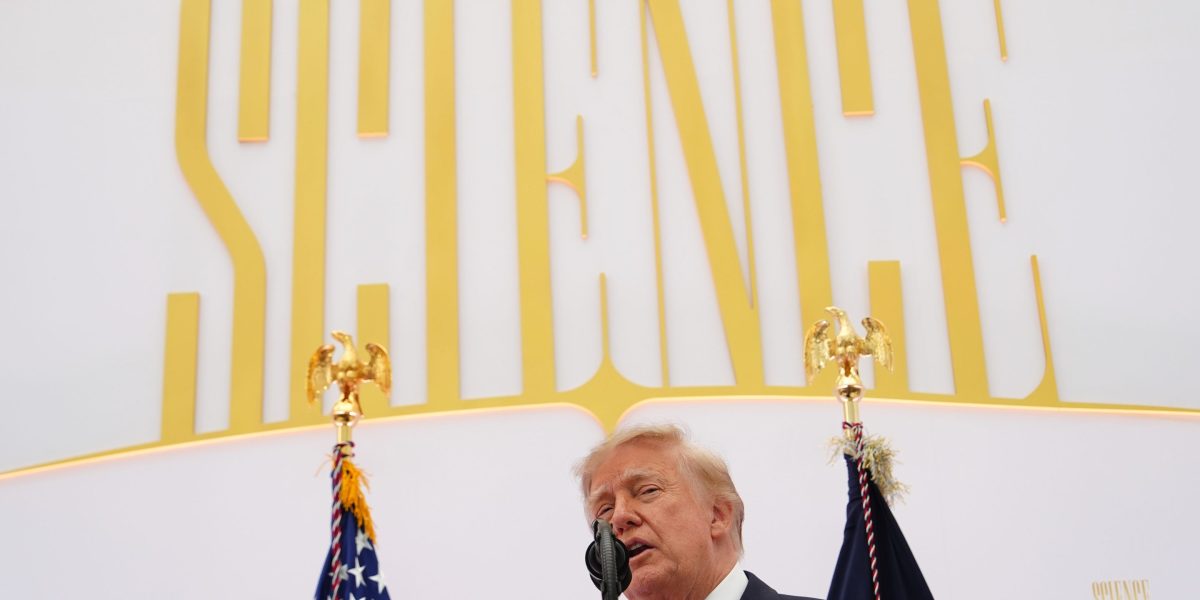
President Donald Trump honored Microsoft CEO Satya Nadella with the National Medal of Technology and Innovation. The ceremony took place just hours after Vice President JD Vance accused Microsoft of abusing the H-1B visa program. Vance claimed the company laid off 6,000 U.S. workers while securing 6,300 H-1B visas and nearly 3,000 green cards.
Microsoft responded by stating that most of its H-1B applications were for extending or changing the status of existing employees. The company has 223,000 employees worldwide and is based in Redmond, Washington.
Trump praised Microsoft and other tech leaders as “national treasures,” despite the accusations against the company. He called the event a “biggest day there is” in science and technology, comparing the honorees to his late uncle, John Trump, who also received a National Medal of Science.
Five of the six tech leaders honored were immigrants, including Elon Musk, Sergey Brin, and Jensen Huang. Trump’s administration has been pushing for stricter immigration policies, even as it celebrates the contributions of foreign-born innovators.
Vance also accused universities like Stanford and MIT of visa fraud, citing the educational backgrounds of some honorees. Despite the contradictions, Trump’s team continues to support Microsoft and other tech companies, emphasizing their role in American innovation.
Contradictions in Immigration and Innovation
The situation highlights the tension between Trump’s anti-immigration rhetoric and his administration’s reliance on immigrant tech leaders. While Vance criticized Microsoft for allegedly replacing American workers with foreign labor, Trump celebrated the same company and its CEO.
Microsoft’s response to the accusations was brief, emphasizing that most H-1B applications were for existing employees. The company has been a major player in the tech industry, with a global workforce and a strong presence in the U.S.
Trump’s praise for tech leaders comes as he seeks to position himself as a champion of American innovation. He has repeatedly highlighted the importance of artificial intelligence and other technologies in driving economic growth, despite calls for regulation.
The administration’s stance on immigration remains inconsistent. While Vance targets companies like Microsoft, Trump continues to honor foreign-born leaders, many of whom have contributed significantly to the U.S. economy.
As the midterm elections approach, Trump is trying to frame the tech industry as a key driver of American prosperity, even as concerns about AI and immigration persist among voters.
Immigrant Tech Leaders and National Recognition
Five of the six tech leaders honored by Trump were immigrants, including Elon Musk, who was born in South Africa, and Sergey Brin, who was born in Russia. Jensen Huang and Lisa Su, both from Taiwan, were also among the honorees.
Trump called the group “national treasures,” comparing them to his late uncle, John Trump, who received the National Medal of Science in 1983. The ceremony was part of a broader effort to highlight the role of technology in American innovation and economic growth.
Despite the contradictions, Trump’s administration continues to support the tech industry, even as it targets companies like Microsoft for alleged visa abuses. The president has been vocal about his belief in the importance of artificial intelligence and its potential to drive economic progress.
The event also coincided with the awarding of Nobel Prizes, underscoring the significance of science and technology in American society. However, the focus on business leaders rather than academics was a notable shift.
As Trump prepares for the midterm elections, he is leveraging the success of the tech industry to bolster his economic agenda, even as concerns about AI and immigration remain widespread.
White House’s Mixed Messaging on Tech and Immigration
The White House has been sending mixed signals on the role of immigrants in the tech industry. While Vice President JD Vance criticized Microsoft for allegedly exploiting the H-1B visa program, President Trump praised the company and its CEO as national leaders.
Microsoft’s response to the accusations was measured, stating that most of its H-1B applications were for existing employees. The company has been a major employer in the U.S. and has contributed significantly to the tech sector.
Trump’s administration has been pushing for stricter immigration policies, but it continues to celebrate the contributions of immigrant tech leaders. This contradiction reflects the broader tension between anti-immigration rhetoric and the reliance on foreign talent in the tech industry.
The White House has also been emphasizing the importance of artificial intelligence, with Trump frequently referring to it as “super intelligence.” He has resisted calls for regulation, arguing that it could stifle innovation and economic growth.
As the midterm elections approach, Trump is trying to position the tech industry as a key driver of American prosperity, even as concerns about AI and immigration persist among voters.
Trump’s Tech Allies and Political Strategy
Trump has been closely aligned with tech leaders, including Elon Musk, Jensen Huang, and Lisa Su. These figures have been frequent visitors to the White House, attending high-profile events and signing agreements on AI development.
Musk, Huang, and Su were among the tech leaders seated at the head table during a state dinner for China’s leader, Xi Jinping. Brin, Nadella, and Dell also attended the event, highlighting the close relationship between the administration and the tech sector.
Trump has been using these relationships to bolster his image as a champion of innovation and economic growth. He has repeatedly emphasized the importance of artificial intelligence and its potential to drive progress, even as concerns about its risks remain.
The administration’s focus on AI and tech is part of a broader strategy to appeal to voters ahead of the midterm elections. By highlighting the success of the tech industry, Trump is trying to frame his economic agenda as a path to prosperity.
However, the administration’s mixed messaging on immigration and tech has created a complex landscape, with contradictory policies and public statements that reflect the challenges of balancing economic growth with political rhetoric.