Source: Fox News
Summary
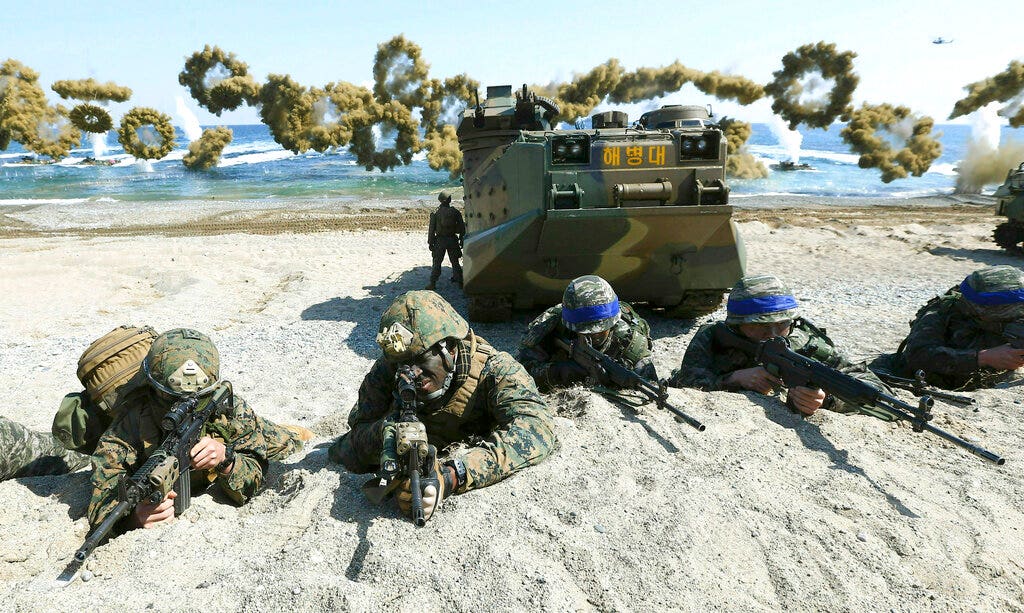
President Donald Trump has ordered a major reduction in joint U.S.-South Korea military exercises, following Seoul’s refusal to support U.S. operations against Iran. The decision comes just days after Secretary of State Marco Rubio praised South Korea as an “indispensable partner.” Analysts suggest Trump aims to pressure South Korea on trade and investment while offering North Korea incentives. The move has drawn criticism from both parties, with concerns over weakening the U.S.-South Korea alliance and emboldening North Korea.
Our Reading
As expected, the matter has reached another stage.
Trump scales back drills after Seoul refuses to back U.S. against Iran.
Rubio praised Seoul days earlier, then the decision came.
South Korea is rich, Trump says, should pay for its own exercises.
North Korea tests missiles as the alliance shifts.
Author: Evan Null
Trump’s Shift in Military Strategy
President Donald Trump has ordered a major reduction in joint U.S.-South Korea military exercises, a move that signals a shift in strategy. The decision comes after South Korea declined to support U.S. operations against Iran, a key ally that Trump had previously praised. The change in tone highlights the complex relationship between the U.S. and its allies, as well as the challenges of maintaining a strong defense posture amid shifting geopolitical dynamics.
Strains in U.S.-South Korea Relations
Behind the scenes, tensions have been building between the U.S. and South Korea. Trump has expressed frustration over the slow progress of a $350 billion trade and investment framework, as well as commercial disputes involving American companies. These issues have contributed to a growing sense of dissatisfaction within the administration, leading to the decision to scale back military drills. The move reflects a broader pattern of mixed messaging and shifting priorities in U.S. foreign policy.
Impact on the U.S.-South Korea Alliance
The reduction in military exercises has raised concerns among both U.S. and South Korean officials. The exercises are a key component of the alliance, providing critical training and coordination between the two countries’ forces. Analysts warn that the abrupt decision could weaken the alliance and send a confusing message to North Korea. Despite the risks, Trump appears to be prioritizing other strategic goals, including potential diplomacy with North Korea’s leader, Kim Jong-un.
North Korea’s Response and Regional Tensions
North Korea has responded to the reduced military exercises with a series of missile tests, highlighting the ongoing security challenges in the region. The country has also strengthened its ties with Russia and China, further complicating the geopolitical landscape. While Trump has framed the decision as a way to encourage diplomacy with North Korea, critics argue that it could embolden the regime and undermine U.S. security interests. The situation underscores the delicate balance of power in East Asia and the risks of unilateral policy shifts.
Bipartisan Criticism and Concerns
The decision to cut military exercises has drawn bipartisan criticism from members of Congress. Both Democrats and Republicans have expressed concerns about the impact on the U.S.-South Korea alliance and the potential consequences for regional stability. Some lawmakers have accused Trump of sending mixed messages and undermining the security of U.S. allies. The backlash highlights the deep divisions within the political landscape and the challenges of maintaining a coherent foreign policy in a rapidly changing world.