Source: Fortune
Summary
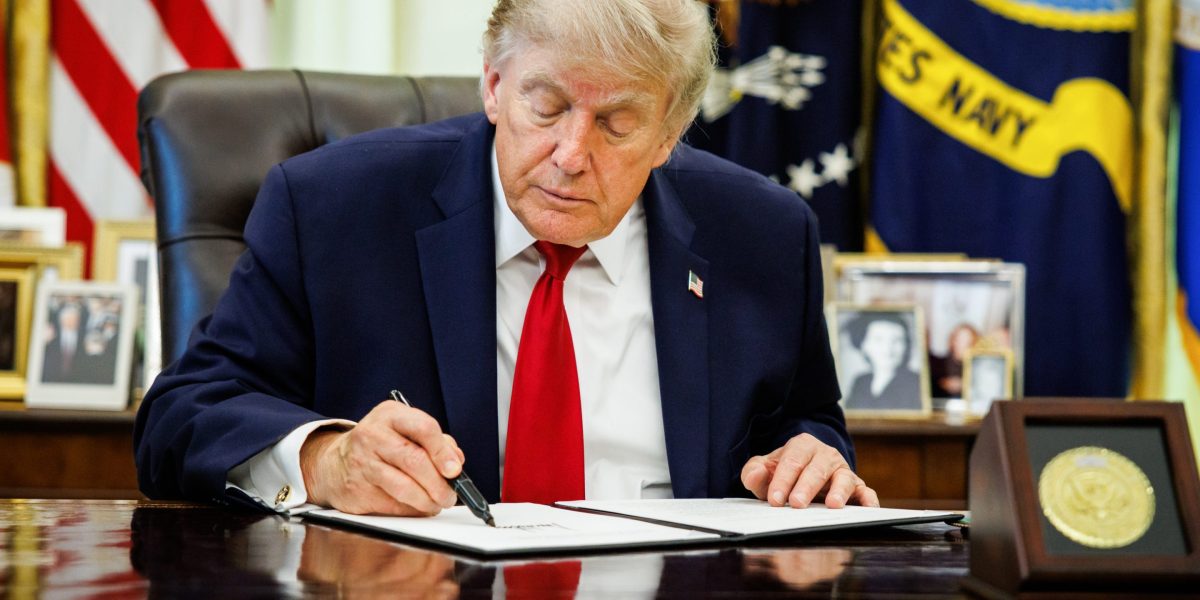
President Trump’s financial disclosure reveals he made $2.2 billion in 2025, with $1.4 billion coming from crypto assets. Economists and experts say this fits into “big player theory,” where a single individual can move markets and introduce personality into them. They argue that this is a new era, where traditional analysis is replaced by “noise trading” driven by rumors and hype. The phenomenon is characterized by a big player operating by discretion rather than rules, and being big enough to shift markets. Experts point to a decades-long erosion of market discipline, starting with Nixon’s decision to sever the dollar’s link to gold in 1971.
Our Reading
The numbers tell one story.
President Trump’s $2.2 billion income disclosure is a classic example of “big player theory” in action. The phenomenon is not new, but Trump’s case represents its logical endpoint after five decades of steady erosion. Experts point to a legal accountability vacuum surrounding the presidency, which has produced a breakdown in institutional response. The big player dynamic increases market volatility and the frequency of bubbles, and creates a condition of “augmented ignorance” where companies stop searching for better products and start cultivating better relationships with the federal government. The paradox at the center is that the big player is also the person directly making the decisions in government, removing the separation that accountability requires.
The announcement sounds like a familiar story of “too big to fail” and “too big to jail,” but with a new twist: the big player is now the president.
The strategy enters a familiar phase, where traditional analysis is replaced by “noise trading” driven by rumors and hype.
The big player’s opacity makes it rational for companies to stop searching for better products and start cultivating better relationships with the federal government.
The result is a permanent misallocation of resources, where the big player’s interests are intertwined with market-moving decisions.
The correction can only be paused, deferred, or transferred to whatever object of belief comes after him.
Author: Evan Null