Source: Fortune
Summary
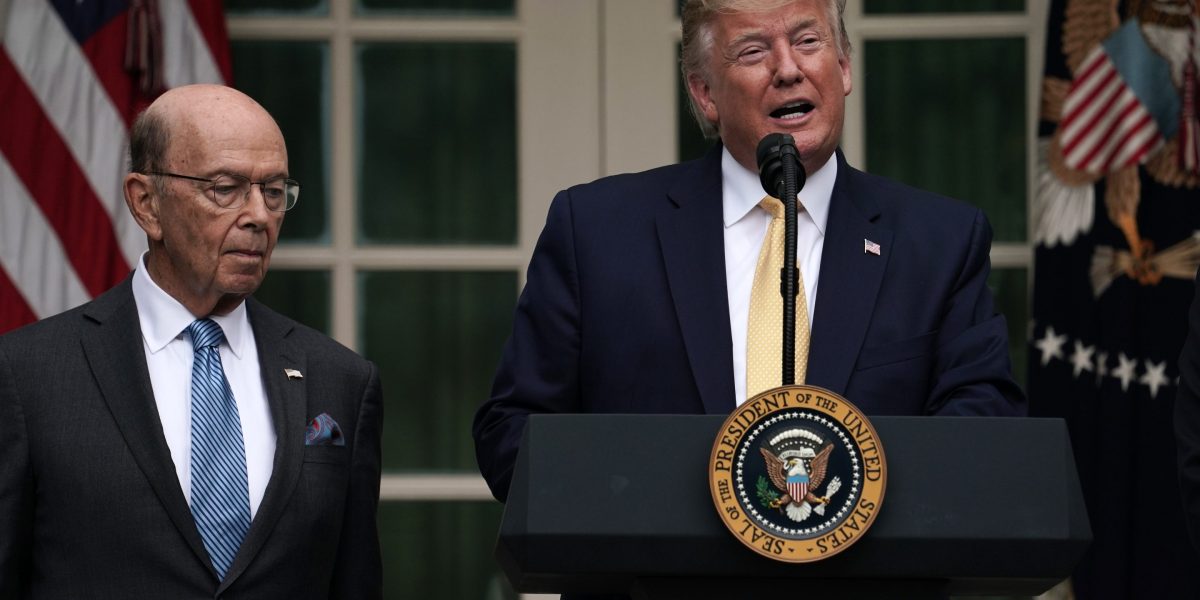
Trade talks between the U.S. and Canada have collapsed, leading to multi-billion-dollar tariffs. Canadian Prime Minister Mark Carney criticized the U.S. for asking for too much, while Trump called Canada “foolish.” Wilbur Ross, former U.S. Commerce Secretary, noted a shift in Canadian sentiment toward the U.S. and the challenges this poses for negotiations. Leaked audio of Vice President JD Vance mocking Carney has further strained relations. Ross suggested Trump’s “51st state” comment was metaphorical but unlikely to gain public support in Canada.
Our Reading
The numbers tell one story.
Trade talks collapsed, tariffs imposed.
Canadian PM called U.S. demands unreasonable.
Vice President mocked Canadian leader in leaked audio.
Trump’s rhetoric fuels tension, but real action seems unlikely.
Trade disputes are old, but sentiment has shifted.
Author: Evan Null
A standoff
The U.S. and Canada are locked in a trade dispute that has escalated into tariffs and public insults. The relationship, once friendly, has soured as both sides trade accusations and blame. The negotiations, which were meant to resolve long-standing issues, have failed, leaving both nations in a stalemate.
Wilbur Ross, a former U.S. Commerce Secretary, believes the current impasse is partly due to a change in Canadian attitudes toward the U.S. He said the Canadian public has grown increasingly negative, making it harder to reach an agreement. This shift in sentiment complicates any potential resolution.
Leaked audio of Vice President JD Vance mocking Canadian Prime Minister Mark Carney has further damaged relations. Vance reportedly called Carney “sweet” and “hilarious,” which has been seen as disrespectful and has added to the tension between the two nations.
Trump has also made inflammatory remarks, calling Canada the “51st state” and suggesting it be renamed Lake America. These comments, while likely rhetorical, have fueled Canadian concerns about sovereignty and U.S. influence.
Despite the tension, Ross believes the U.S. is unlikely to take the initiative in future negotiations. He said the deal offered by the U.S. was favorable to Canada, but the Canadian government has been unwilling to compromise. The situation remains unresolved, with both sides holding firm.
Old issues, new tensions
The disputes between the U.S. and Canada are not new. Issues like defense spending, dairy levies, and transshipment of goods have long been points of contention. These issues have resurfaced in the current negotiations, but the political climate has made them harder to resolve.
Ross said the U.S. has offered a deal that is favorable to Canada, but the Canadian government has been unwilling to accept it. He suggested that the U.S. is not likely to push further, leaving the onus on Canada to find a solution.
Carney, however, has maintained that his team has been “pragmatic, patient, and persistent” in seeking an agreement. He has emphasized that Canada has pursued every opportunity to reach a deal, but the U.S. has not been willing to compromise.
The current impasse is not just about trade; it’s about trust and perception. The leaked audio and Trump’s rhetoric have damaged the relationship, making it harder to find common ground. Both sides are now looking for a way out, but the path forward remains unclear.
Ross suggested that inflation and rising consumer prices could eventually force a resolution. He said Canada, with its smaller economy, may be more vulnerable to these pressures and could be the first to seek a compromise.
Public sentiment and political will
Public sentiment in Canada has shifted significantly, with many citizens viewing the U.S. more negatively. This change in attitude has made it harder for Canadian leaders to negotiate with their American counterparts. The political will to reach an agreement has also been affected by this growing distrust.
Ross noted that the Canadian public’s opposition to U.S. proposals is not just about the content of the deals but also about the broader relationship. Any proposal from the U.S. is likely to face resistance, regardless of its merits. This dynamic complicates the negotiation process and makes a resolution more difficult.
The leaked audio of Vance mocking Carney has further fueled Canadian resentment. The incident has been seen as a sign of disrespect and has added to the perception that the U.S. does not take Canada seriously. This has only deepened the divide between the two nations.
Trump’s comments, including his suggestion to rename Lake Ontario, have also been viewed as provocative. While these remarks may be rhetorical, they have been interpreted as a challenge to Canadian sovereignty. This has made it harder for Canadian leaders to engage in meaningful dialogue with the U.S.
Ross believes that the U.S. is unlikely to take the lead in future negotiations. He said the Canadian government will need to make the first move if a resolution is to be reached. However, with the current climate, it’s unclear whether either side is willing to compromise.
Future prospects
The future of U.S.-Canada trade relations remains uncertain. Both sides have shown little willingness to back down, and the political climate has made it harder to find common ground. The recent escalation of tensions has raised concerns about the long-term stability of the relationship.
Ross suggested that the U.S. is not likely to push for a deal unless Canada takes the initiative. He said the current U.S. administration has been more focused on domestic issues and is not as invested in resolving the trade dispute. This lack of urgency could prolong the stalemate.
Carney, on the other hand, has maintained that Canada is committed to finding a solution. He has emphasized that his team has been “pragmatic, patient, and persistent” in seeking an agreement. However, without a clear path forward, it’s unclear how long the negotiations will continue.
The impact of inflation and rising consumer prices could eventually force a resolution. Ross said Canada, with its smaller economy, may be more vulnerable to these pressures and could be the first to seek a compromise. However, this is not guaranteed, and both sides may continue to hold their ground.
As the situation continues to unfold, it remains to be seen whether the U.S. and Canada can find a way to restore their relationship. The current impasse has created a difficult environment for negotiations, and the path forward is far from clear.
Broader implications
The U.S.-Canada trade dispute has broader implications beyond just the two nations. It affects global trade relations and could set a precedent for how other countries handle similar conflicts. The way the U.S. and Canada navigate this situation will be closely watched by other nations.
The dispute also highlights the challenges of maintaining strong trade relationships in a politically charged environment. As both countries face domestic pressures, their ability to cooperate on trade issues may be tested. This could have long-term consequences for their economic ties.
Ross believes that the U.S. is not likely to take the lead in future negotiations, which means Canada will need to find a way to move forward. This could be difficult, given the current climate and the lack of trust between the two nations. However, it may also provide an opportunity for Canada to assert its position and seek a more favorable deal.
The situation also raises questions about the role of leadership in trade negotiations. Trump’s rhetoric and actions have had a significant impact on the relationship, and his approach has been a source of tension. The way future leaders handle these issues will be crucial in determining the outcome of the dispute.
Ultimately, the U.S.-Canada trade dispute is a complex issue with far-reaching implications. It is not just about trade; it is about trust, perception, and the future of the relationship between the two nations. How this dispute is resolved will have lasting effects on their economic and political ties.