Source: Fortune.com
Summary
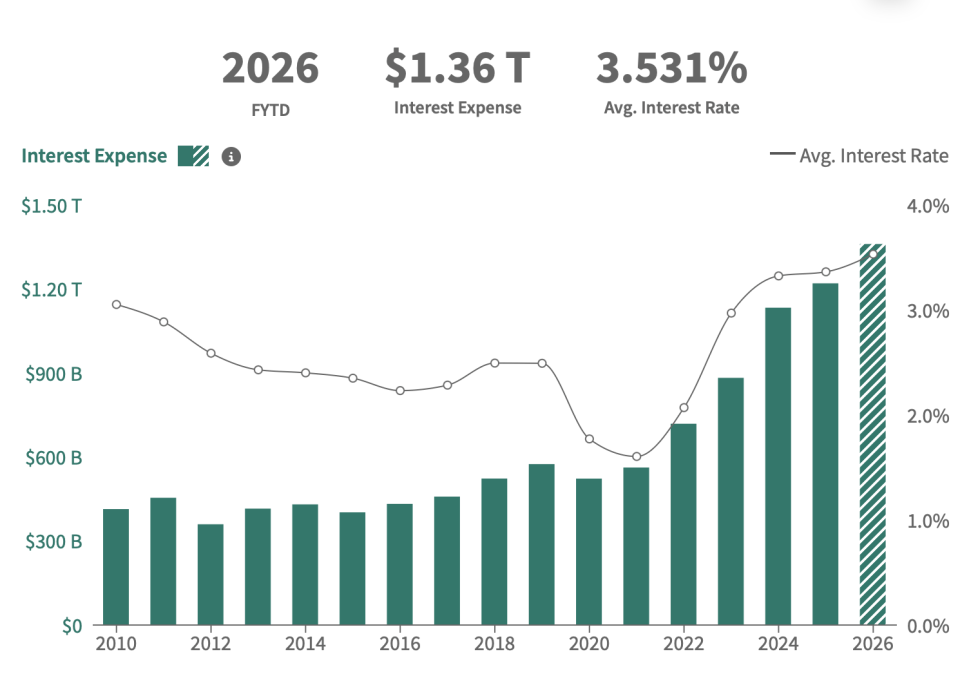
The U.S. federal budget deficit reached $1.99 trillion in fiscal 2026, up 12% from the previous year, according to Treasury Department data. Revenue rose 3% to $5.4 trillion, while spending increased 6% to $7.4 trillion. Interest payments on the national debt rose to $1.36 trillion, more than double the 2021 level, and now exceed defense spending and Medicaid. Net interest costs hit $1.05 trillion, outpacing GDP growth. The Peter G. Peterson Foundation estimated interest payments now represent 3.2% of GDP, a record since 1991.
Our Reading
The numbers tell one story.
Deficit widens as spending outpaces revenue.
Interest costs surge, outpacing GDP growth.
Debt rolls over at higher rates, risking more costs.
Politicians avoid tough choices, betting on growth.
Author: Evan Null
U.S. Debt Crisis Deepens
The U.S. federal government’s fiscal year ended with a staggering $1.99 trillion deficit, marking a significant increase from the previous year. This deficit is driven by rising federal spending, which outpaced revenue growth. The Treasury Department reported that revenue increased by 3% to $5.4 trillion, while spending rose by 6% to $7.4 trillion. This widening gap highlights the growing challenges the government faces in managing its finances.
Interest payments on the national debt have become a major concern, with gross interest costs reaching $1.36 trillion in fiscal 2026. This is more than double the rate in 2021, reflecting the impact of the Federal Reserve’s aggressive tightening cycle. Net interest payments rose by 8% to $1.05 trillion, surpassing increases in total spending, revenue, and GDP. This trend underscores the increasing burden of debt on the federal budget.
The fiscal 2026 net interest costs amount to about $2.9 billion a day, and the Peter G. Peterson Foundation estimates they represent 3.2% of GDP, breaking the previous record set in 1991. With gross U.S. debt at $40 trillion and publicly held debt at 100% of GDP, the situation is dire. Borrowing costs are rising, and interest payments are projected to be the fastest-growing portion of the federal budget in the coming years.
The federal government is increasingly exposed to market volatility, which threatens to make interest costs even steeper. Treasury Secretary Scott Bessent has been issuing more short-term debt to finance the deficit, while retiring long-term obligations. This strategy means that about one-third of publicly held debt, or more than $10 trillion, is due to mature within the next 12 months, requiring the government to roll it over at today’s higher rates.
Despite the growing concerns, there is no sign of significant action to address the issue. President Donald Trump has called for a $5,000 “dividend” check to Americans, and Bessent has argued that economic growth can help reduce the debt. However, CBO Director Phillip Swagel has warned that faster economic growth alone is unlikely to stabilize the fiscal trajectory. The challenge remains a political one, with difficult choices ahead for policymakers.