Source: Fortune.com
Summary
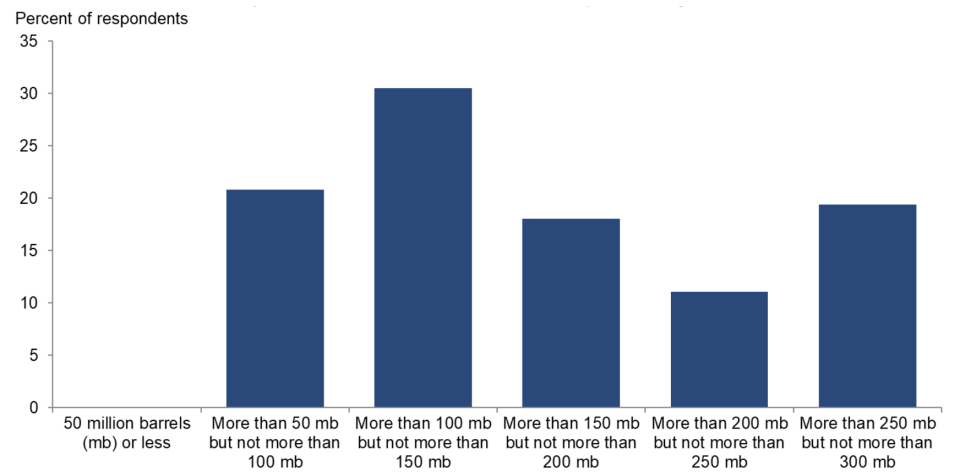
The U.S. Strategic Petroleum Reserve (SPR) has dropped to 284 million barrels, the lowest level since 1982, and is expected to fall further after the Trump administration’s final release under an IEA agreement. Industry executives and experts have varying estimates of the SPR’s minimum operational level, with some suggesting it could be as low as 70 million barrels. Saudi Aramco CEO Amin Nasser warned that global oil inventories are nearing critical levels, and the supply resilience cushion is thin. The Dallas Fed survey found that oil executives disagree on the SPR’s effective minimum, with estimates ranging from 50 million to 300 million barrels.
Our Reading
The numbers tell one story.
SPR is down to 284 million barrels, the lowest since 1982.
Executives disagree on what “minimum” means.
Some say 70 million, others 300.
The system is straining, but no one knows how much more it can take.
Author: Evan Null
Strategic Petroleum Reserve in Focus
The U.S. Strategic Petroleum Reserve (SPR) has become a central point of concern for the oil market. As the reserve continues to shrink, the question of how low it can go without causing damage to the infrastructure remains unanswered. The SPR is a key tool for managing oil supply shocks, but its effectiveness is now in question as it approaches its lowest levels in decades.
Uncertainty Over Minimum Levels
Industry executives have provided a wide range of estimates for the SPR’s minimum operational level. Some believe it could be as low as 70 million barrels, while others suggest it could be as high as 300 million. This lack of consensus highlights the uncertainty surrounding the reserve’s ability to function effectively under pressure.
Global Supply Concerns
Global oil inventories are also under strain, with the situation in the Middle East adding to the uncertainty. The conflict in Iran has led to a reduction in oil flows, and while Persian Gulf exports have returned to prewar levels, the situation remains fragile. This has raised concerns about the long-term stability of global oil supplies.
Engineering and Physical Limits
The SPR is stored in underground salt caverns, which have physical and engineering limits. As oil is drawn from these caverns, the water level rises, potentially damaging the infrastructure. Experts warn that the reserve is losing its ability to act as an immediate economic buffer, and the physical constraints of the caverns are becoming a growing concern.
Policy and Industry Responses
The Energy Department has stated that at least 70 million barrels must remain in the SPR to ensure the safe operation of the caverns. However, industry experts and academics have offered different perspectives, with some suggesting that the practical operational floor is much higher. As the SPR continues to shrink, the debate over its minimum level is likely to intensify.