Source: Fortune
Summary
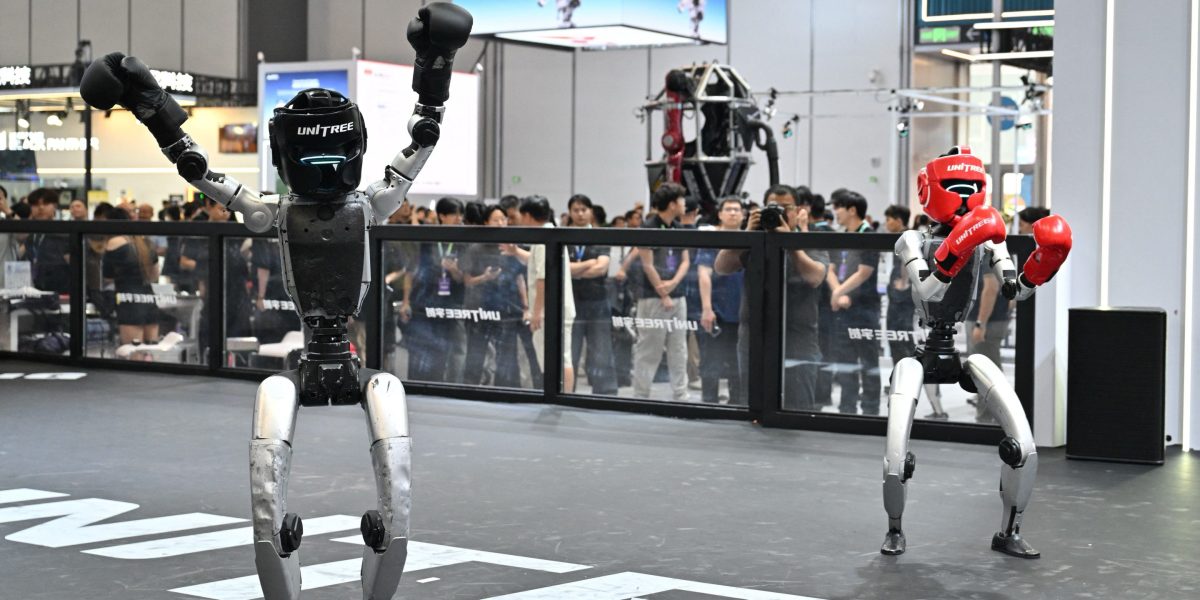
Unitree, a Chinese humanoid robot manufacturer, saw its shares surge 460% on its first day of trading, valuing the company at $66 billion. The company raised $900 million in its IPO on Shanghai’s STAR Market. Unitree reported $252 million in revenue in 2025, with 45% from overseas sales. Its founder met with Chinese President Xi Jinping, and the company has backing from Alibaba, Tencent, and state funds. HSBC analysts, however, question the sustainability of the robotics sector’s growth.
Our Reading
The numbers tell one story.
Unitree’s stock jumped 460% on its first day, pushing its valuation past major tech firms.
The company’s revenue is small, but its IPO raised $900 million at a $9 billion valuation.
It’s backed by big names and has a high-profile founder.
But analysts question if the hype will last.
Author: Evan Null
Chinese AI and hardware IPOs are booming
A large trading-day pop is common for heavily anticipated Chinese IPOs. Mainland Chinese regulators try to keep IPO valuations low to protect retail investors if a newly listed stock fails to live up to the hype.
Shares in ChangXin Memory Technologies (CXMT), one of the world’s largest manufacturers of memory chips, surged by 460% on their first day of trading in Shanghai on July 27, after the company raised over $8 billion in its IPO. The company’s stock has continued to climb since then, and it’s now the most valuable Chinese company, ahead of tech giant Tencent.
One of Unitree’s domestic competitors, UBTech, listed in Hong Kong in late 2023. Another robotics startup, Agibot, is planning its own Hong Kong IPO.
Other major AI and hardware companies considering an IPO, either in Shanghai or Hong Kong, include LLM developers Kimi developer Moonshot AI and DeepSeek, memory chipmaker Yangtze Memory Technologies, Baidu chip subsidiary Kunlunxin, and Nvidia competitor Moore Threads.
These IPOs reflect a broader trend of rapid growth in China’s tech sector, driven by AI and hardware innovation.
The U.S. just banned foreign-made robots. Is that bad for Unitree?
In late July, the U.S. imposed a ban on foreign-made robots, citing the risk to national security. (Models already sold in the U.S. are exempt.) That hits a major market for Unitree, which last year generated 18% of its revenue from the U.S. The Pentagon has also placed Unitree on a list of “Chinese military companies,” or firms the U.S. believes has ties to China’s armed forces.
“Losing access [to the U.S.] could noticeably affect [Unitree’s] revenue growth–particularly because the company has been among the most successful Chinese firms at selling relatively low-cost robots overseas,” wrote Morningstar analyst Kangyuxiao Li on Aug. 18, the day before Unitree’s trading debut.
He adds that robotics firms like Unitree, in addition to losing a “large developed market customer base,” might also lose valuable feedback from U.S. customers that could improve their products.
But the U.S. robotics sector could lose out just as much from Washington’s ban. Without access to cheap Chinese robots and components, robotics startups may struggle to develop and manufacture affordable products. Some U.S. startups are even resorting to carrying Chinese robotics components in their luggage, according to The Information.
The U.S. ban could have mixed effects, depending on how quickly the market adapts to new supply chains.