Source: Fortune
Summary
Consumer sentiment in the US has hit a record low, with the University of Michigan’s April reading coming in at 49.8, the lowest in the survey’s 74-year history. Economists note that the gap between consumer sentiment and actual spending has widened, and the survey can be distorted by partisanship. Despite this, Heather Long, chief economist at Navy Federal Credit Union, believes the sentiment data speaks to a real financial reality, where Americans are getting squeezed by inflation and stagnant wages.
Our Reading
The numbers tell one story. Consumer sentiment is at a record low, but retail sales are still rising. However, the spending is “bifurcated,” with higher-income households accounting for the majority of it. Lower-income Americans are feeling the squeeze, with a “K-shaped” recovery where the top earners rise and the rest fall. The divide is evident in Navy Federal’s member data, which shows that households earning $150,000 or more are not experiencing a recession, while the bottom half of the income distribution is struggling.
The announcement sounds familiar. The same numbers powering the stock market rally show capital pulling further ahead of labor, with labor’s share of GDP trending down for two decades.
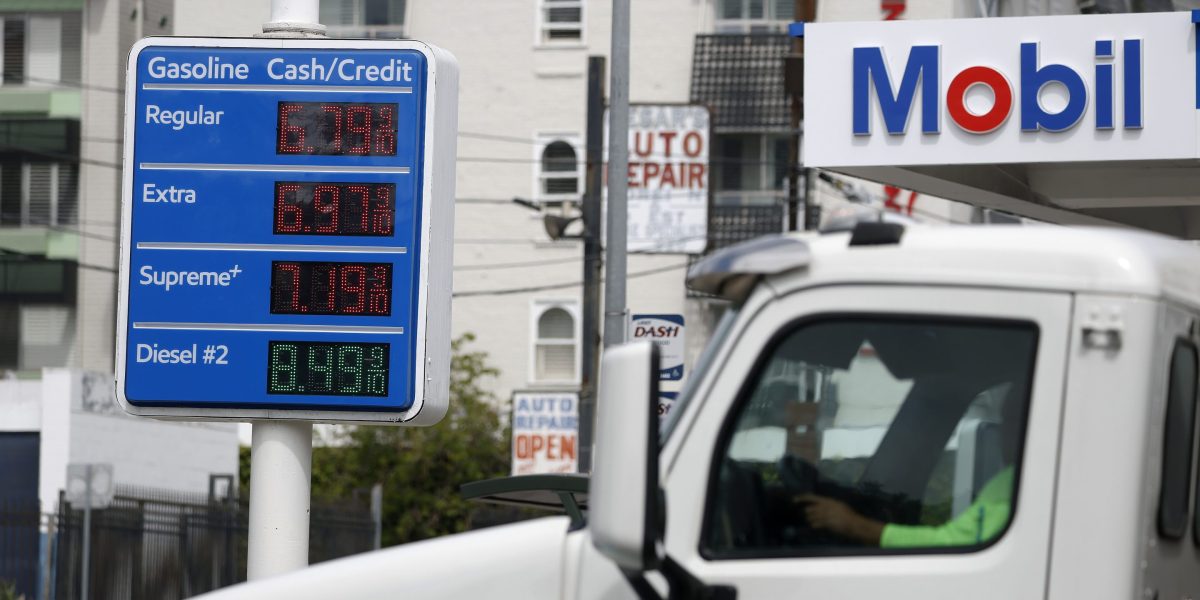
The strategy enters a familiar phase. Economists are warning that the squeeze could spiral into a full recession, but Friday’s labor data dampened those fears. However, the squeeze happens on a different timeline than payrolls, showing up first in credit card balances and demand destruction for gas.
Heather Long’s observation reframes the situation: “There’s the people who earn—I’d put it at $150,000 or more in New York, I’d put it at $125,000 or more elsewhere—there’s no recession going on in their world.”
Author: Evan Null