Source: Fortune
Summary
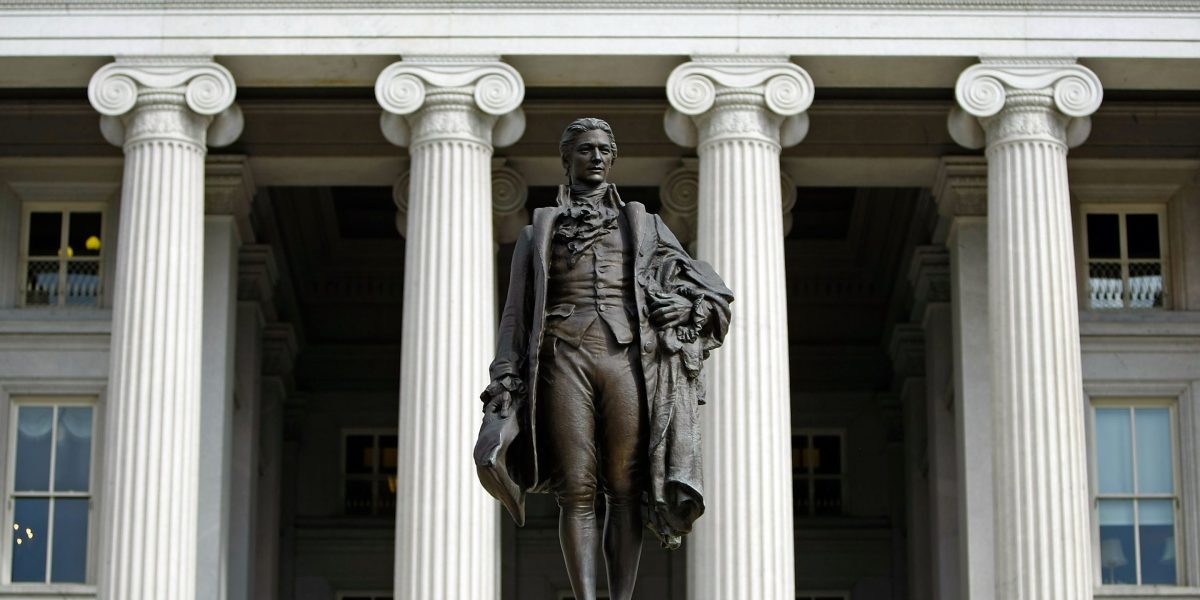
The US debt was once a source of national strength, thanks to Alexander Hamilton’s decision in 1790 to consolidate debts from the Revolutionary War. This move established the country’s creditworthiness and allowed it to borrow money relatively cheaply. Today, US debt is $39 trillion, with interest costs alone reaching $1 trillion a year. Despite growing concerns about the sustainability of the debt, investors continue to buy new US debt, and the Treasury market remains the world’s deepest and most liquid.
Our Reading
The numbers tell one story.
US debt has grown exponentially, with the debt-to-GDP ratio reaching 100% today. The Penn Wharton Budget Model warns that the “outer bound” of federal debt is 210% of GDP, beyond which defaulting on either Treasury debt or pay-as-you-go transfers like Social Security becomes a near certainty. The model estimates that the US has 25 years before hitting this threshold, but this may downplay the risk. Meanwhile, investors continue to buy new US debt, despite growing concerns about the sustainability of the debt.
The US is playing a game of debt chicken, and the clock is ticking.
Author: Evan Null