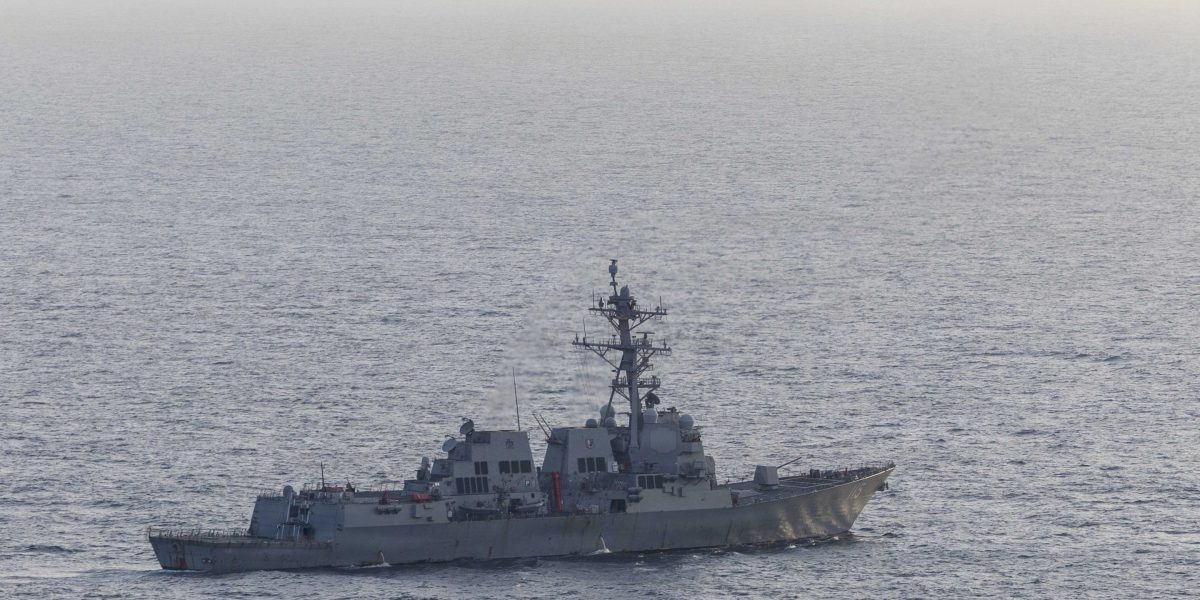
Source: Fortune
Summary
The U.S. military is actively assisting commercial ships in exiting the Persian Gulf through the Strait of Hormuz, with two U.S.-flagged merchant vessels safely underway. The U.S. has destroyed six Iranian small boats and intercepted Iranian cruise missiles and drones, with a naval blockade on Iranian ships remaining in effect. The move comes as part of Project Freedom, announced by President Donald Trump, to guide ships from neutral and innocent countries out of the strait. The conflict has led to a surge in oil prices and a decline in U.S. stock indexes.
Our Reading
The numbers tell one story.
The U.S. military is taking a more active role in the Strait of Hormuz, with Admiral Brad Cooper stating that U.S. forces are “strongly advising” Iranian forces to stay away. The use of language like “Project Freedom” and “neutral and innocent” countries suggests a careful balancing act between assertiveness and restraint. The fact that most shipping companies are reluctant to follow along until fighting has ceased indicates that the situation remains volatile. The U.S. military’s rules of engagement have changed to allow strikes on immediate threats, which could escalate the situation further. The effective closure of the Strait of Hormuz has been Iran’s top source of leverage, and the U.S. is trying to regain control. The situation is a classic example of a “kill box” scenario, where multiple threats converge to create a high-risk environment.
It’s a game of chicken, and someone’s going to blink.
Author: Evan Null