Source: Fortune.com
Summary
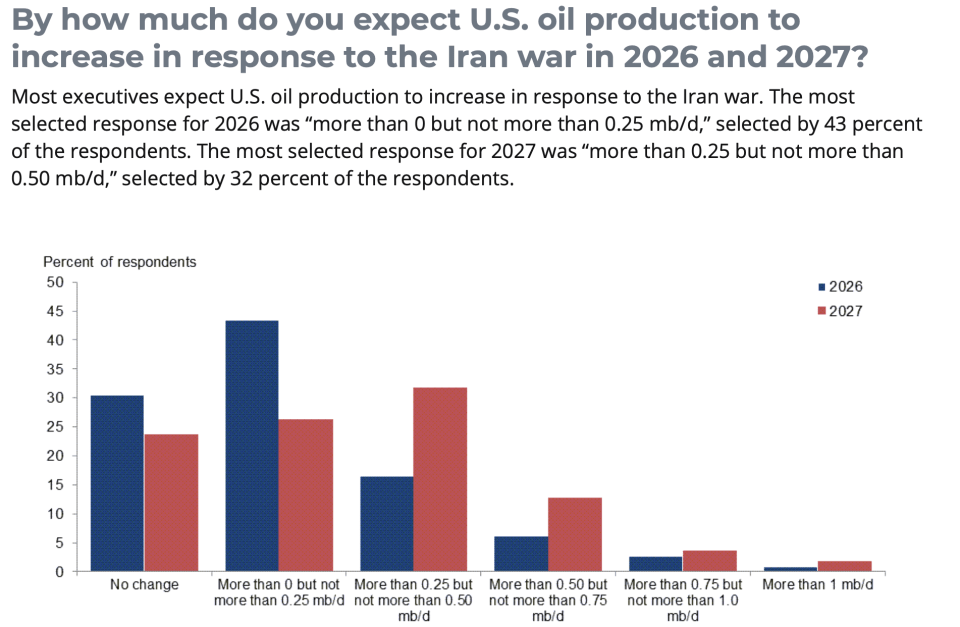
A survey of oil and gas executives by the Dallas Fed found that despite the recent surge in crude prices, companies in the US oil patch do not plan to increase production significantly. The survey revealed that 30% of executives expect no change in US oil production this year, while 43% predict a modest increase of 1-250,000 barrels per day. The executives cited uncertainty and volatility in prices, as well as concerns about the impact of President Trump’s policies, as reasons for their cautious outlook. The survey also found that the extreme volatility in prices has created too much uncertainty, dampening capital spending views.
Our Reading
The numbers tell one story. Despite the surge in crude prices, US oil companies are not rushing to increase production. The Dallas Fed survey reveals a cautious outlook among executives, with many citing uncertainty and volatility in prices. The comments from executives suggest that the Trump administration’s policies and tweets are creating uncertainty and making it difficult for companies to plan for the future. The situation is likely to get worse, with energy experts warning of a reckoning in the oil market.
Uncertainty Reigns in the Oil Patch
Executives are hesitant to increase production due to uncertainty and volatility in prices.
Trump’s Tweets Create Uncertainty
Executives cite Trump’s tweets as a source of uncertainty, making it difficult to plan for the future.
Oil Market Reckoning Looms
Energy experts warn of a reckoning in the oil market, with shortages creeping into parts of Asia and Europe.
Supply Chain Disruptions
The Strait of Hormuz closure has caused supply chain disruptions, with ports taking two months to reopen and tanker crews waiting two to three weeks to feel safe enough to travel through the strait again.
Restarting Oil Production Will Take Time
Reviving oil production will take four months to reach 99% of capacity, according to JPMorgan.
Author: Evan Null