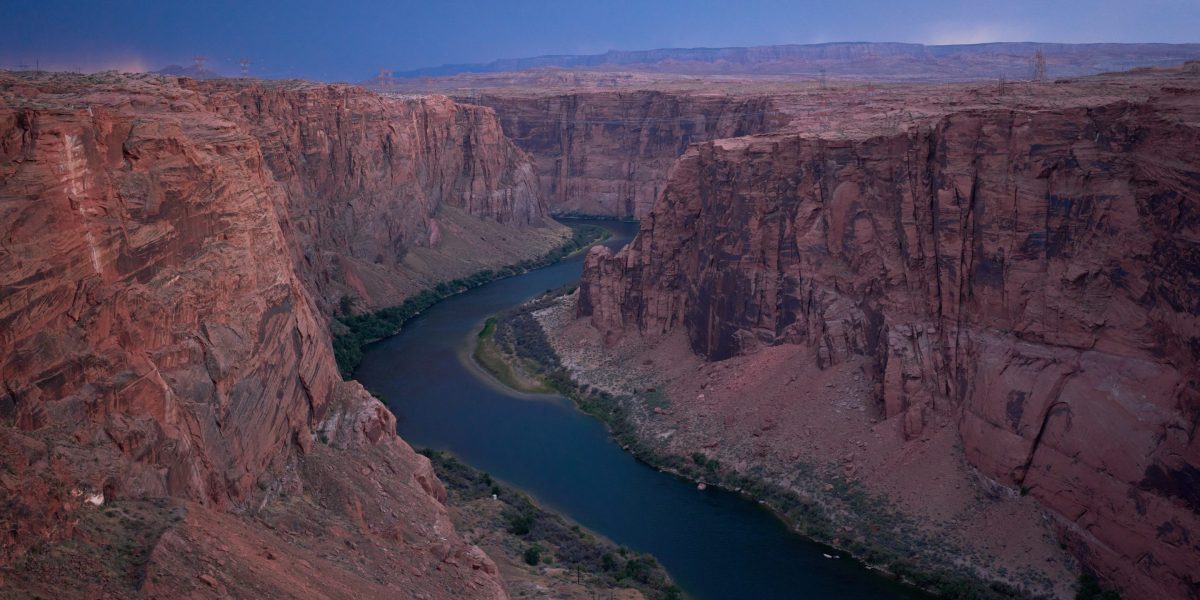
Source: Fortune.com
Summary
Cave Creek, a small Arizona town, is struggling to secure enough water as the Colorado River faces severe depletion. The town relies almost entirely on the river, which serves 40 million people and is shrinking due to climate change and overuse. A federal plan to address the crisis has been criticized as insufficient. Nevada has sued the Interior Department over potential water cuts, while reservoir levels hit record lows. Farmers and communities face uncertainty as water shortages worsen.
Our Reading
The numbers tell one story.
Cave Creek relies on the Colorado River, which is shrinking.
Federal plans don’t address the full crisis.
Nevada sues over potential water cuts.
Reservoirs hit record lows, signaling deepening drought.
Author: Evan Null
Water Cuts and Legal Battles
The Colorado River is a lifeline for millions, but its declining levels are forcing communities to act. Cave Creek, a town of 5,000, is one of many facing water shortages. The federal plan to address the crisis has been met with skepticism, with some officials calling it inadequate. Nevada’s recent lawsuit against the Interior Department highlights the growing tension over water rights and availability.
Reservoirs at Historic Lows
Reservoirs like Lake Mead and Lake Powell, which are critical to the Colorado River system, have reached record lows. These reservoirs are essential for storing water for agriculture, cities, and ecosystems. With snowpack levels at historic lows, the ability to replenish these reservoirs is diminishing, worsening the water crisis.
Impact on Agriculture
Farmers in the region, particularly in Yuma, Arizona, are struggling with uncertainty. While they may avoid immediate cuts, long-term planning is difficult. Crops like citrus and almonds take years to mature, making it hard for farmers to invest in new land. Some have left fields unplanted to help conserve water, but this is not a sustainable solution.
Native American Communities
The Colorado River Indian Tribes are also affected by the water crisis. Despite having some of the oldest water rights, their access is limited by outdated infrastructure. Farmers like Ray Martinez are concerned about the future of their land and the ability to sustain crops. The tribe’s efforts to conserve water are crucial but not enough to reverse the trend.
Uncertainty and Long-Term Planning
The Colorado River crisis is not a short-term issue. Drought is a slow-moving phenomenon, and recovery will take years. Officials like Tom Buschatzke warn that the uncertainty will continue to grow. While El Niño may bring some relief, it won’t undo decades of water depletion. Communities and farmers are left to navigate a future with limited resources and unclear solutions.