Source: Fortune.com
Summary
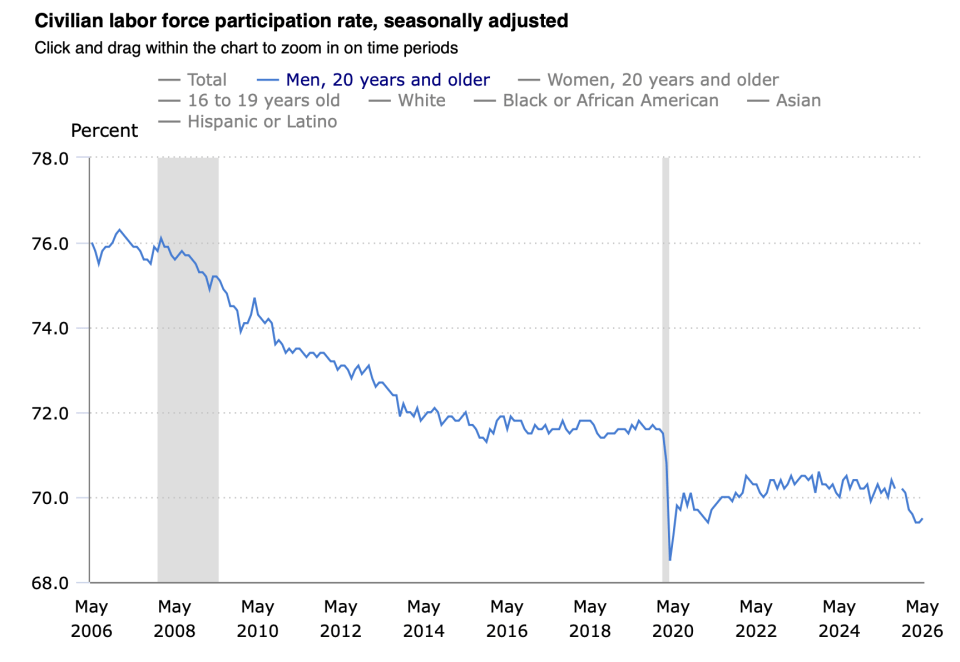
The male labor force participation rate in the US has been declining for generations, with the rate for men 20 years and older falling to 69.5% in May. Economists have proposed various theories to explain this trend, including the loss of construction jobs, the introduction of advanced video games, and a mismatch in skills or disability. A new paper by University of Connecticut economists suggests that men’s beliefs about the benefits of work are shaped by labor market conditions observed during childhood, leading to long-run declines in labor supply.
Our Reading
The numbers tell one story. The male labor force participation rate has been declining for decades, with various theories attempting to explain the trend. Economists have pointed to factors such as job loss, video games, and skills mismatch. However, a new paper suggests that childhood experiences shape men’s beliefs about work, leading to a decline in labor force participation. The phenomenon persists even after men move to a different state, and the effects are stronger among men exposed to the experiences of their own racial group. The paper’s findings imply that managing expectations and cultivating credible, long-run beliefs in the value of work may be an effective response to declining male participation.
It’s not just about the numbers; it’s about the narrative that shapes men’s decisions to participate in the labor force.
Author: Evan Null