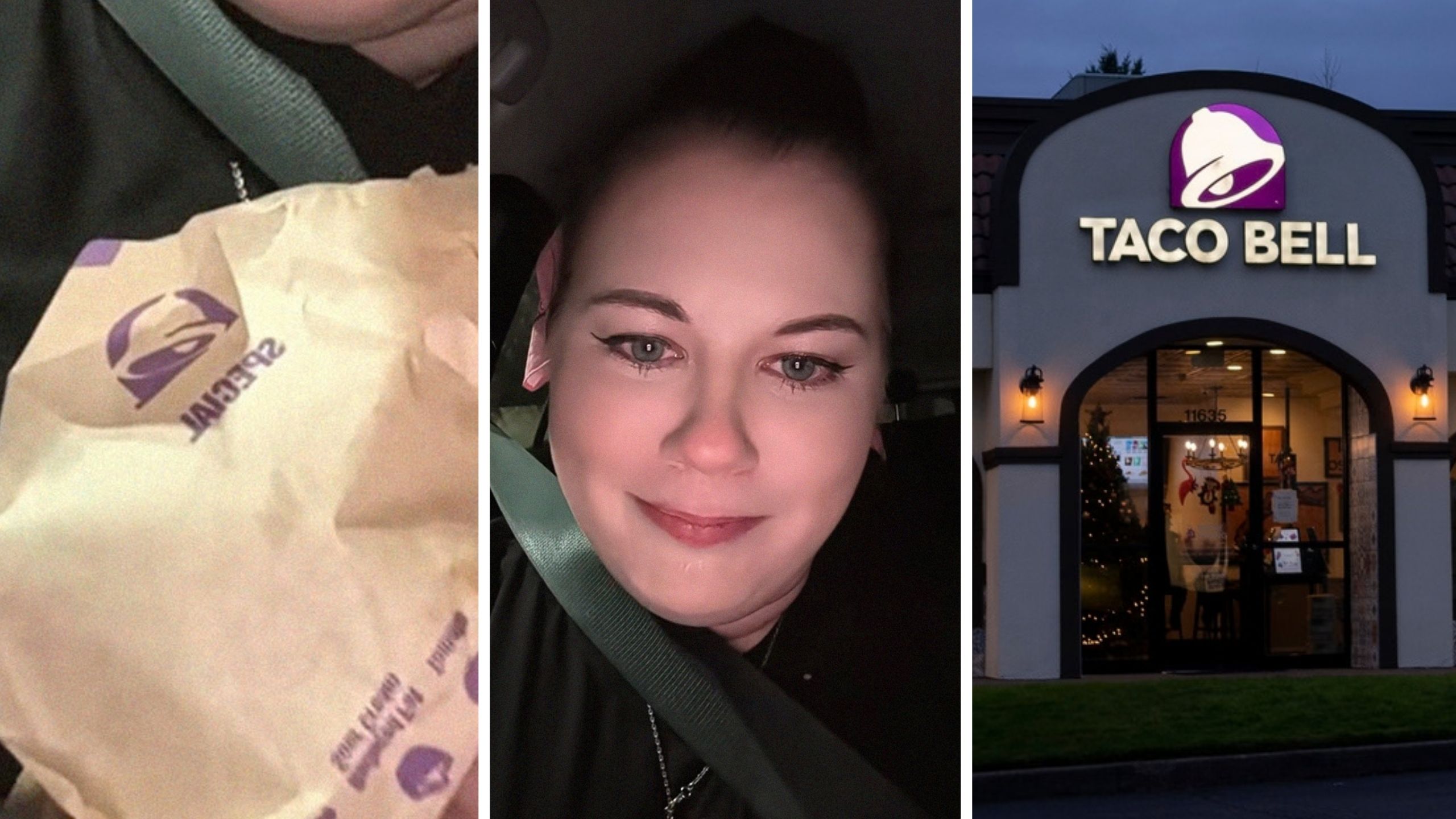
Source: BroBible
Summary
A self-proclaimed witch, Electra, claims that after ghost hunting, she visits Taco Bell to prevent ghosts from following her home. She attributes this to the “Hitchhiker Effect,” a phenomenon suggesting spirits may attach to investigators. Parapsychologists and paranormal researchers have noted similar experiences. The article references historical and cultural uses of bells for spiritual cleansing, linking Taco Bell’s name to this practice.
Our Reading
The habit gets a new name.
Ghosts need a pit stop after work.
Bells are just a brand now.
Paranormal investigators eat late.
Spooky spirits don’t like Crunchwraps.
Author: Evan Null
Can Ghosts Follow You Home?
I’ve investigated the paranormal for 22+ years and have not only heard this assertion several times but may have experienced it myself. My colleague and founder of the American Paranormal Research Association, Brandon Alvis, documented very compelling information regarding this.
After investigating Saugus Train Station, he returned home and saw a door open on its own inside. He immediately took out his audio recorder to document any potentially strange activity. As it turns out, the same mysterious voice he captured at the location he was investigating earlier was also in his home.
Moreover, in some of the locations we explored in “Haunted Discoveries,” Brandon and I cataloged data that suggests entities followed us across different locations.
One interviewee we spoke with during an investigation at the Morgan County Jail also claims to have had this experience. After visiting the decommissioned prison, she drove home. During her commute, she looked into her rearview window and saw a dark shadow figure sitting in the backseat.
The Hitchhiker Effect
Some have referred to this phenomenon as “The Hitchhiker Effect.”
Parapsychologist Loyd M. Auerbach, in his 1986 book “ESP, Hauntings, And Poltergeists,” states that emotional or mental connections investigators make with a site make them prone to taking on hitchhikers. Furthermore, unresolved or unfinished communications may create a pathway for these spirits to tag along with an investigator.
“Ghost Whisperer” Mary Ann Winkowski has also made this claim.
Electra’s joke about Taco Bell, specifically the “bell” part being a spiritual cleansing tool, is rooted in ancient practices. Now chowing down on a Crunchwrap Supreme may be a cure for a “paranormal hangover,” and folks who want hot food late night are left with limited options. This could be why Electra and others decide to use the Live Mas restaurant as a post-investigation pit stop.
Does Stopping At A Second Location Really Work?
At the very least, on a psychological level, separating oneself from a location can be helpful. If, like Auerbach says, there’s indeed an emotional connection made to a place, a mental palate cleanse could do you good.
Furthermore, I, Brandon, and other individuals we’ve investigated with routinely inform any spirits that they aren’t welcome to follow us home. So if you’re out on a paranormal investigation, firmly stating this aloud before leaving a place may help in severing any links established whilst there.
Bells And The Supernatural
Electra’s joke about Taco Bell, specifically the “bell” part being a spiritual cleansing tool, is rooted in ancient practices. Now chowing down on a Crunchwrap Supreme may be a cure for a “paranormal hangover,” and folks who want hot food late night are left with limited options. This could be why Electra and others decide to use the Live Mas restaurant as a post-investigation pit stop.
But the implementation of bells to ward off evil spirits does exist in numerous cultures and religions. Exodus 28:33-35 specifically speaks to the connection bells have to the divine. The cleaning power of bells is also referenced in Ovid’s Fasti 5 429-444. The Latin Reading Blog notes that these writings specifically speak to the power of bells, particularly their efficacy in driving “away evil spirits from your house.”
Other Greco-Roman writings from Lucian of Samosata and Plutarch also laud bells for their evil-repelling properties. Daoist, Assyrian, Babylonian, and Buddhist practices also implement bells. Of course, Catholicism and other Christian denominations routinely use bells.
These spiritual traditions are not ornamental but are tools of consecration.
William Durandus, the Bishop of Mende, wrote in 1284, “Bells are rung in storms that the demons, hearing the trump of the Eternal King … may take flight in terror and cease from raising tempests.”