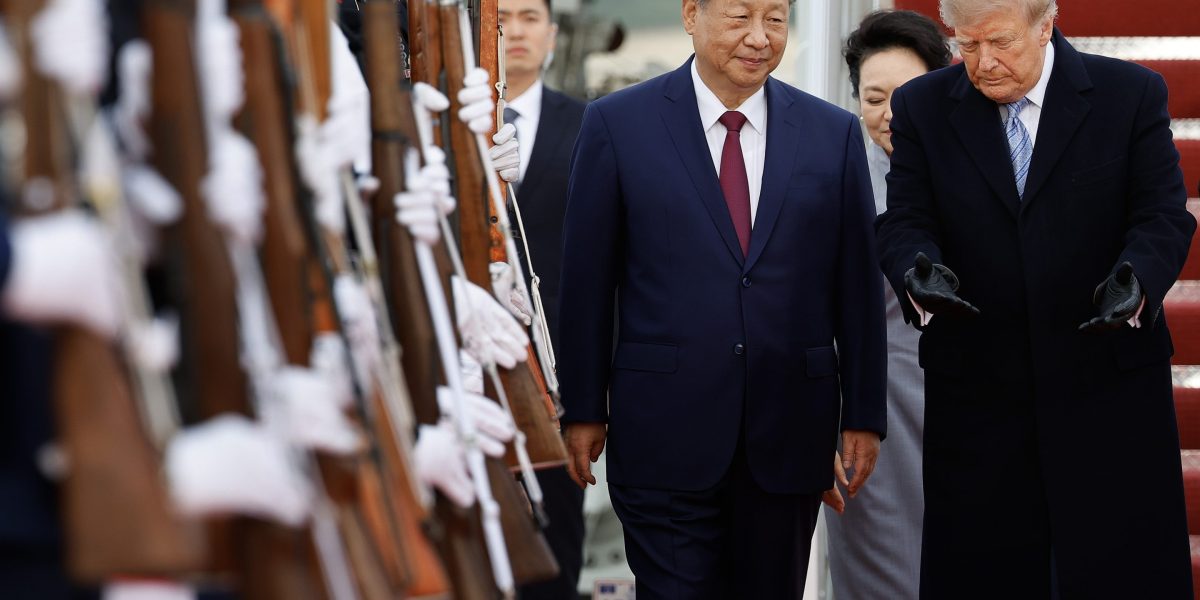
Source: Fortune
Summary
As Xi Jinping prepares to meet with U.S. officials, artificial intelligence is a central topic. The U.S. claims both nations have agreed to an “AI hotline” to address runaway systems. China is now seen as a leader in technology, partly due to U.S. sanctions, which have pushed Beijing to accelerate its tech self-reliance. The 15th Five-Year Plan emphasizes technological sovereignty, with increased investment in semiconductors, robotics, and AI. China is also attracting top global talent and expanding international academic partnerships to support its tech ambitions.
Our Reading
The numbers tell one story.
China is investing heavily in hard tech, with research spending exceeding 3.9 trillion yuan in 2025.
Talent is moving to China, with 85 top researchers relocating between 2024 and 2025.
International partnerships are expanding, with 86 joint institutions approved in 2026.
China is building a tech ecosystem that challenges U.S. dominance.
Author: Evan Null
AI and the New Tech Cold War
The U.S. and China are locked in a high-stakes race for technological supremacy, with artificial intelligence at the center. As Xi Jinping prepares to meet with U.S. leaders, the focus is on AI, with both sides discussing an “AI hotline.” This reflects a broader shift in global tech dynamics, where China is no longer just a follower but a competitor.
U.S. sanctions and trade restrictions have not slowed China’s tech progress but have instead accelerated its push for self-reliance. The 15th Five-Year Plan underscores this shift, with a focus on semiconductors, robotics, and AI. Beijing is investing heavily in research and development, with funding reaching record levels in 2025.
Talent is also moving to China. Over 85 top researchers have relocated to the country in the past year, according to reports. This brain gain is bolstered by high-profile academic appointments, including Nobel laureates joining Chinese universities. The result is a research ecosystem that is now a global frontier, not a fallback.
China is also expanding its influence through international partnerships. In 2026, the country approved 86 joint institutions and 133 joint programs, covering fields like AI and big data. This dual strategy of building domestic sovereignty and global influence is reshaping the tech landscape.
While the U.S. seeks to contain China’s rise, Beijing has already moved beyond the constraints. The tech competition is no longer about catching up—it’s about leading. And with its focus on hard tech, China is positioning itself as a global leader in the AI era.
Sanctions and Self-Reliance
U.S. sanctions have had an unintended effect on China’s tech development. Rather than isolating the country, the restrictions have pushed Beijing to accelerate its self-reliance. The result is a surge in domestic innovation, with companies like ChangXin Memory Technologies and Unitree Robotics leading the charge.
China’s 15th Five-Year Plan is a clear indicator of this shift. The plan emphasizes technological sovereignty, with a focus on semiconductors, robotics, and AI. This is not just about catching up—it’s about building a new tech paradigm that challenges U.S. dominance.
Investment in research is at an all-time high, with over 3.9 trillion yuan allocated in 2025. Basic research funding has also seen a significant increase, surpassing 7% of total spending. This reflects a long-term strategy to build a sustainable tech foundation.
China’s approach is not just about domestic growth—it’s about global influence. By expanding international partnerships and building a hardware-centric AI ecosystem, Beijing is positioning itself as a key player in the global tech race.
The result is a tech landscape that is increasingly dominated by China. With its focus on hard tech and global partnerships, the country is no longer just a competitor—it’s a leader in the AI era.
The Talent Shift
China’s tech rise is being fueled by a surge in top talent. Over 85 world-class researchers have relocated to the country in the past year, according to reports. This brain gain is reshaping the research landscape, with Nobel laureates and other top scientists joining Chinese institutions.
Academic superstars like Omar Yaghi, Hartmut Michel, and Andre Geim have all made the move to China, bringing their expertise to research institutions like Tsinghua University and the University of Hong Kong. This trend is not just about individual choices—it’s a strategic shift by Beijing to attract global talent.
The result is a research ecosystem that is now a global frontier. According to a study by the Carnegie Endowment, over 57% of top AI talent in 2025 had degrees from Chinese institutions. This marks a significant shift from previous years, where U.S. institutions dominated.
China’s ability to attract and retain top talent is a key factor in its tech rise. With a focus on long-term investment and research, the country is building a sustainable foundation for innovation. This is not just about catching up—it’s about leading.
As more scientists and researchers move to China, the country is solidifying its position as a global tech leader. The talent shift is a clear indicator of this trend, with Beijing positioning itself as the new center of innovation.
Global Influence and Open-Source Ecosystems
China is not only building its own tech capabilities but also expanding its influence through open-source ecosystems. Platforms like Kimi K3, Qwen, and DeepSeek are enabling countries in the Global South to develop their own AI without relying on Western infrastructure. This is a strategic move to challenge the dominance of U.S. tech firms.
By promoting open-source models, China is creating an alternative to the Western-dominated tech landscape. This approach allows for greater autonomy, as countries can build their own AI systems without being dependent on U.S. platforms. It’s a way to reshape the global tech order.
China’s strategy is also about building a hardware-centric ecosystem. This includes everything from semiconductors to AI-driven vehicles, which generate commercial revenue and provide real-world data for training AI models. This data is a key asset, one that U.S. firms cannot replicate.
International partnerships are also playing a role in this expansion. China is investing in joint institutions and programs, which help spread its tech influence. These partnerships are not just about collaboration—they’re about building a global network of support for Chinese tech.
As China continues to expand its open-source and hardware ecosystems, it is reshaping the global tech landscape. The result is a new era of competition, where China is no longer just a player—it’s a leader.
The Cost of Leadership
China’s focus on hard tech has come at a cost. Heavy investment in research and development has left the consumer market sluggish, with household consumption lagging behind the surging tech sector. This two-speed economy is a trade-off that Beijing has accepted in pursuit of technological sovereignty.
The shift from property- and consumer-led growth to tech-driven development has had a significant impact. While the hard-tech sector is booming, the consumer market is struggling. This has created a gap that could affect overall economic stability.
Despite these challenges, Beijing has prioritized technological self-reliance. U.S. pressure has convinced China that tech sovereignty is a matter of national survival. This mindset has driven the country’s aggressive investment in semiconductors, AI, and robotics.
The result is a tech landscape that is increasingly dominated by China. With its focus on long-term growth and self-reliance, the country is positioning itself as a global leader. The cost is high, but the goal is clear: to build a tech ecosystem that is independent and resilient.
As the U.S. debates how to contain China’s rise, Beijing has already moved beyond the constraints. The tech competition is no longer about catching up—it’s about leading. And with its focus on hard tech, China is well on its way to becoming the dominant force in the AI era.