Source: Fortune.com
Summary
Gavin Newsom, California’s Democratic governor, is positioning himself as a potential 2028 presidential candidate, despite concerns about his association with California, a state often viewed negatively in the South. Voters in South Carolina, where Newsom campaigned, expressed mixed opinions about his appeal. His team acknowledges “California derangement syndrome” but believes he can reframe the narrative. Newsom focused on attacking Donald Trump and emphasizing his readiness to fight for Democratic values. Critics, including Republicans, argue that his California roots could hurt his national appeal.
Our Reading
The announcement sounds familiar.
Newsom is building a 2028 campaign while downplaying California’s political baggage.
Voters in South Carolina are skeptical but intrigued by his celebrity image.
His team knows the history of California governors failing in national races.
He’s trying to reframe the conversation, but the state remains a liability.
Author: Evan Null
California as a Liability
Gavin Newsom, the governor of California, is facing a unique challenge as he looks to build a national political presence. His home state, often seen as a symbol of progressive values, is also a source of controversy and criticism, especially in more conservative regions like South Carolina. This duality makes it difficult for Newsom to appeal to a broad audience, as many voters associate California with policies and attitudes they find extreme or out of touch.
Newsom’s campaign is in its early stages, but his team is already aware of the hurdles. They recognize that California’s reputation, often referred to as “California derangement syndrome,” could work against him. This term describes the widespread dislike of the state, particularly among voters who feel that California’s policies and culture are too liberal or disconnected from their own experiences. Despite this, Newsom is not backing down and is actively trying to reframe the narrative around his candidacy.
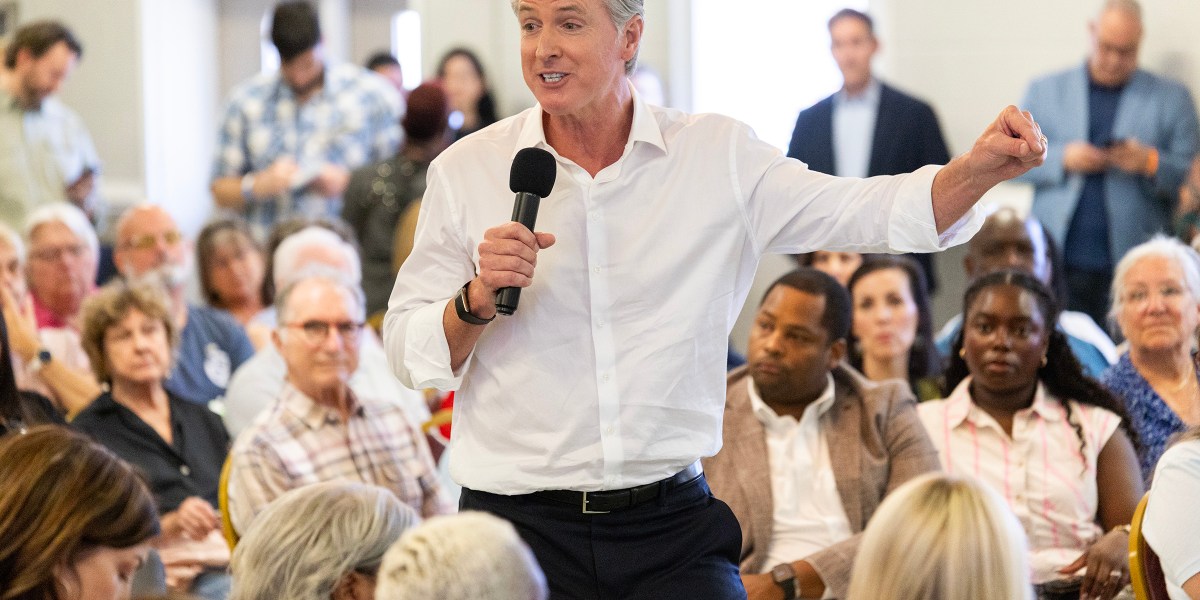
During his recent trip to South Carolina, Newsom focused on attacking Donald Trump and rallying Democrats to stand up against what he described as an “invasive species” in the form of the former president. This strategy is designed to shift the focus away from his California roots and onto the broader political battle. However, the question remains whether he can successfully distance himself from the state’s reputation and build a coalition that spans across the political spectrum.
Newsom’s team is also aware that his presence in South Carolina is being closely watched. While some voters are drawn to his celebrity status and political experience, others are skeptical about his ability to connect with the broader electorate. This mixed reception highlights the challenges he faces as he tries to position himself as a viable candidate for the 2028 presidential race.
Despite the challenges, Newsom is not hiding his ambitions. He has left the door open for a potential presidential run and is actively engaging with voters across the country. However, the road ahead is fraught with obstacles, and the question of whether he can overcome the stigma associated with his home state remains unanswered.
Newsom’s Strategy and Challenges
Newsom’s strategy involves positioning himself as a strong leader who can stand up to Donald Trump and other conservative figures. He has been vocal about his opposition to Trump’s policies, particularly those related to immigration, healthcare, and the economy. This approach is designed to appeal to Democrats who are looking for a candidate who can effectively challenge the Republican Party. However, the challenge lies in balancing this message with the need to address the concerns of voters who are skeptical of California’s influence.
Newsom’s team has also been working to highlight his experience and achievements in California. They point to progressive policies such as expanded healthcare coverage, increased minimum wage, and aggressive climate change initiatives as evidence of his leadership. These accomplishments are meant to showcase his ability to deliver results and build a strong record that can be leveraged in a national campaign.
Despite these efforts, Newsom’s association with California remains a significant hurdle. Many voters, especially in the South, view the state as a place of extreme liberalism and are wary of its influence. This perception is reinforced by the actions of Republican activists, who have been vocal in their criticism of Newsom and his policies. They argue that his California roots make him ill-suited for a national role and that his focus on progressive issues is out of step with the values of many voters.
Newsom’s campaign is also facing the challenge of building a broad coalition of support. While he has the backing of some Democrats and progressive activists, he needs to win over more moderate and independent voters who are essential for a successful presidential run. This requires a careful balance of messaging that appeals to both the party’s base and the broader electorate.
As the 2028 race begins to take shape, Newsom’s ability to navigate these challenges will be crucial. His campaign will need to address the concerns of voters while also showcasing his strengths and accomplishments. The road to the White House is long and complex, and Newsom’s success will depend on his ability to overcome the stigma associated with his home state and build a compelling narrative that resonates with a wide range of voters.
Public Perception and Media Coverage
Public perception of Newsom is mixed, with many voters expressing both interest and skepticism. During his recent campaign stops in South Carolina, Newsom was met with a mix of enthusiasm and criticism. Some voters were drawn to his celebrity status and political experience, while others were wary of his association with California. This divide highlights the challenges he faces in building a broad base of support.
Media coverage of Newsom has also been varied. While some outlets have highlighted his potential as a presidential candidate, others have focused on the challenges he faces due to his California roots. This coverage has contributed to the perception that Newsom is a polarizing figure, with supporters praising his leadership and critics questioning his ability to connect with a wider audience.
Newsom’s campaign has also been affected by the broader political climate. The rise of Donald Trump and the increasing polarization of the political landscape have made it more difficult for candidates to build a unified message. Newsom’s focus on attacking Trump has been a key part of his strategy, but it has also drawn criticism from some who argue that he is not addressing the concerns of voters directly.
The media’s role in shaping public opinion is also a factor in Newsom’s campaign. His appearances on national outlets like Fox News have helped to increase his visibility, but they have also exposed him to criticism from both sides of the political spectrum. This visibility is important for building name recognition, but it also means that his every move is scrutinized by voters and analysts alike.
As the 2028 race approaches, the media’s coverage of Newsom will continue to play a significant role in shaping public perception. His ability to navigate this landscape and maintain a positive image will be crucial to his success. The challenge lies in balancing the need for visibility with the need to address the concerns of voters who are skeptical of his candidacy.
Historical Context and Political Legacy
Newsom’s campaign is not the first to face the challenges of running from California. The state has a long history of producing presidential candidates who have struggled to gain national support. Former governors like Ronald Reagan, Pete Wilson, and Jerry Brown have all faced difficulties in their bids for the White House, often due to the perception of California as an extreme or out-of-touch state.
This historical context is a significant factor in Newsom’s campaign. His team is aware that the legacy of previous California candidates could work against him, and they are working to reframe the narrative around his candidacy. This includes highlighting his achievements in California and positioning him as a leader who can appeal to a broader audience.
Newsom’s campaign is also influenced by the political landscape of the 2028 race. With a wide range of potential candidates, including figures like Pete Buttigieg and Josh Shapiro, Newsom must differentiate himself and build a compelling case for his candidacy. This requires a careful balance of messaging that addresses the concerns of voters while also showcasing his strengths and accomplishments.
The challenges faced by previous California candidates highlight the importance of building a strong and cohesive campaign. Newsom’s team is aware that the road to the White House is long and complex, and they are working to ensure that his campaign is well-positioned to overcome these obstacles. This includes addressing the concerns of voters who are skeptical of his association with California and building a message that resonates with a wide range of voters.
As the 2028 race begins to take shape, the historical context of California’s political legacy will continue to play a role in shaping public perception. Newsom’s ability to navigate this landscape and build a compelling narrative will be crucial to his success. The challenge lies in balancing the need to address the concerns of voters with the need to showcase his strengths and accomplishments in a way that resonates with a broad audience.
Future Prospects and Challenges
As the 2028 presidential race approaches, Newsom’s campaign will need to address a range of challenges and opportunities. One of the key factors that will determine his success is his ability to build a broad coalition of support. This requires a careful balance of messaging that appeals to both the Democratic base and the broader electorate, particularly in key battleground states.
Newsom’s campaign will also need to navigate the complex political landscape of the 2028 race. With a wide range of potential candidates, including figures like Pete Buttigieg and Josh Shapiro, Newsom must differentiate himself and build a compelling case for his candidacy. This will require a strong focus on his achievements in California and his ability to connect with voters across the political spectrum.
Another challenge for Newsom is the need to address the concerns of voters who are skeptical of his association with California. This includes addressing the perception that the state is too liberal and out of touch with the values of many voters. His campaign will need to work to reframe the narrative around his candidacy and build a message that resonates with a wide range of voters.
Newsom’s team is also aware of the importance of media coverage in shaping public perception. His appearances on national outlets like Fox News have helped to increase his visibility, but they have also exposed him to criticism from both sides of the political spectrum. This visibility is important for building name recognition, but it also means that his every move is scrutinized by voters and analysts alike.
As the 2028 race begins to take shape, the challenges and opportunities facing Newsom will continue to evolve. His ability to navigate these challenges and build a compelling narrative will be crucial to his success. The road to the White House is long and complex, and the outcome will depend on his ability to connect with voters and build a strong and cohesive campaign.