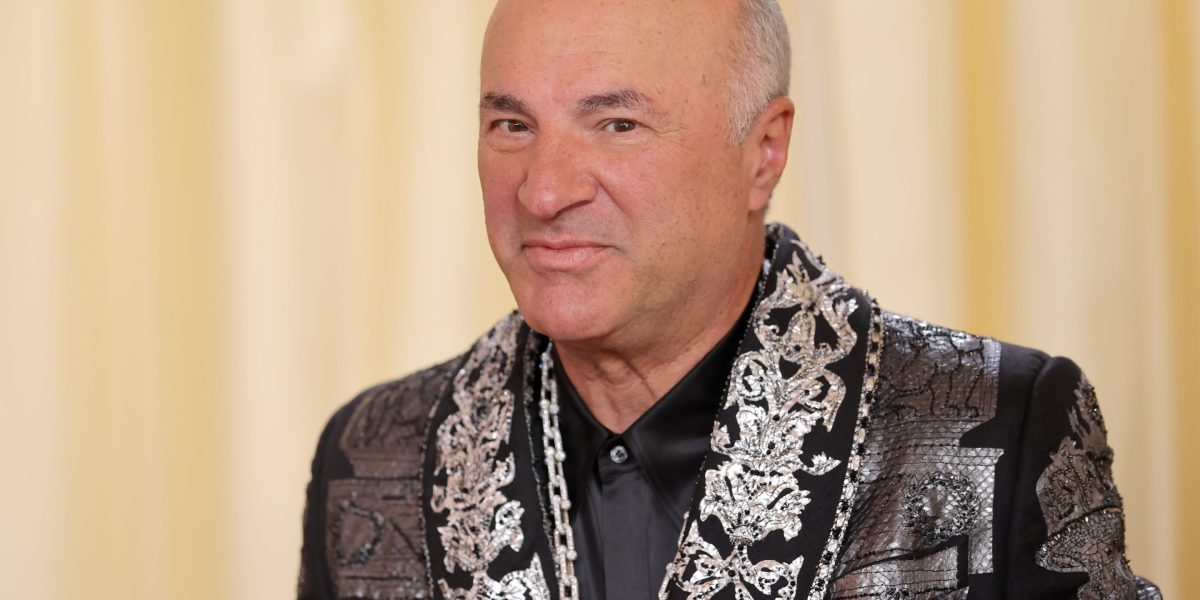
Source: Fortune.com
Summary
Kevin O’Leary, a Shark Tank investor, advises saving 15% of every dollar earned to build wealth through compound interest. He claims that a $68,000 annual salary, with consistent savings, could lead to a million-dollar retirement. However, financial experts note that many Americans struggle to save even a fraction of that due to rising living costs. The article explores whether O’Leary’s math holds up and compares his advice to other financial experts like Warren Buffett and Suze Orman.
Our Reading
The numbers tell one story.
O’Leary pushes 15% savings as a golden rule.
His math assumes 10% annual returns and 40 years of consistent contributions.
Average Americans face real-world hurdles like rent, groceries, and debt.
Experts agree on saving, but the gap between advice and reality is wide.
Author: Evan Null
Kevin O’Leary’s 15% Rule
Kevin O’Leary, known for his role on Shark Tank, has long advocated for a simple financial rule: save 15% of every dollar earned. He claims this approach, if followed consistently, can lead to a million-dollar retirement. His advice is based on the power of compound interest, which he believes is the “gift the market gives you.”
O’Leary’s logic is straightforward. He argues that by setting aside 15% of income—whether from a paycheck, side hustle, or other sources—individuals can build wealth over time. He emphasizes that the key is to let the money grow without interference, allowing it to compound over decades. This method, he says, is a reliable way to achieve financial security in retirement.
His advice aligns with the principles of long-term investing, particularly in index funds. O’Leary’s approach mirrors that of Warren Buffett, who has often recommended investing in the S&P 500 as a way to outperform most active fund managers. However, O’Leary’s focus on 15% savings sets him apart from other financial experts who may suggest different percentages based on individual circumstances.
Despite the appeal of O’Leary’s advice, many Americans struggle to save even a fraction of 15% due to rising living costs, student debt, and stagnant wages. The article highlights the challenges of implementing such a strategy, particularly for those in the middle-income bracket who are already stretched thin.
While O’Leary’s math checks out on paper, the real-world application is more complex. The article questions whether his advice is realistic for the average American, given the current economic landscape. It also explores the broader debate around retirement savings, including the role of employer-sponsored plans and the impact of inflation on long-term financial goals.
Does the Math Add Up?
O’Leary’s claim that saving 15% of a $68,000 salary could lead to a million-dollar retirement is based on historical returns of the S&P 500. Assuming a 10% annual return and consistent contributions over 40 years, the numbers suggest a significant accumulation of wealth. However, the article points out that this assumes ideal conditions, such as no market downturns and no changes in income or expenses.
Even with a more conservative 7% return, the numbers still suggest a substantial retirement fund. But the article notes that many Americans are not in a position to save 15% of their income. The average personal savings rate in the U.S. is around 4.4%, far below O’Leary’s recommendation. This discrepancy raises questions about the feasibility of his advice for the average worker.
Additionally, the article examines the impact of taxes and living expenses on savings. After taxes, a $68,000 salary leaves about $52,000 in take-home pay. When factoring in rent, groceries, utilities, and other expenses, there is little left for savings. This makes it difficult for many Americans to meet O’Leary’s 15% target, even if they wanted to.
Despite these challenges, O’Leary remains confident in his approach. He argues that younger generations need to rethink their spending habits and prioritize saving over unnecessary purchases. His message is clear: investing early and consistently is the key to long-term financial success.
The article also highlights the importance of financial education and planning. While O’Leary’s advice is simple, it requires discipline and a long-term perspective. For many Americans, the challenge is not just saving 15%, but understanding how to manage their money effectively over time.
Other Financial Experts’ Perspectives
O’Leary’s advice is not unique in the world of personal finance. Warren Buffett, one of the most successful investors of all time, has long advocated for a similar approach. Buffett recommends investing in low-cost index funds, particularly the S&P 500, as a way to achieve steady growth over time. His philosophy aligns with O’Leary’s emphasis on long-term investing and the power of compounding.
Buffett’s approach is more focused on asset allocation, suggesting that investors should allocate 10% of their portfolio to short-term government bonds and 90% to an S&P 500 index fund. This strategy is designed to balance risk and reward, providing steady growth while minimizing exposure to market volatility. While O’Leary’s advice is more about the amount saved than the specific investments, both experts agree on the importance of consistency and time.
Another financial expert, Suze Orman, has also emphasized the importance of saving for retirement. Orman recommends that individuals save at least 10% of their income each year, particularly given the rising costs of healthcare and the increasing life expectancy of Americans. She has also suggested that 70 should be the new retirement age, as many people are not financially prepared to retire in their 60s.
Orman’s advice reflects a broader concern about the financial preparedness of Americans. With rising healthcare costs and the potential for longer retirements, she argues that individuals need to save more than they might expect. This perspective aligns with O’Leary’s emphasis on early and consistent savings, but with a greater focus on the long-term implications of retirement planning.
While O’Leary, Buffett, and Orman all agree on the importance of saving, their approaches differ in terms of specific strategies and recommendations. O’Leary’s focus on 15% savings is more about the amount, while Buffett and Orman are more concerned with the types of investments and the overall financial plan. However, all three experts agree that discipline and long-term thinking are essential for building wealth.
The Real-World Challenges of Saving 15%
Despite the theoretical appeal of O’Leary’s 15% savings rule, the reality for many Americans is far more complicated. The average personal savings rate in the U.S. is just 4.4%, according to the Bureau of Labor Statistics. This means that most Americans are not saving even a fraction of what O’Leary recommends. The challenge is not just about the amount saved, but also about the ability to maintain consistent savings over time.
For those earning $68,000 a year, the math suggests that saving 15% would require setting aside $10,200 annually, or about $850 per month. However, after taxes, take-home pay is around $52,000, leaving about $4,333 per month for other expenses. This makes it difficult to set aside $850 each month without sacrificing other essential needs.
Additional expenses such as rent, groceries, utilities, and student loan payments further reduce the amount available for savings. For example, the average rent in the U.S. is $1,740 per month, leaving only $2,593 for other expenses. Adding in groceries, utilities, and student loan payments, the remaining amount is often insufficient to meet O’Leary’s 15% target.
Even if individuals could save 15% of their gross income, the impact of inflation and rising living costs could erode the value of their savings over time. This raises questions about the long-term viability of O’Leary’s advice, particularly in a period of economic uncertainty and financial instability.
Moreover, not all Americans have access to employer-sponsored retirement plans like 401(k)s, which can make it even more difficult to save consistently. Without employer matching contributions, individuals must rely on their own savings, which can be challenging given the current economic environment.
The Role of Financial Education and Planning
O’Leary’s advice, while simple, highlights the importance of financial education and planning. Many Americans lack the knowledge or tools needed to make informed decisions about their money. Without a clear understanding of how to save, invest, and manage debt, it can be difficult to build long-term wealth.
Financial education plays a critical role in helping individuals develop healthy money habits. By learning about budgeting, saving, and investing, people can make more informed decisions about their financial future. This is particularly important for younger generations, who may not have had the opportunity to learn about personal finance in school.
However, financial education alone is not enough. Many Americans face systemic barriers that make it difficult to save and invest. These include stagnant wages, rising living costs, and a lack of access to affordable financial services. Addressing these issues requires a broader conversation about economic policy and financial inclusion.
Despite these challenges, O’Leary’s message remains relevant. His emphasis on early and consistent savings is a valuable lesson for anyone looking to build wealth over time. While the path to financial security may be difficult, the principles he advocates—discipline, patience, and long-term thinking—can help individuals achieve their goals.
Ultimately, the key to financial success is not just about saving a certain percentage of income, but about developing a mindset that prioritizes long-term growth over short-term gratification. By making smart financial decisions and staying committed to their goals, individuals can build a more secure and prosperous future for themselves and their families.