Source: Fortune.com
Summary
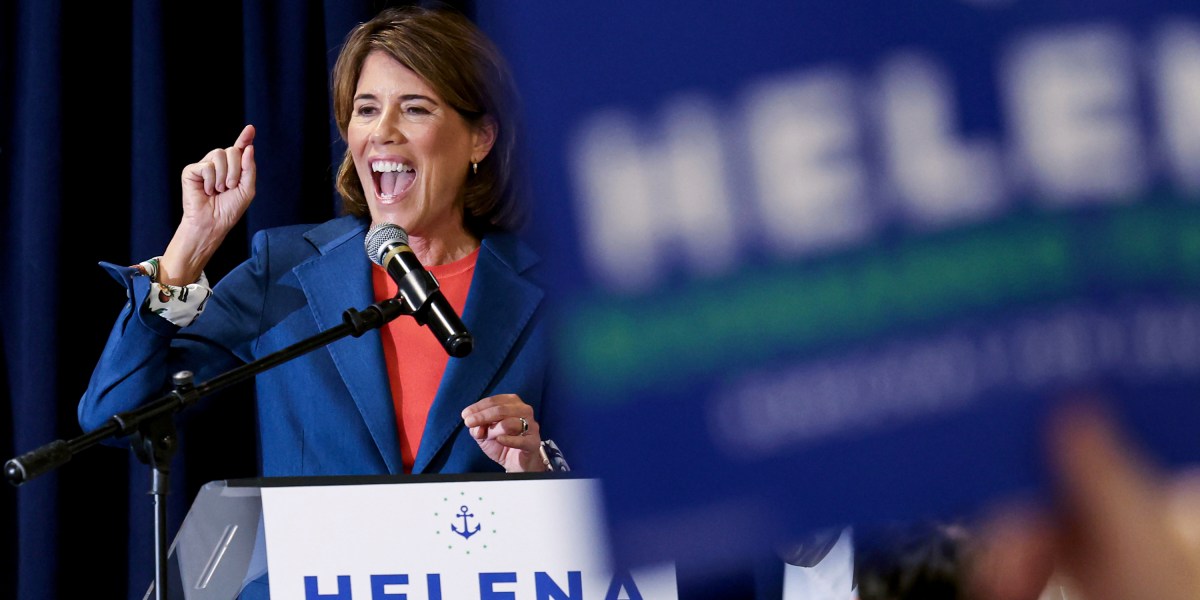
Rhode Island Gov. Dan McKee faces a primary challenge from Helena Foulkes, a former CVS Health executive. Foulkes has outspent McKee and criticized his handling of a bridge repair project that has caused traffic disruptions. McKee, 75, is trying to avoid becoming the first U.S. governor to lose a primary since 2018. Foulkes, 62, claims state government favors a small group and has accused McKee of prioritizing profits over people. The winner of the Sept. 9 primary will likely win the general election.
Our Reading
The numbers tell one story.
McKee faces a primary challenge from a former corporate executive.
Foulkes has outspent him and criticized his bridge repairs.
McKee accuses her of putting profits over people.
Corporate ties and public projects make for a familiar political clash.
Author: Evan Null
Bridge Drama Haunts the Campaign
The Washington Bridge in Providence has become a central issue in the race. Gov. Dan McKee closed the westbound side in 2023 due to a critical failure, causing major traffic disruptions. The repairs have taken longer than expected, with costs rising and the completion date pushed to 2028. Foulkes has used the bridge as a key point of criticism against McKee, arguing that his leadership has failed the people of Rhode Island.
McKee has defended his decision, saying he prioritized safety and that the bridge will be completed before Baltimore’s Francis Scott Key Bridge, which collapsed in 2024. However, the ongoing issues have made the bridge a symbol of government inefficiency. Political analysts say that infrastructure projects like this often become easy targets for criticism, as they are directly tied to state government responsibility.
The bridge’s impact on daily life has made it a hot topic in the campaign. With nearly 100,000 vehicles crossing the bridge each day, the disruption has affected residents and businesses alike. Foulkes has used this to argue that McKee is out of touch with the concerns of everyday voters, while McKee continues to frame the issue as a matter of safety and long-term planning.
As the primary approaches, the bridge remains a key battleground. Both candidates are using it to shape their narratives, with Foulkes painting McKee as a leader who fails to deliver on promises, and McKee trying to position himself as the one who keeps the state safe and on track.
The bridge saga has also highlighted the challenges of governing in a state with a strong Democratic leaning. While McKee has the support of many in his party, Foulkes has been able to tap into growing frustration with incumbents, making the race more competitive than expected.
McKee Attacks Foulkes’ Work at CVS
McKee has shifted his focus to Foulkes’ corporate background, accusing her of being an out-of-touch executive who prioritized profits over people. He has specifically targeted her time at CVS Health, where she served as president of the pharmacy division from 2014 to 2018. McKee claims she helped fuel the opioid crisis during her tenure, a charge Foulkes denies.
Foulkes has responded by pointing to CVS’ efforts to reduce opioid prescriptions during her time at the company. She notes that the company cut its opioid dispersal by 40% while she was in charge. However, after she left, CVS agreed to pay $5 billion to settle opioid-related lawsuits, which she says was not her responsibility.
McKee’s attacks have drawn pushback from business leaders in Rhode Island, who have warned him to stop criticizing CVS. Foulkes has argued that his rhetoric could drive businesses away from the state, citing a letter from the 50 largest companies in Rhode Island urging him to stop his campaign against her.
Despite these challenges, Foulkes continues to position herself as an outsider who can bring change to a state she says is being run by a small group of powerful interests. She has also gained support from voters in McKee’s hometown of Cumberland, where he once served as mayor.
The debate over Foulkes’ corporate past has become a key part of the race, with both candidates using it to shape their public image. McKee tries to paint her as a corporate figure who doesn’t understand the struggles of working people, while Foulkes argues that he is out of touch and unwilling to listen to the concerns of everyday voters.
Foulkes’ Political Background and Support
Helena Foulkes comes from a prominent political family. Her grandfather, Thomas Dodd, and her uncle, Chris Dodd, were both Democratic senators in Connecticut. This background has given her a level of political credibility and connections that she has used to build her campaign.
Foulkes worked at CVS Health for 25 years, eventually becoming president of the company’s pharmacy division. She later served as CEO of the Canadian retail giant Hudson’s Bay Company before leaving in 2020. Her corporate experience has been both a point of criticism and a source of support for her campaign.
Despite her corporate background, Foulkes has been able to attract a growing base of support, including some Democrats from McKee’s hometown of Cumberland. She has positioned herself as an outsider who can challenge the status quo and bring fresh ideas to the state’s leadership.
Her campaign has also been bolstered by the growing frustration with incumbents in Rhode Island. Democratic voters have shown a willingness to support challengers, which has given Foulkes a chance to make history by potentially unseating McKee.
While Foulkes has faced criticism for her corporate ties, she has also been able to use them to build a network of support and resources. Her campaign has been well-funded and has been able to outspend McKee, giving her a strong presence in the race.
The Role of the Democratic Party and Labor Unions
The Democratic Party in Rhode Island has not endorsed either McKee or Foulkes in the primary race, which has left the candidates to fight for support on their own. This lack of party backing has made the race more competitive and has given Foulkes a chance to gain traction without the traditional support of the party establishment.
Similarly, the state AFL-CIO, which represents labor unions, has also not endorsed either candidate. This has left the labor movement in a neutral position, which could be a factor in how the race plays out. McKee has tried to position himself as a candidate who represents the working class, but without the backing of the unions, his message may not resonate as strongly.
Foulkes, on the other hand, has been able to build support from a wide range of voters, including those who may not have traditionally supported her. She has also been able to tap into the growing frustration with the political establishment, which has helped her gain momentum in the race.
As the primary approaches, the lack of party and union support for either candidate has created a more open field. This has allowed Foulkes to build her campaign on her own terms, while McKee has had to rely on his own resources and connections to stay competitive.
The absence of traditional endorsements has also made the race more unpredictable, with both candidates having to work harder to win over voters. This dynamic has added to the tension in the race and has made it more difficult for either side to gain a clear advantage.