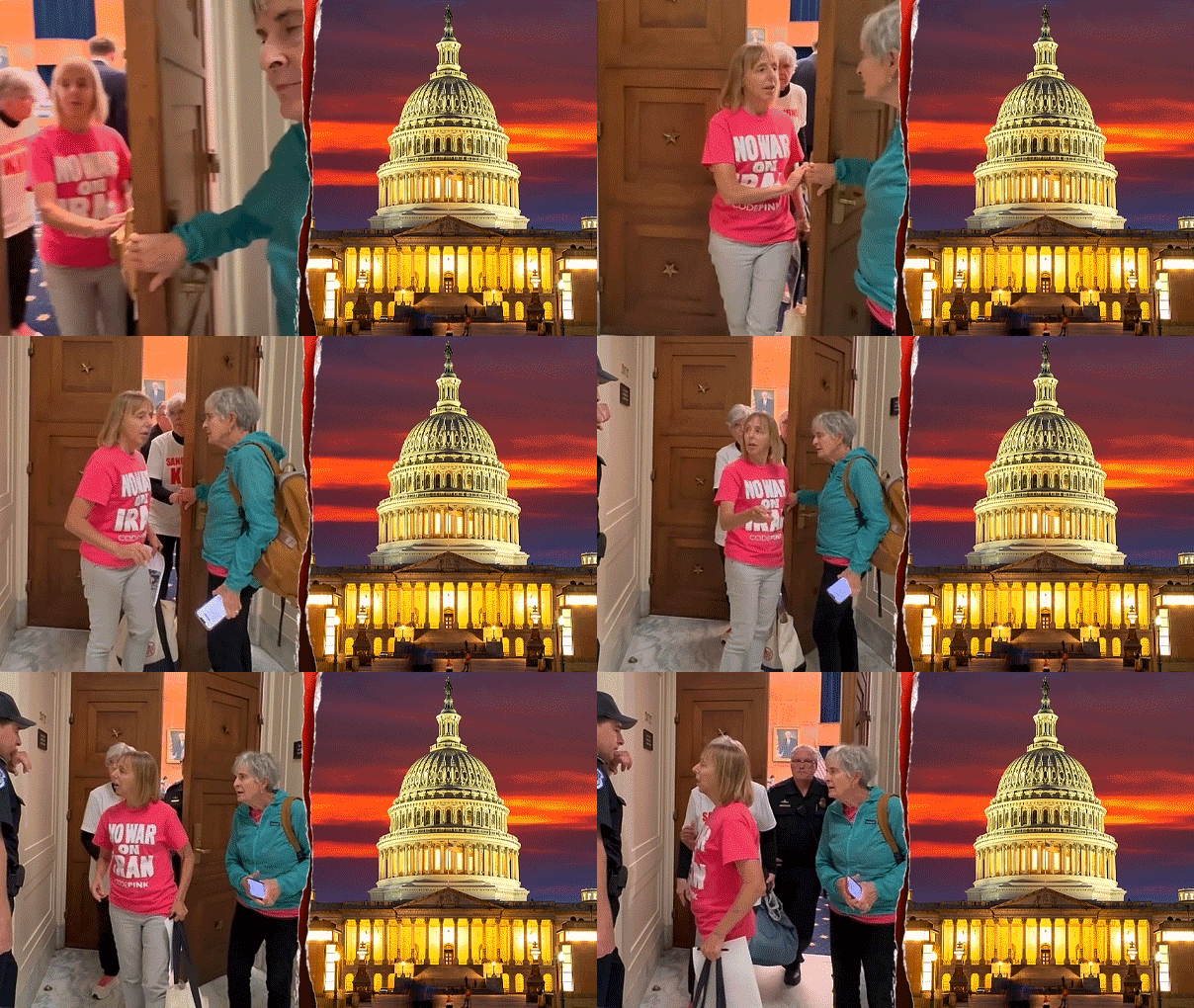
Source: Fox News
Summary
Lawmakers on the House Foreign Affairs Committee accused activists from CodePink and other groups of acting as “Trojan horses” for foreign adversaries. During a hearing on foreign influence, CodePink co-founder Medea Benjamin and two others were escorted out after wearing T-shirts supporting Iran and Cuba. The committee criticized the network of activists, nonprofits, and social media influencers allegedly funded by foreign actors. The discussion centered on transparency and exposing the sources of political messaging. Neville Roy Singham, a tech tycoon linked to several nonprofits, was highlighted as a key figure. Lawmakers argued that foreign governments use these groups to spread propaganda and influence U.S. politics.
Our Reading
As expected, the matter has reached another stage.
Activists in T-shirts sit behind witnesses, then take photos of themselves on a monitor.
Lawmakers stop the hearing, call it disruption, and escort them out.
Outside, they continue recording, combing their hair before another performance.
Their actions mirror the very theater they claim to oppose.
Author: Evan Null
Lawmakers Sound the Alarm on ‘Trojan Horse’ Activists
Members of the House Foreign Affairs Committee warned about a network of activists, nonprofits, and social media influencers allegedly spreading foreign messages. The committee described these groups as “Trojan horses” that could undermine American democracy. The discussion came after CodePink co-founder Medea Benjamin and two others were removed from a hearing for wearing T-shirts supporting Iran and Cuba. The lawmakers emphasized the need for transparency to expose who finances and influences political messaging.
During the hearing, Benjamin and her group sat behind witnesses, drawing attention to their pro-Iran and pro-Cuba messages. The committee chairman, Bill Huizenga, described the incident as planned disruption, suggesting that the activists were using the hearing for political theater. He argued that foreign actors could be funding or influencing these groups without the public’s knowledge.
The hearing focused on how foreign governments, including China, Russia, and Iran, might be using U.S. political systems to spread their messages. Lawmakers stressed the importance of transparency and disclosure to identify the sources of political influence. They also highlighted the role of social media and other platforms in amplifying foreign messaging.
One of the central figures in the discussion was Neville Roy Singham, a tech tycoon who has funded several nonprofits linked to the hearing. Lawmakers accused him of using his wealth to support groups that promote communist ideology and destabilize American society. Singham and CodePink denied any direct ties to foreign governments, claiming their activities reflect personal political beliefs.
The committee also addressed the role of artificial intelligence and social media in foreign influence campaigns. Lawmakers warned that foreign adversaries could use these tools to manipulate public opinion and create division. They called for stronger measures to ensure transparency and prevent foreign interference in U.S. politics.
Activists’ Actions Spark Debate on Political Theater
The incident involving Medea Benjamin and her group at the hearing raised questions about the line between legitimate political expression and foreign influence. Lawmakers argued that the activists’ actions were part of a larger strategy to draw attention and spread their message. They described the event as political theater, suggesting that the activists were using the hearing to gain visibility and support.
Benjamin and her team continued their performance outside the hearing room, recording videos and engaging with lawmakers. Their actions highlighted the tension between free speech and the potential for foreign interference. Lawmakers emphasized the need to distinguish between genuine political activism and covert influence operations.
The hearing also focused on the role of social media in amplifying political messages. Lawmakers warned that foreign actors could use online platforms to spread propaganda and manipulate public opinion. They called for greater transparency in political messaging and more scrutiny of the sources behind political campaigns.
Despite the controversy, Benjamin and her group maintained that their activities were independent and not influenced by foreign governments. They argued that their focus on social justice and political activism was a legitimate form of expression. However, lawmakers remained skeptical, emphasizing the need for greater oversight and accountability.
The debate over “Trojan horses” in American politics reflects broader concerns about the influence of foreign actors on U.S. democracy. Lawmakers stressed the importance of transparency and public awareness in identifying and countering these threats. They called for continued efforts to ensure that political messaging is clear, honest, and free from foreign interference.
Transparency and the Challenge of Foreign Influence
Lawmakers emphasized transparency as the key to addressing concerns about foreign influence in U.S. politics. They argued that the public needs to know who is funding and shaping political messages, especially when those messages may be influenced by foreign actors. This call for transparency was a recurring theme throughout the hearing, with lawmakers stressing the importance of disclosure and accountability.
The hearing also highlighted the difficulty of distinguishing between legitimate political activism and covert influence operations. Lawmakers acknowledged that many activists and organizations operate independently, but they warned that some could be acting on behalf of foreign governments without the public’s knowledge. This distinction was central to the debate over whether certain groups should be subject to greater scrutiny.
One of the main concerns raised during the hearing was the role of social media in spreading political messages. Lawmakers warned that foreign actors could use online platforms to manipulate public opinion and create division. They called for greater oversight of social media and other digital tools to prevent the spread of foreign propaganda.
Despite the concerns raised, some activists and organizations defended their right to free speech and political expression. They argued that their activities were not influenced by foreign governments and that their focus on social justice and political reform was a legitimate form of activism. However, lawmakers remained cautious, emphasizing the need for continued vigilance and transparency.
The hearing underscored the complex challenges of protecting U.S. democracy from foreign influence. Lawmakers called for a combination of transparency, oversight, and public awareness to address these threats. They stressed the importance of maintaining an open political system while ensuring that foreign actors do not exploit it for their own purposes.
The Role of Nonprofits and Social Media in Political Influence
The hearing focused on the role of nonprofits and social media in shaping political discourse. Lawmakers argued that these groups could be used by foreign actors to spread propaganda and influence public opinion. They emphasized the need for greater transparency in how these organizations operate and who funds their activities.
One of the key figures in the discussion was Neville Roy Singham, a tech tycoon who has funded several nonprofits linked to the hearing. Lawmakers accused him of using his wealth to support groups that promote communist ideology and destabilize American society. They argued that his connections to China and his financial support for these groups raised concerns about foreign influence.
Despite these concerns, Singham and CodePink denied any direct ties to foreign governments. They claimed that their activities were driven by personal political beliefs and not by foreign interests. However, lawmakers remained skeptical, emphasizing the need for further investigation and greater oversight of these organizations.
The hearing also highlighted the role of social media in amplifying political messages. Lawmakers warned that foreign actors could use online platforms to spread propaganda and manipulate public opinion. They called for greater scrutiny of social media and other digital tools to prevent the spread of foreign influence.
Overall, the hearing underscored the challenges of protecting U.S. democracy from foreign influence. Lawmakers stressed the importance of transparency, accountability, and public awareness in addressing these threats. They called for continued efforts to ensure that political messaging is clear, honest, and free from foreign interference.
Lawmakers and Activists in a Political Theater
The hearing became a stage for a political performance, with lawmakers and activists playing their roles. Lawmakers accused activists of acting as “Trojan horses” for foreign adversaries, while the activists defended their actions as legitimate political expression. The event highlighted the tension between free speech and the potential for foreign influence in U.S. politics.
During the hearing, Medea Benjamin and her group sat behind witnesses, drawing attention to their pro-Iran and pro-Cuba messages. Their actions were seen by lawmakers as a form of disruption, designed to gain visibility and support. The committee chairman, Bill Huizenga, described the incident as planned theater, suggesting that the activists were using the hearing to spread their message.
Outside the hearing room, Benjamin continued her performance, recording videos and engaging with lawmakers. Her actions reflected the broader debate over the role of political activism in a democratic society. Lawmakers argued that the activists’ actions were part of a larger strategy to draw attention and spread their message, while the activists maintained that their activities were independent and not influenced by foreign governments.
The hearing also highlighted the role of social media in amplifying political messages. Lawmakers warned that foreign actors could use online platforms to manipulate public opinion and create division. They called for greater oversight of social media and other digital tools to prevent the spread of foreign influence.
Ultimately, the event reflected the complex challenges of protecting U.S. democracy from foreign influence. Lawmakers emphasized the need for transparency and accountability, while activists defended their right to free speech and political expression. The debate over “Trojan horses” in American politics remains an ongoing concern for those seeking to safeguard the integrity of the democratic process.