Source: Fox News
Summary
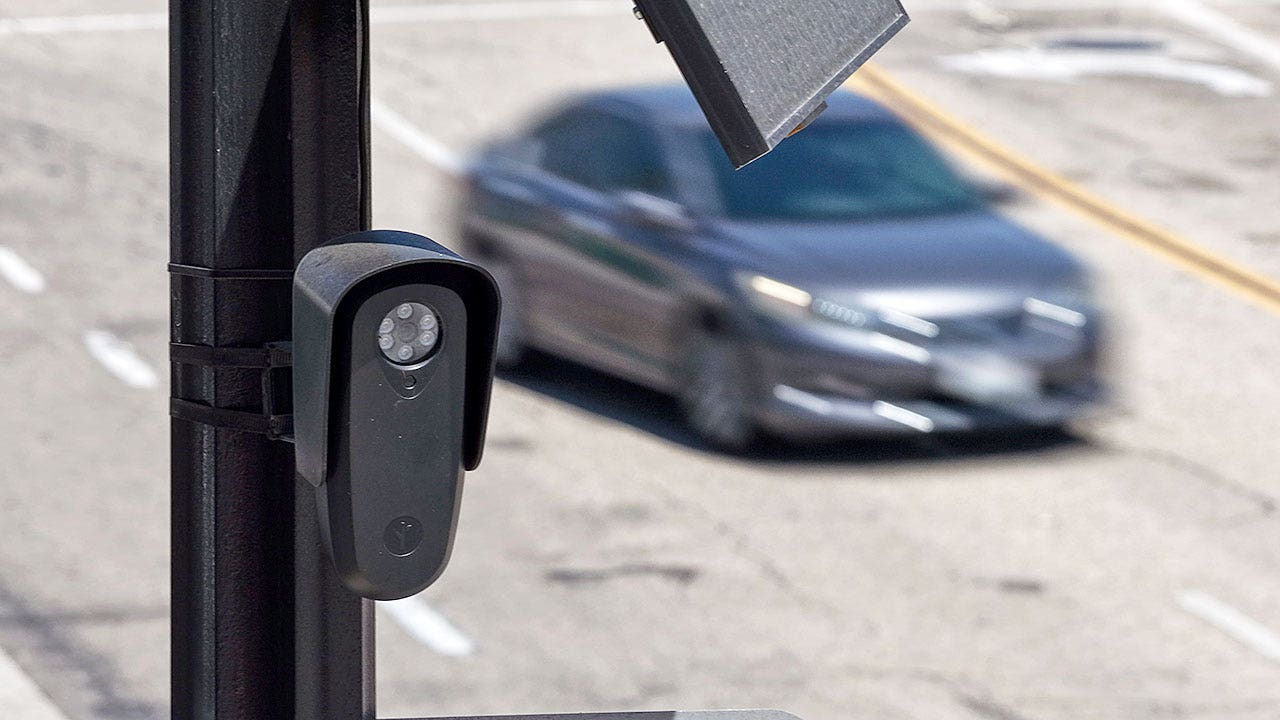
Flock Safety, which operates surveillance cameras in 49 states, is highlighting crime clearance rates in cities using its technology compared to those that don’t, as debates over surveillance continue. Phil Arnold, a retired police chief, told Fox News Digital that Flock cameras help solve crimes like theft and assault. He described how the technology narrows searches for suspect vehicles, reducing inconvenience for law-abiding citizens. Flock provided data showing higher clearance rates in cities with its cameras, such as Hendersonville, Tennessee, compared to Nashville. However, critics argue the technology is intrusive and unconstitutional, and some cities have raised concerns about privacy and misuse. A federal judge recently ruled that using Flock cameras to access a woman’s driving history violated her Fourth Amendment rights. The ACLU’s Chad Marlow questioned the correlation between Flock cameras and crime-solving rates, citing other factors like police resources and city size.
Our Reading
As expected, the matter has reached another stage.
Phil Arnold, a retired police chief, explains how Flock cameras help solve crimes.
Cities with Flock cameras show higher clearance rates than those without.
Critics say the technology is invasive and unconstitutional.
Privacy and misuse remain central concerns.
Author: Evan Null
Key Cities and Data
Nashville, Tennessee, cleared only 7% of motor vehicle thefts in the first half of 2026, while nearby Hendersonville, which uses Flock cameras, cleared 40% of the same cases. Aggravated assault clearance rates followed a similar pattern, with Nashville at 41% and Hendersonville at 95%. Vehicle break-ins in Nashville were solved at a rate of 3%, compared to 50% in Hendersonville. In Hillsborough, North Carolina, which does not use Flock cameras, vehicle thefts had a 0% clearance rate, while nearby Burlington cleared 46% of the same cases.
Legal and Ethical Concerns
A federal judge in Oklahoma ruled that a police deputy violated a woman’s Fourth Amendment rights by using Flock cameras to access her driving history and then pulling her over. The case involved a woman found with 91 pounds of methamphetamine. The ACLU’s Chad Marlow questioned the link between Flock cameras and crime-solving rates, noting that factors like city size, police resources, and local policies could influence the data. Privacy concerns remain central, with many communities debating whether the technology is necessary or intrusive.
Surveillance and Misuse
Cases of police officers using ALPR technology for non-law enforcement purposes are increasing. A Washington Post analysis identified at least 50 cases of rogue officers abusing the tool, with many involving stalking of ex-partners. Flock Safety’s Phil Arnold stated that data is only accessed when law enforcement is searching for a suspect, and that police need a CAD report or case number to access it. However, critics argue that the potential for misuse remains high, and that the technology could lead to a “China-like surveillance state” as warned by a former Pentagon AI chief.
Company Response and Regulation
Flock Safety’s CEO, Garrett Langley, has called for legislation to regulate the use of its cameras. Arnold said the company supports government regulation to prevent misuse. However, the ACLU’s Chad Marlow suggested that Flock’s push for regulation is more about public relations than ethics, noting that the company recently reduced its data retention period to 30 days. He argued that Flock is responding to backlash rather than a sudden change in values.
Public Perception and Debate
The debate over Flock cameras continues, with some communities pushing for their removal due to privacy concerns, while others see them as a valuable tool for solving crimes. Arnold emphasized that the technology helps police departments with limited resources, acting as a “force multiplier.” However, critics argue that the potential for misuse and the lack of clear constitutional boundaries remain significant issues. The conversation around surveillance, privacy, and law enforcement continues to evolve as more cities weigh the benefits and risks of Flock cameras.