Source: Fortune
Summary
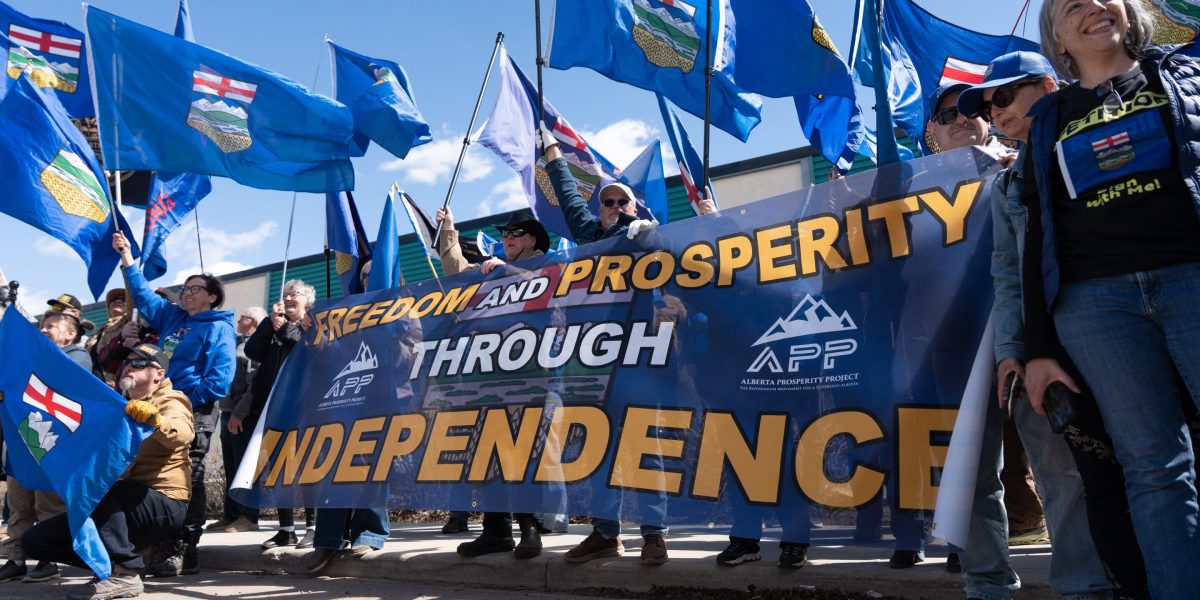
Alberta voters will decide on Oct. 19 whether to begin a process toward a future referendum on leaving Canada. Premier Danielle Smith, who supports remaining in Canada, said recent polls show 23% support for separation. Alberta has long clashed with federal governments over energy policy, with Liberal leaders Pierre and Justin Trudeau facing backlash. The pandemic and the Freedom Convoy protests fueled separatist sentiment, with some activists linking the movement to broader anti-globalization and anti-vaccine views. Prime Minister Mark Carney, seen as more sympathetic to Alberta’s concerns, has pushed for new oil pipelines. Separatists have also reached out to U.S. officials, though the State Department said the vote is Alberta’s decision.
Our Reading
The numbers tell one story.
Alberta’s referendum vote is not about leaving Canada but starting a process.
Premier Smith says 23% support for separation is too high.
Separatists link their cause to pandemic protests and anti-globalization.
Carney’s energy-friendly policies have made him an unusual ally in Alberta.
Activists talk to U.S. officials, but Canada remains the final authority.
Author: Evan Null
Alberta’s Referendum Vote: A Symbol of Fracture
Alberta, a province with vast oil reserves, is set to vote on whether to begin a process that could lead to a future referendum on separation from Canada. The decision is not about immediate independence but about signaling dissatisfaction with federal policies. Premier Danielle Smith, who supports remaining in Canada, has expressed concern over the 23% of voters who support separation, calling it “too high for my liking.”
The province has long had tensions with federal governments, especially over energy policy. Leaders like Pierre Trudeau and his son Justin faced significant backlash in Alberta for their approaches to oil and climate regulations. The recent pandemic and the Freedom Convoy protests have further fueled separatist sentiment, with some activists linking the movement to broader anti-globalization and anti-vaccine views.
Prime Minister Mark Carney has taken a more sympathetic stance toward Alberta’s concerns, pushing for new oil pipelines and opposing U.S. trade wars. His policies have made him an unusual ally in a traditionally conservative province. Separatists, however, continue to reach out to U.S. officials, though the State Department has emphasized that the vote is a matter for Albertans to decide.
Some activists, like Jeff Rath, see the movement as a response to pandemic restrictions and federal overreach. Others, like former Premier Jason Kenney, warn that the separatist movement has grown more organized and radical, with some ties to conspiracy theories and foreign political movements. Despite this, Kenney believes the movement is more about sending a message to Ottawa than seeking immediate independence.
The outcome of the vote could shape Alberta’s relationship with the federal government, even if it does not lead to immediate separation. With support for independence historically low, the referendum is more about leverage than a direct path to independence. Still, the movement’s growing influence has raised concerns about its impact on the broader conservative movement in Canada.
Historical Context and Tensions
Alberta’s history of tension with the federal government dates back decades, with energy policy often at the center of the conflict. The province’s oil reserves have made it a key player in Canada’s economy, but also a point of contention with federal leaders. Pierre Trudeau and his son Justin Trudeau both faced significant opposition in Alberta for their energy and climate policies, which were seen as detrimental to the province’s interests.
The recent pandemic and the Freedom Convoy protests have amplified these tensions. The convoy, which began as a protest against vaccine mandates for cross-border truckers, evolved into a broader movement against pandemic restrictions. This shift has given separatist activists a new cause to rally around, with some claiming that the movement has grown more radical and organized.
Former Premier Jason Kenney has described the separatist movement as having ties to conspiracy theories and foreign political influences, though he emphasizes that most supporters are not separatists but frustrated Albertans. He also notes that the movement has drawn inspiration from the MAGA movement, with some activists attempting to influence the United Conservative Party.
Despite the concerns, Kenney believes the movement is not a direct threat to Canada but could challenge the conservative movement’s unity. He warns that even a low percentage of support, such as 10% to 20%, would be a significant shift from the past, where separatist parties typically drew only 1% or 2% of the vote.
The situation in Alberta is not isolated. Quebec has also seen a resurgence of separatist sentiment, with the Parti Québécois returning to power. However, support for independence in Quebec remains around 30%, and the party’s leader has stated that a referendum will not happen while Donald Trump is U.S. president.
The Role of Federal Leadership
Prime Minister Mark Carney has taken a more sympathetic approach to Alberta’s concerns, emphasizing the need to open new markets for the province’s oil. His support for a proposed pipeline to the West Coast has positioned him as a rare ally for Alberta within the federal government. Carney’s policies, which include opposition to U.S. trade wars and 51st-state rhetoric, have made him more popular in conservative Alberta than previous Liberal leaders.
Kenney, a former conservative critic of Trudeau’s approach, has praised Carney for understanding Alberta’s grievances and aspirations. He believes that Carney’s leadership has moved in the right direction on energy issues, even if it has not fully addressed the province’s concerns. However, Carney remains a formidable opponent for separatists, who acknowledge that winning a majority in Alberta is unlikely.
Separatists have also reached out to U.S. officials, with some claiming that discussions about a potential oil pipeline through the U.S. to the Pacific were part of recent meetings. The U.S. State Department has stated that it regularly meets with a wide range of representatives, but emphasized that the vote is a decision for the people of Alberta.
Despite these efforts, separatists acknowledge that they face an uphill battle. Jeff Rath, a leader of the independence movement, said he would be “thrilled” with more than 30% of the vote, which would still fall short of a majority. He also noted that “every major politician” in Alberta and Canada is against the separatists, making their path to success difficult.
Carney has framed the debate in terms of national unity, saying that Canada faces real threats to its economy, security, and way of life. He argues that the country is stronger together, a message that resonates with many Albertans who still see value in remaining part of Canada.
Activists and Their Vision
Separatist activists in Alberta have a clear vision for what an independent province could look like. They argue that independence would give Alberta more control over its natural resources and reduce the influence of the federal government. Some, like Jeff Rath, have described the movement as a response to pandemic restrictions and federal overreach, with the Freedom Convoy serving as a catalyst for broader discontent.
Rath, a leader of the independence movement, said that federal vaccine rules preventing unvaccinated Canadians from flying were his breaking point. He described the pandemic as “the straw that broke the camel’s back,” leading to a growing sense of frustration and a desire for change. The convoy, he said, helped radicalize many people and brought new energy to the movement.
Keith Wilson, another independence leader, has argued that the vote is not just about separation but about gaining leverage in negotiations with Ottawa. He believes that even if independence is not achieved, the vote could lead to significant structural changes in Alberta’s relationship with the federal government. Wilson has stated that he would accept substantial reforms short of full independence.
Despite these ambitions, separatists acknowledge that they face an uphill battle. Rath said he would be “thrilled” with more than 30% of the vote, which would still fall short of a majority. He also noted that “every major politician” in Alberta and Canada is against the separatists, making their path to success difficult.
Kenney, who has been critical of the movement, believes that even a low percentage of support, such as 10% to 20%, would be a significant shift from the past, where separatist parties typically drew only 1% or 2% of the vote. He warns that this could embolden the movement and challenge the broader conservative movement’s unity.
International Implications and Concerns
Separatist activists in Alberta have not limited their efforts to domestic politics. They have reached out to U.S. officials, seeking support for their cause and discussing potential economic opportunities. Jeff Rath confirmed that he and other independence advocates met with U.S. State Department officials three times, presenting a document outlining what an independent Alberta could offer the United States.
Rath claimed that people involved in the meetings were going directly to the White House and that a possible oil pipeline through the U.S. to the Pacific was “literally a topic of our last meeting with the U.S. State Department.” However, the State Department has stated that it regularly meets with a wide range of representatives, and that the vote is a decision for the people of Alberta.
Kenney has called the outreach “bonkers,” arguing that people with “zero democratic mandate” are discussing with a foreign government “the status of a separate state that does not exist.” He believes that such actions are not only misguided but also undermine the legitimacy of the separatist movement.
Despite these concerns, some U.S. officials have expressed interest in Alberta’s energy potential. U.S. Treasury Secretary Scott Bessent has called Alberta “a natural partner,” suggesting that the province’s oil exports could play a role in U.S. energy strategy. However, the U.S. government has not taken a formal stance on the referendum, emphasizing that it is an internal matter for Canada.
The international dimension of the separatist movement raises questions about its legitimacy and potential impact on cross-border relations. While some activists see it as a way to gain leverage in negotiations with Ottawa, others view it as a dangerous precedent that could destabilize the region. The outcome of the vote will likely shape how the movement is perceived both domestically and internationally.