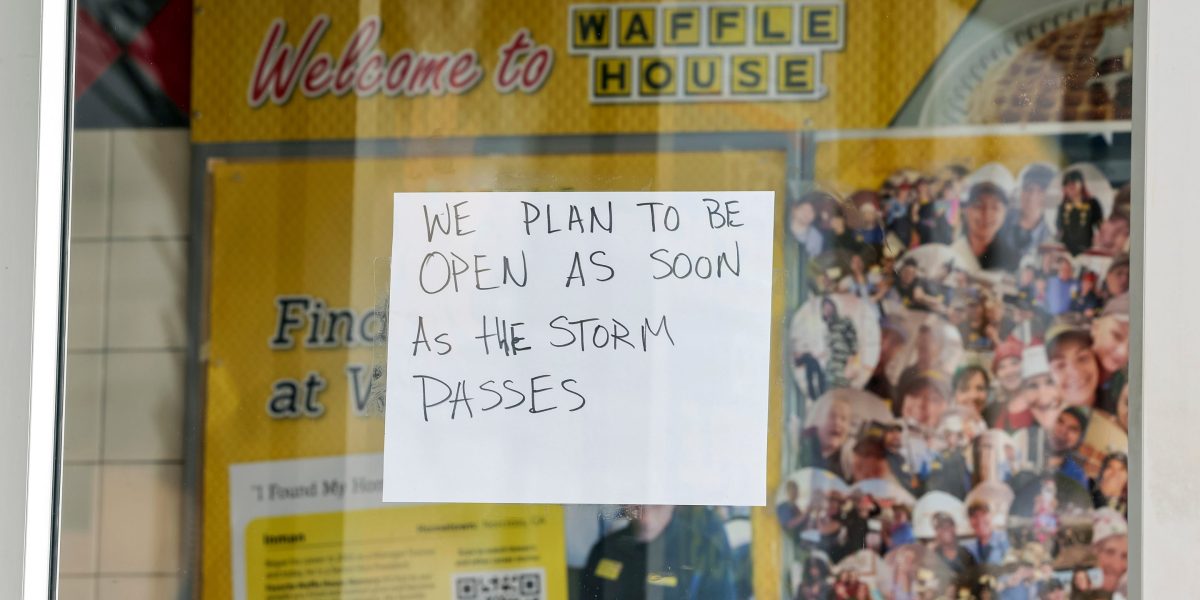
Source: Fortune.com
Summary
The Waffle House Index is an informal way to gauge the severity of a storm based on whether Waffle House locations are open, serving a full menu, or closed. The system, developed by former FEMA Administrator Craig Fugate, uses color-coded maps to show the status of restaurants in affected areas. Green indicates full service, yellow means limited menu, and red means closure. The index has become a trusted tool for emergency officials and residents to assess damage and plan aid. Waffle House has invested in generators and disaster preparedness to ensure operations during and after storms.
Our Reading
The numbers tell one story.
Waffle House locations serve as a proxy for disaster severity.
Green, yellow, and red statuses guide emergency response.
FEMA uses the index to identify areas in need.
The chain’s preparedness is no accident.
The Waffle House Index is a strange but effective way to measure disaster impact.
Author: Evan Null
What is the Waffle House Index?
The Waffle House Index is a system used to measure the impact of natural disasters based on the status of Waffle House locations. It provides a simple, visual way to understand the severity of a storm and the condition of affected communities. The index is based on whether a Waffle House is open, serving a full menu, or closed. It has become a widely recognized tool for both residents and emergency officials.
How Does the Index Work?
The Waffle House Index uses color-coded maps to show the status of restaurants in storm-affected areas. Green means the location is fully operational, yellow indicates a limited menu, and red means the restaurant is closed. These statuses help emergency responders and residents assess the extent of damage and determine where aid is most needed. The system has been adopted by FEMA and other agencies as a practical way to track recovery efforts.
How Did the Index Start?
The Waffle House Index was developed by former FEMA Administrator Craig Fugate in 2004. He noticed that Waffle House locations often remained open during and after storms, making them a reliable indicator of community conditions. Fugate and his team began using the chain’s status to guide disaster response efforts. The system has since become a standard tool for assessing storm damage and planning aid distribution.
Why Is Waffle House Reliable?
Waffle House has built a reputation for resilience during disasters. The chain has invested in generators, mobile command centers, and employee training to ensure operations continue even in extreme conditions. This preparedness has made the chain a trusted resource for communities in need of food, shelter, and stability during and after storms. The Waffle House Index reflects this reliability, turning a simple diner into a critical part of disaster response.
The Waffle House Index in Practice
The Waffle House Index is used by both residents and emergency officials to track the impact of hurricanes, tornadoes, and other natural disasters. It provides a quick and easy way to understand the condition of an area without needing complex data. By monitoring the status of Waffle House locations, officials can prioritize aid and resources where they are most needed. The system has proven to be a practical and effective way to measure disaster impact and support recovery efforts.